Competition engineering reaches road cars
The 33 Stradale carries the chassis thinking and mechanical priorities of the Tipo 33 onto the road.
Milan, Italy · est. 1910
Competition engineering translated into small-series road cars.
Curated entry points
Three cars that explain the manufacturer: its origins, its engineering peak and the shape of its modern ambition.
Complete catalogue
2 models · 1 families
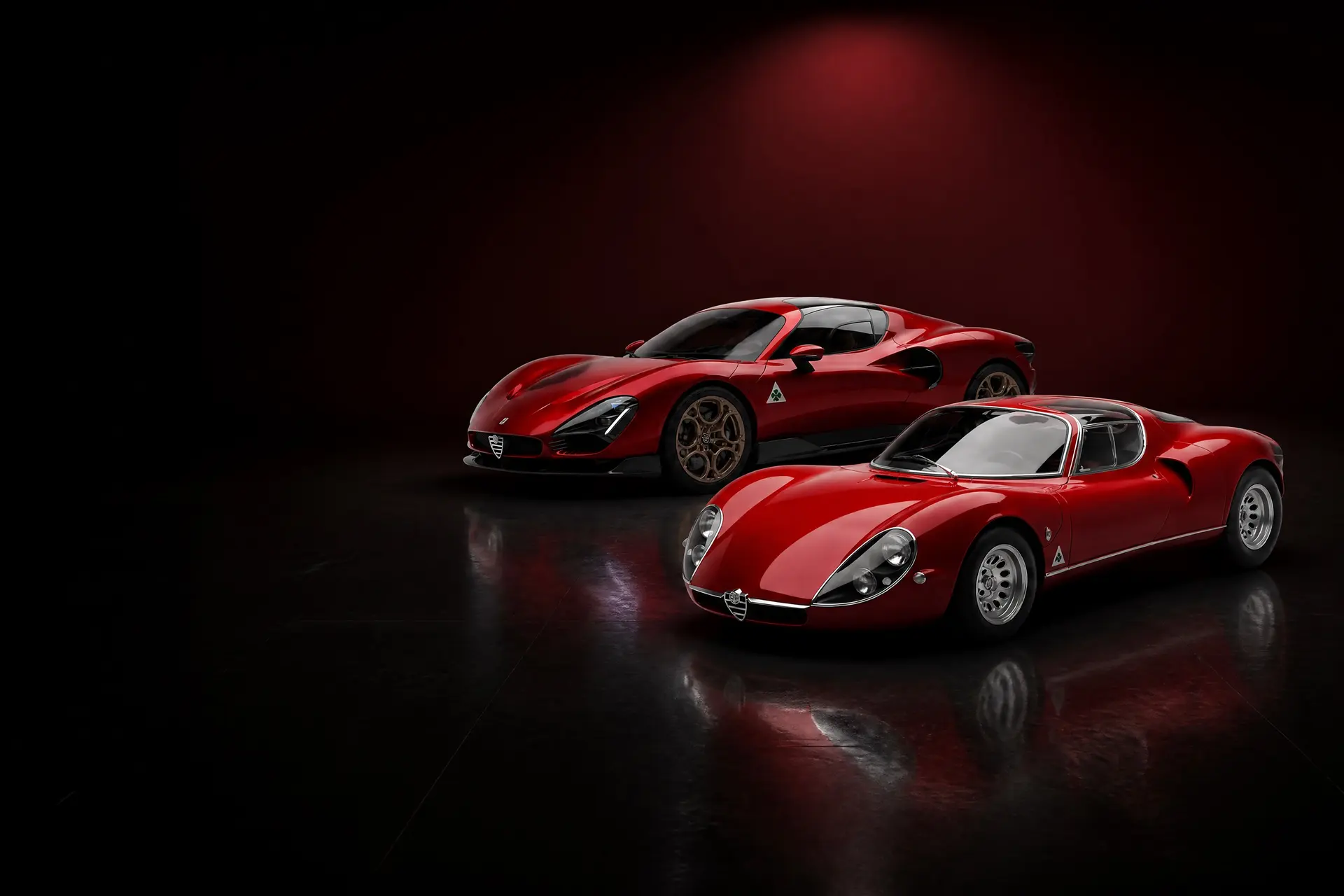
A racing prototype made road-legal in 1967, and the 33-unit homage that revived the name in 2024 — the two collectible poles of the marque.
The house
Alfa Romeo was winning grands prix before Ferrari existed — Enzo Ferrari ran Alfa’s works team before founding his own marque. That racing bloodline peaked on the road in 1967 with the Tipo 33 Stradale.
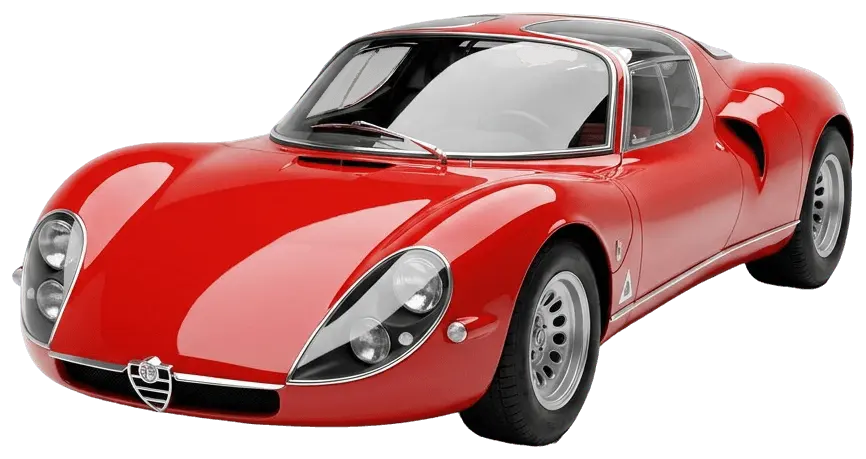
A road-legal version of the T33 sports prototype, the 33 Stradale carried Franco Scaglione’s butterfly-doored body over a race chassis — around 18 were built, and collectors routinely rank it the most beautiful car of all time. One rarely trades; when it does, the price is a rumour.
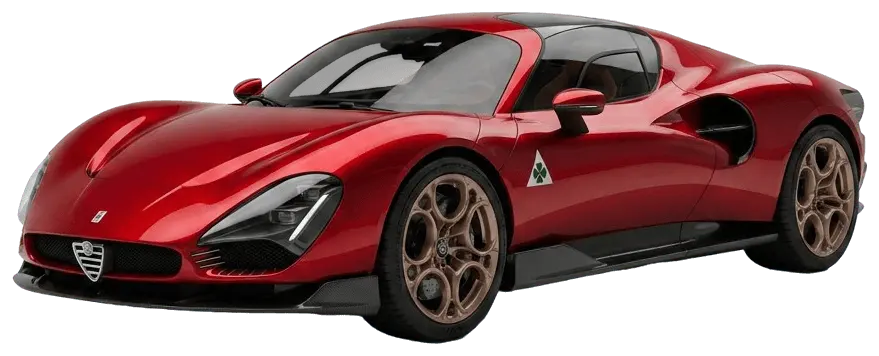
In 2024 Alfa revived the name for a new 33 Stradale: 33 examples on Maserati MC20 bones, every one sold before announcement — the marque’s first true collectible in decades.
Selected milestones
1910
A.L.F.A. is founded in Milan
Anonima Lombarda Fabbrica Automobili begins on 24 June with the 24 HP and 12 HP as its first cars.
1950
The 1900 changes the factory
Alfa's first unitary-body car made on an assembly line moves the company towards series production.
1954
The Giulietta scales the twin-cam
The Sprint takes an all-aluminium twin-cam engine derived from racing practice into volume production.
1963
Arese opens
The new plant increases capacity for the Giulia and Alfa Romeo's next phase of series production.
1967
The 33 Stradale is shown at Monza
Franco Scaglione's road-going Tipo 33 derivative joins a competition chassis to a hand-built aluminium body.
2023
The 33 Stradale returns as a fixed commission
Alfa unveils 33 individually configured cars, all allocated before launch; the first is completed in December 2024.
What defines Alfa Romeo
The 33 Stradale carries the chassis thinking and mechanical priorities of the Tipo 33 onto the road.
Aluminium engines, compact dimensions and lightweight structures recur from the Giulietta to the 33.
Alfa Romeo repeatedly works with independent designers and coachbuilders for its smallest production programmes.
The mark
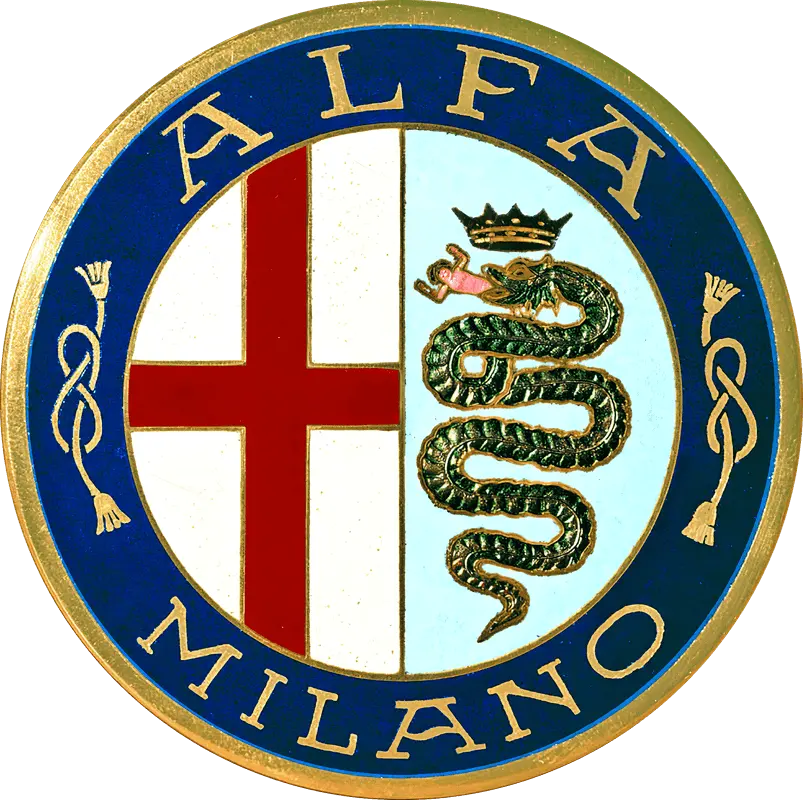
Milan, 1910: the story the house tells is of a draughtsman, Romano Cattaneo, waiting for a tram at Piazza Castello with the Filarete Tower in view — and on it the biscione, the serpent of the Visconti who once ruled the city. With chief engineer Giuseppe Merosi he set it beside the red cross of Milan’s own banner: a municipal coat of arms, worn as a car badge.
The ring has kept minutes ever since — Romeo added to the name in 1918, a laurel wreath for the P2’s inaugural world championship in 1925, Milano dropped in 1972 as production spread south. The cross and the serpent have never moved.
Romano Cattaneo, 1910 · with Giuseppe Merosi
1910–1918
The first roundel — Milan’s red cross beside the Visconti serpent, ALFA MILANO on the ring.
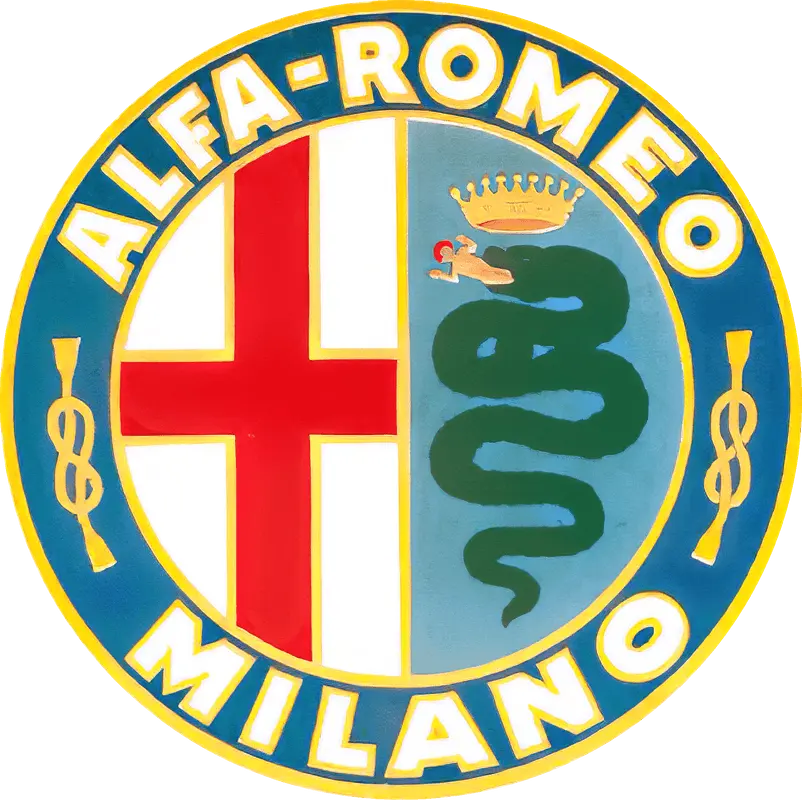
1918–1925
Romeo joins the name — the new owner written into the ring.
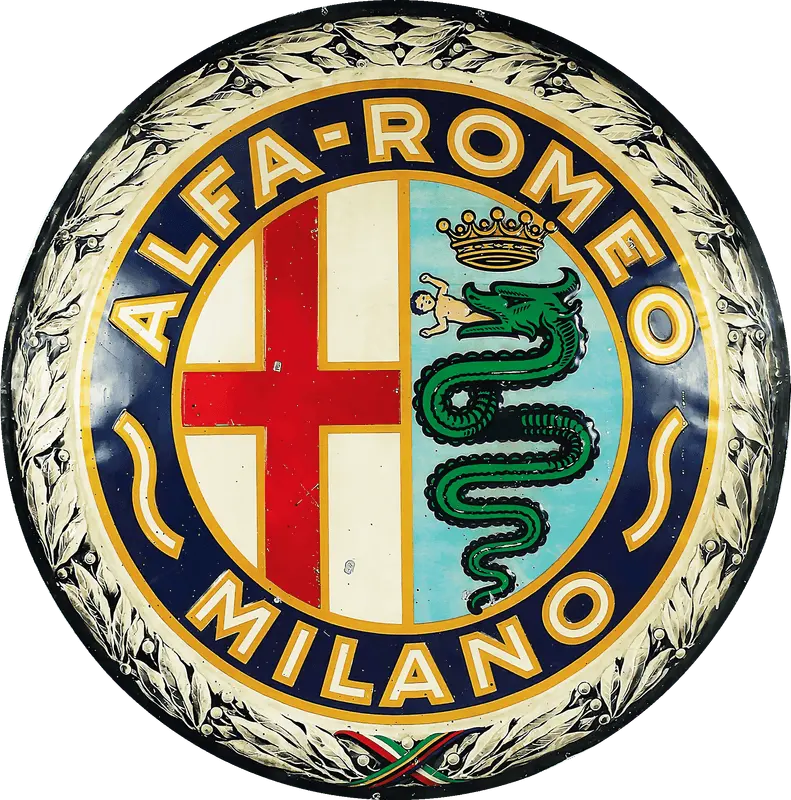
1925–1946
A laurel wreath for the P2, winner of the inaugural world championship.
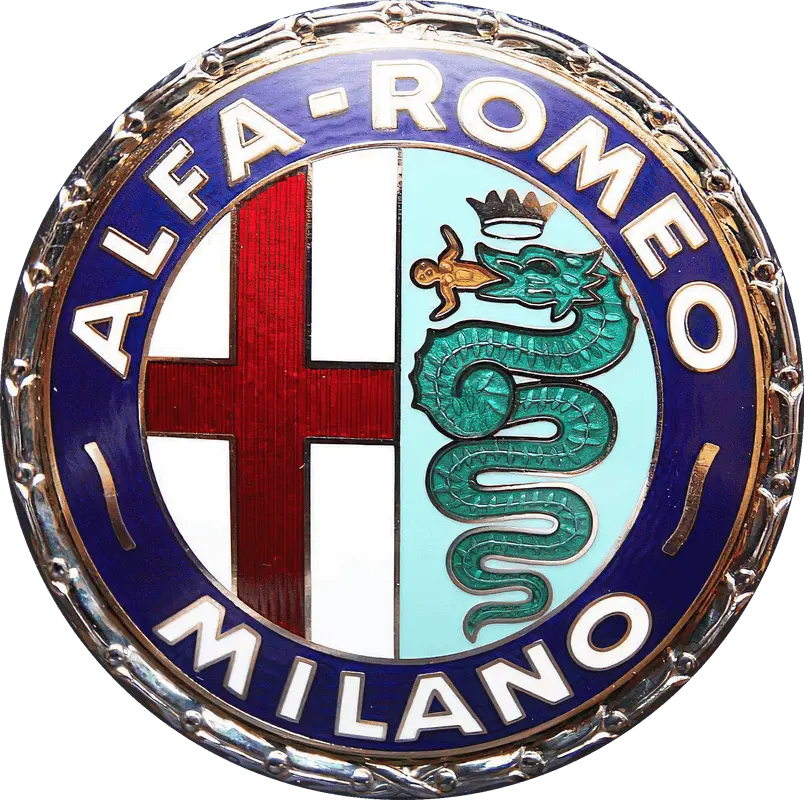
1950–1972
The postwar redraw — gold on blue, geometry in place of engraving.
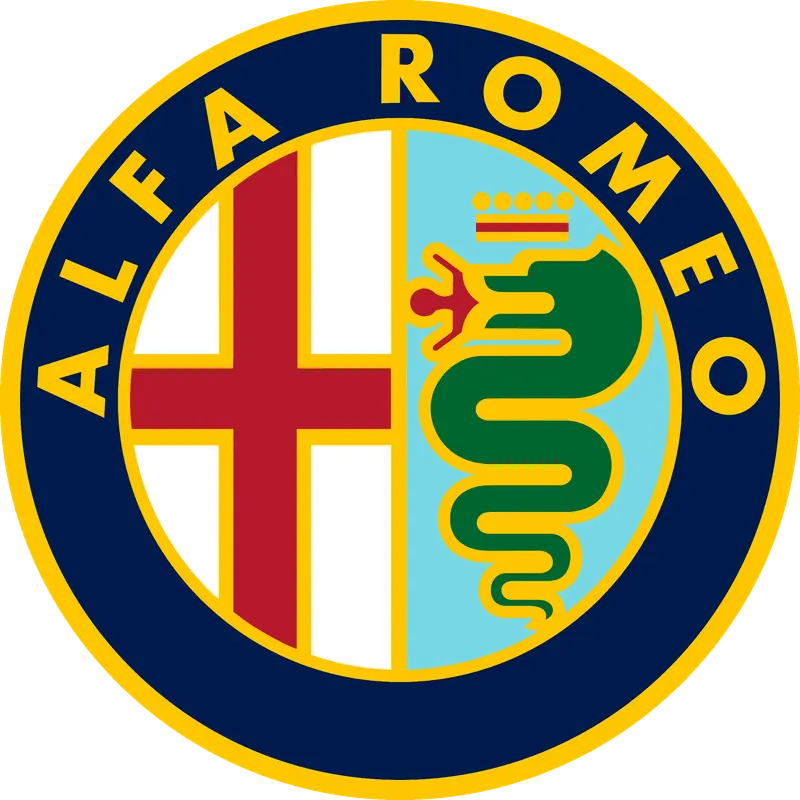
1972–2015
Milano leaves the badge as production spreads beyond the city.
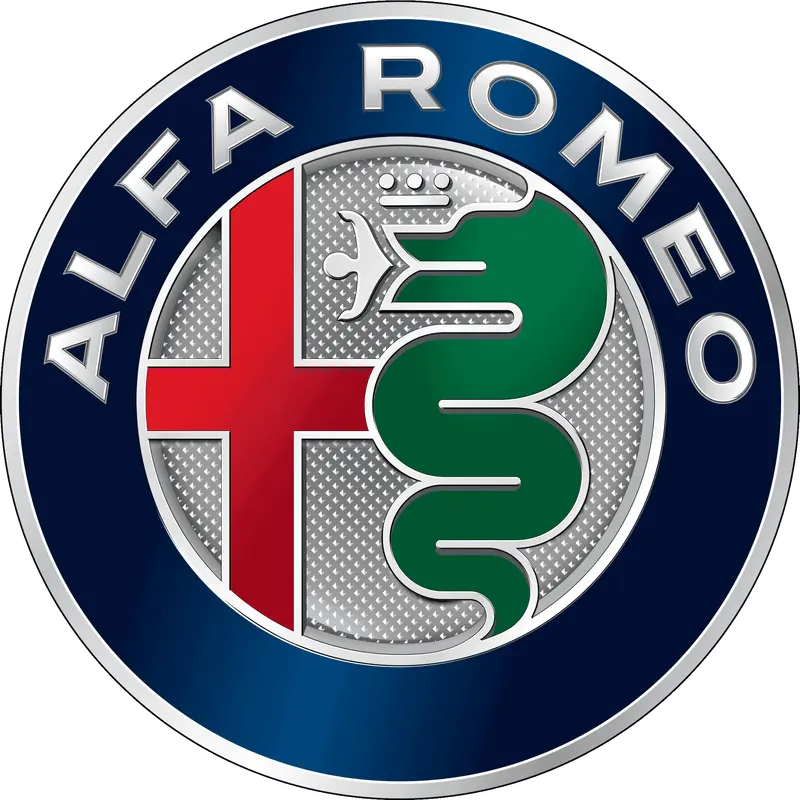
2015–
One metal field, the dividing line gone — cross and serpent share the ground.