Centralise the mass
Engines are pushed rearward in the chassis, behind the front axle in the 5300 GT and behind the driver in the P538.
Livorno, Italy · est. 1964
A short-lived Livorno marque defined by weight distribution and American V8 power.
Curated entry points
Three cars that explain the manufacturer: its origins, its engineering peak and the shape of its modern ambition.
Complete catalogue
1 models · 1 families
Strada road cars and Corsa racers — a front-mid-engined V8 GT built low enough to embarrass prototypes, in a run of barely 133.
The house
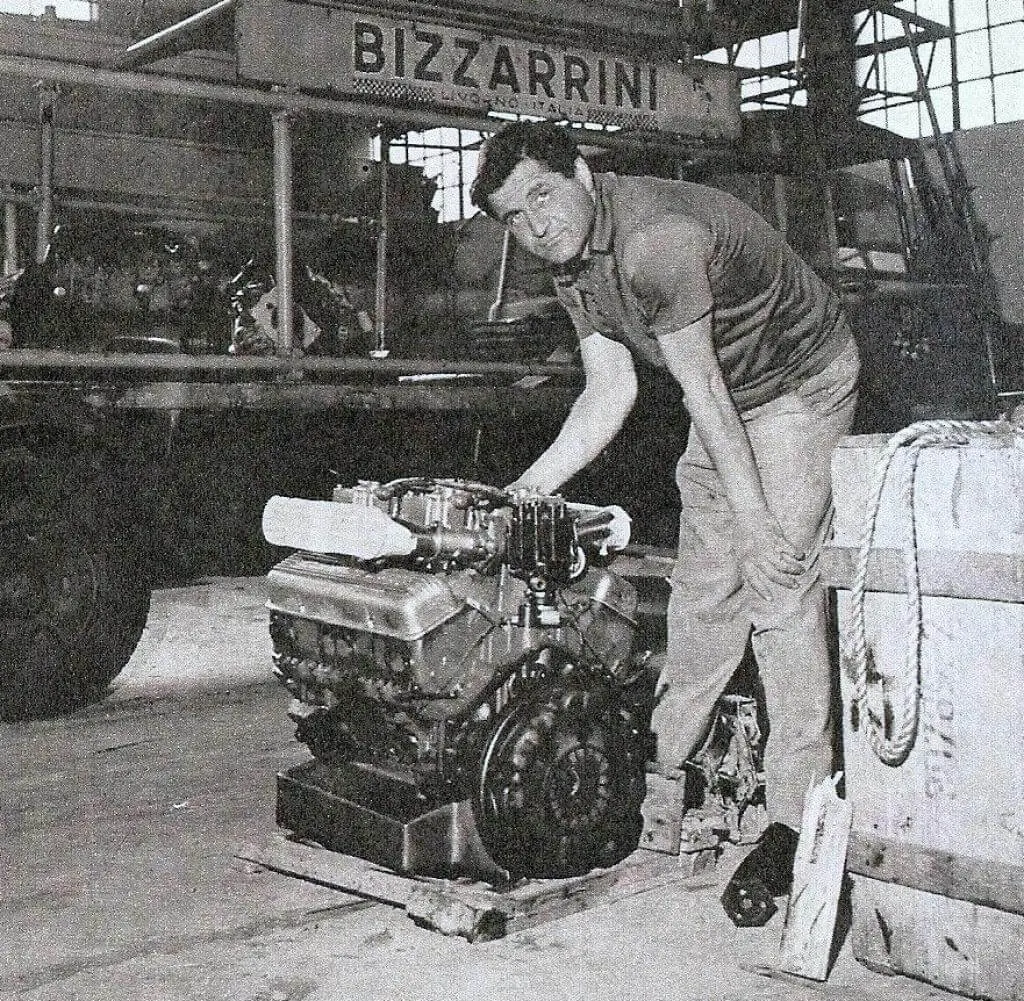
Giotto Bizzarrini engineered the Ferrari 250 GTO, then walked out of Maranello in the great palace revolt of 1961. After designing Lamborghini’s V12, he built his own car.
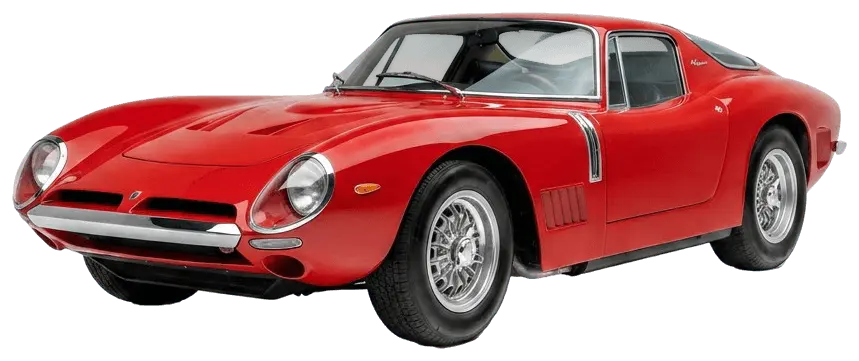
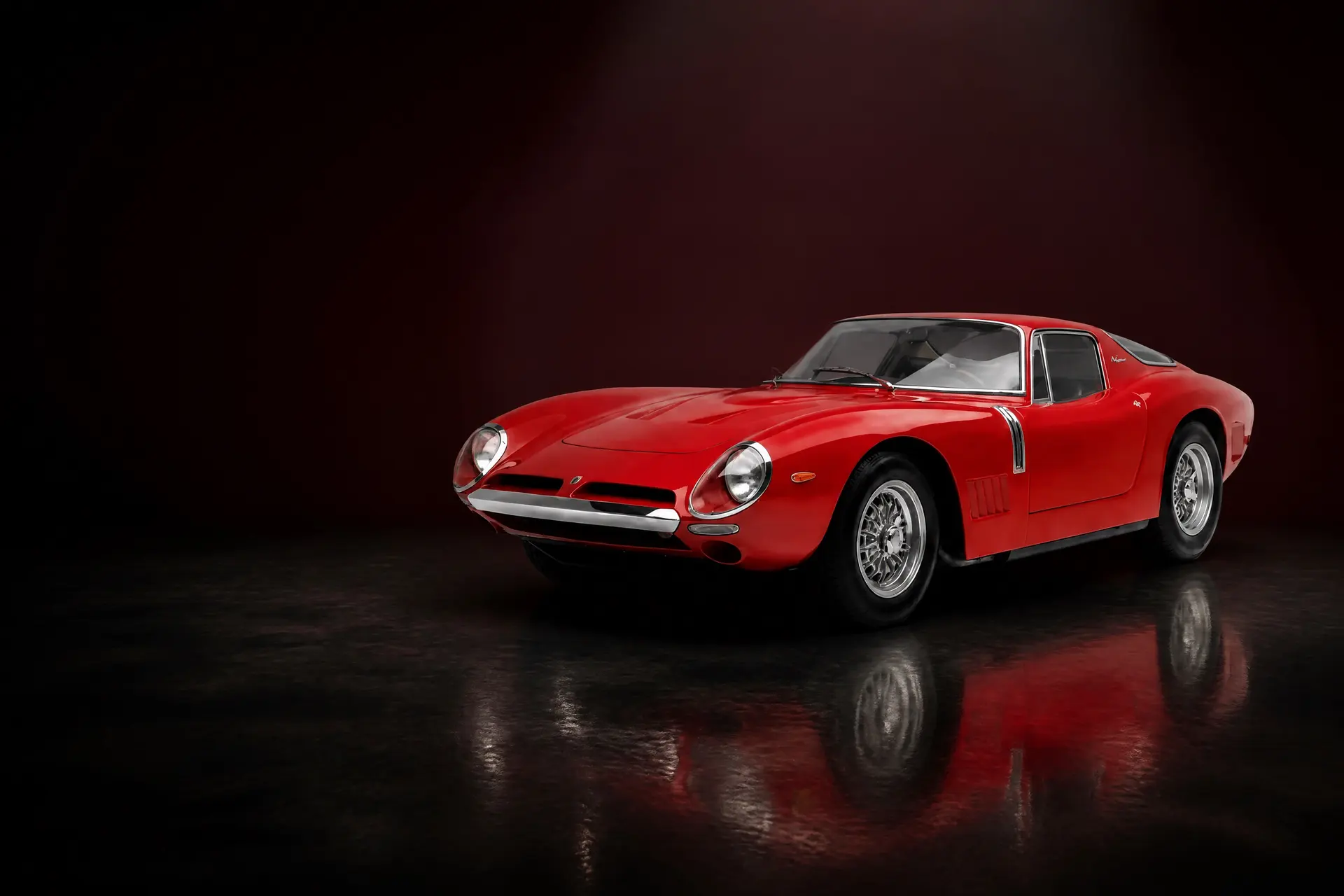
The 5300 GT put a Corvette V8 amidships-forward in a chassis slung so low the driver sits practically between the rear wheels, under a Giugiaro-drawn aluminium body. A Corsa won its class at Le Mans in 1965.
Around 133 were built before the money ran out — enough to race, never enough to profit. Half a century on, the Strada has become a connoisseur’s blue-chip: GTO engineering with an outsider’s story, at a hundredth of the price.
Selected milestones
1964
The Livorno company
Prototipi Bizzarrini is founded while Giotto Bizzarrini continues the Iso Grifo A3/C programme that will become the 5300 GT.
1965
The Corsa proves the layout
The 5300 GT Corsa wins the over-five-litre class at Le Mans, giving the road-going Strada a direct competition reference.
1966
P538
The open P538 moves the 5.3-litre V8 behind the driver and extends the marque from grand touring into a purpose-built sports racer.
1967
A smaller Europa
The 1900 GT Europa pairs a light glass-fibre body with Opel power, opening a lower-capacity line beneath the 5300 GT.
1969
Original production ends
Bizzarrini S.p.A. declares bankruptcy after difficulties with investors, fixing the original production period at five years.
2020
The name returns
New ownership reintroduces the marque; a 24-car 5300 GT Corsa Revival programme follows.
What defines Bizzarrini
Engines are pushed rearward in the chassis, behind the front axle in the 5300 GT and behind the driver in the P538.
Bizzarrini paired its own chassis work with Chevrolet V8 and Opel four-cylinder power rather than developing engines in-house.
The Corsa and P538 programmes made endurance racing part of development rather than a separate styling exercise.
The hands
2 names in the register stand behind this manufacturer. Each has a file of their own, following the work wherever it went.
The mark
The original company had one mark: a golden eagle, wings spread, on a red disc ringed by gilt flames — BIZZARRINI above, Livorno below. Who drew it is not recorded; the works lasted barely five years and left more cars than paperwork.
The name returned in 2020: a revived Bizzarrini builds continuation 5300 GTs, and the eagle still fronts the company.

1964–1969
The only mark the company ever had: eagle, disc, and a ring of flame.