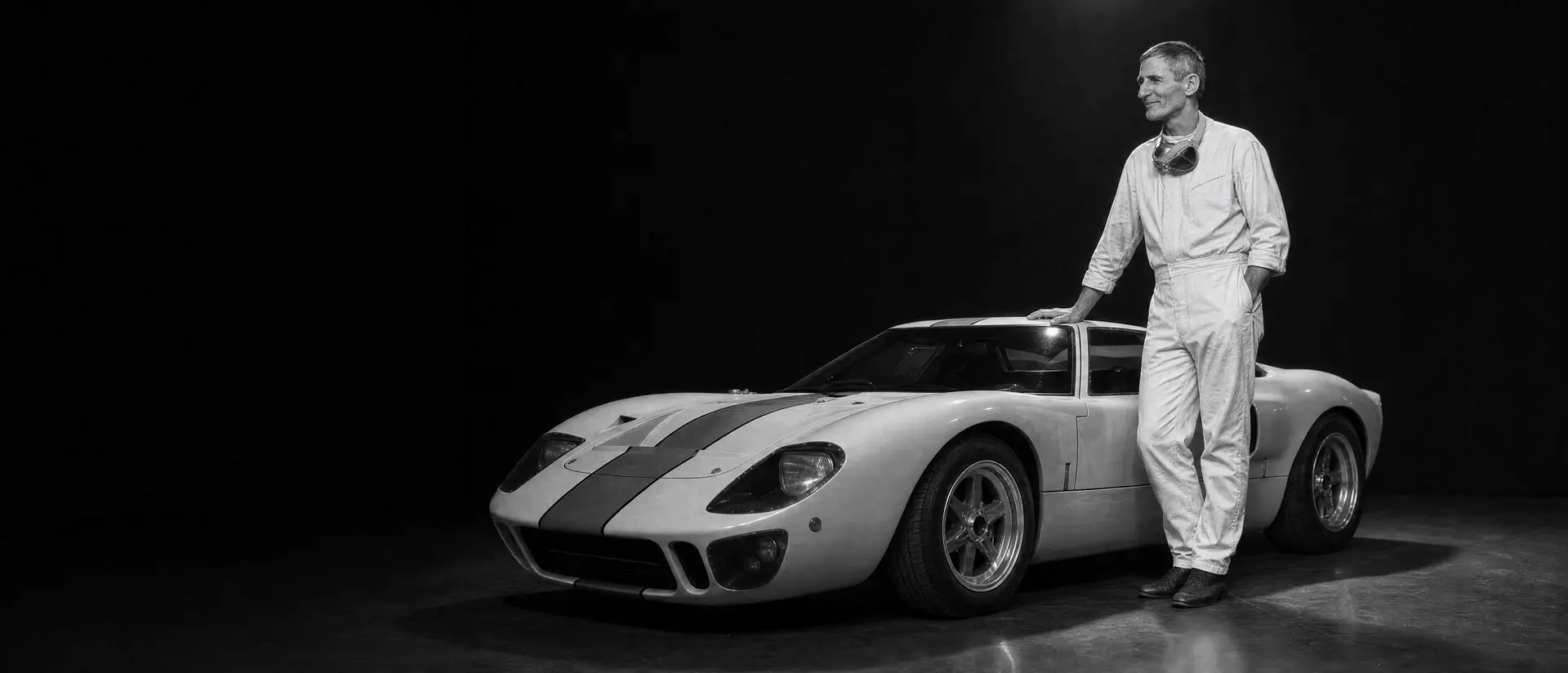
Use proven components
Shelby starts with an existing lightweight chassis and a serviceable production V8 rather than designing every system anew.
Los Angeles, USA · est. 1962
Shelby joined American V8s to lightweight chassis.
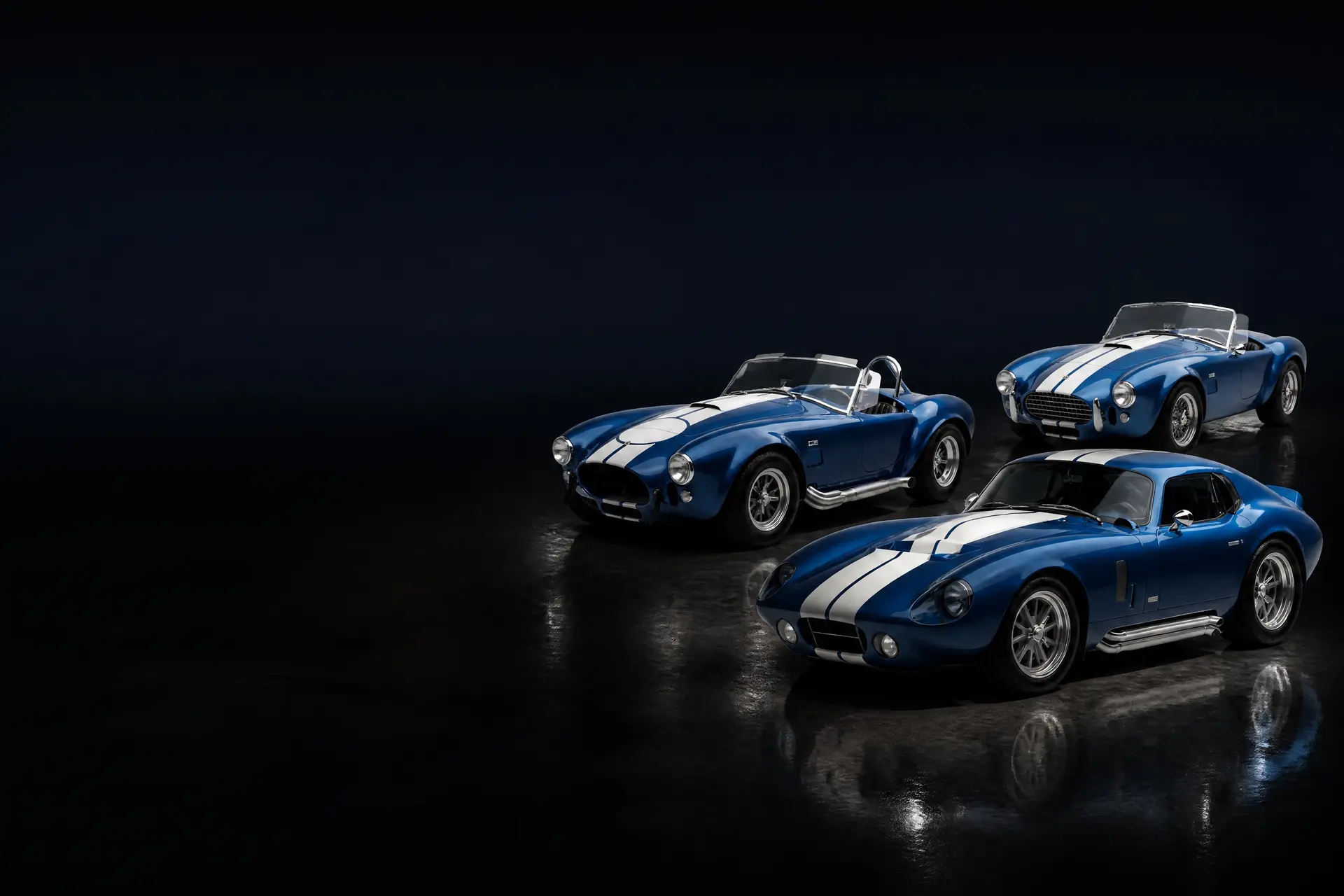
Curated entry points
Three cars that explain the manufacturer: its origins, its engineering peak and the shape of its modern ambition.
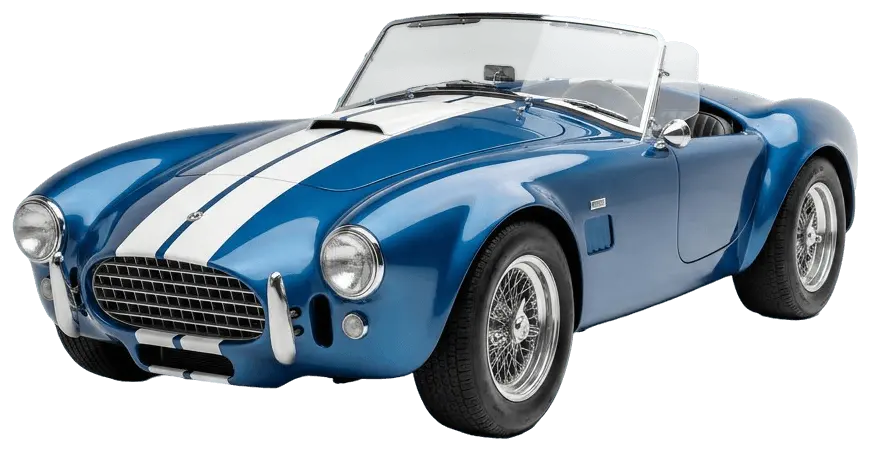 1963–1965
The small-block original — the car that made the legend.
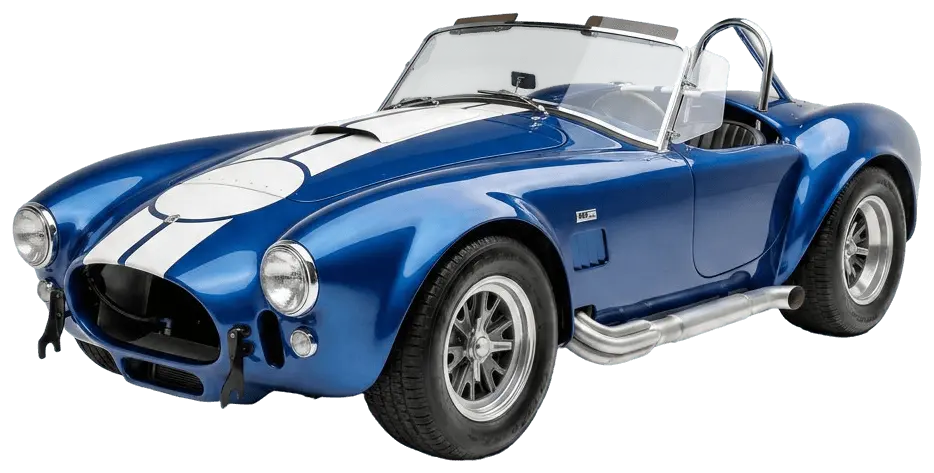 1965–1967
The big-block icon; the S/C is the most coveted street Cobra.
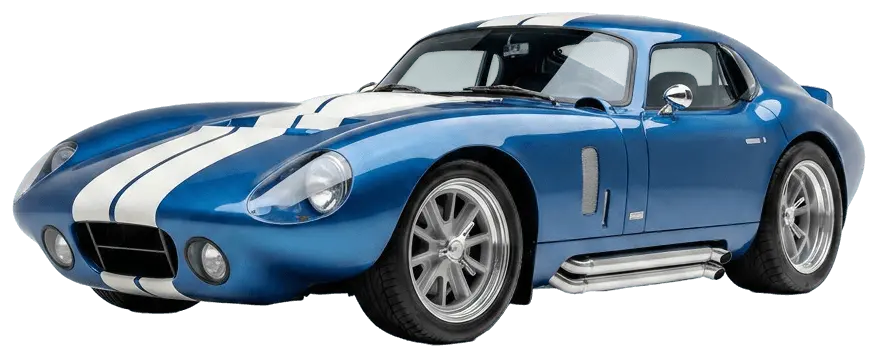 1964–1965
Six built; 1965 FIA GT champion — essentially untradeable.
Complete catalogue
3 models · 1 families
The original Shelby American cars — small-block and big-block Cobras, and the six Daytona Coupes that won America its first FIA GT title.
The house
Carroll Shelby, a retired Le Mans winner with a heart condition, dropped a Ford V8 into a light English roadster and created the Cobra — brutal, loud and faster than anything Europe sent against it.
The small-block 289 won races; the 427 became the icon. The semi-competition S/C cars are the most coveted street Cobras of all, and every original chassis is documented — the replica industry makes provenance the whole game.
To beat Ferrari’s GTOs on the long straights of Europe, Pete Brock drew a closed body over the Cobra frame: the Daytona Coupe. Six were built, they took the 1965 FIA GT championship, and each is now a museum-grade, eight-figure asset.
Selected milestones
1962
Shelby American and CSX 2000
Carroll Shelby forms the company in California, installs Ford's 260 V8 in an AC chassis and presents the first Cobra.
1963
The 289 defines the small-block Cobra
Ford's 289, rack-and-pinion steering and revised front suspension establish the Mark II leaf-spring specification.
1964
The Daytona Coupe reduces drag
The closed, Kamm-tailed Cobra debuts at Daytona and wins the GT class at Le Mans that June.
1965
World GT championship
Cobra roadsters and Daytona Coupes secure the FIA International Manufacturers' GT Championship for Shelby American.
1965
The 427 requires a new chassis
A wider four-inch-tube frame, coil-spring independent suspension and revised bodywork make the big-block Cobra a distinct car, not an engine swap.
What defines Shelby
Shelby starts with an existing lightweight chassis and a serviceable production V8 rather than designing every system anew.
The Daytona Coupe adds the aerodynamic efficiency the open Cobra lacks on long European straights.
The 427 programme widens and stiffens the frame and replaces transverse leaf springs with coil suspension to carry the FE big-block.
The hands
One name in the register stands behind this manufacturer. Their own file follows the work wherever it went.
The mark
Carroll Shelby said the name arrived in his sleep: he woke, wrote “Cobra” on the notepad he kept by the bed, and the car was christened before it existed. The badge came from Pete Brock, Shelby American’s first paid employee, and the brief was a single line — a round badge with a snake on it, sized to the AC emblem it would replace.
Brock went on to draw the Daytona Coupe: the snake and America’s most valuable racing car share an author.
Pete Brock — Shelby American’s first employee
1962–
Brock’s roundel — the hooded snake over the name, drawn to the AC badge’s bolt pattern.