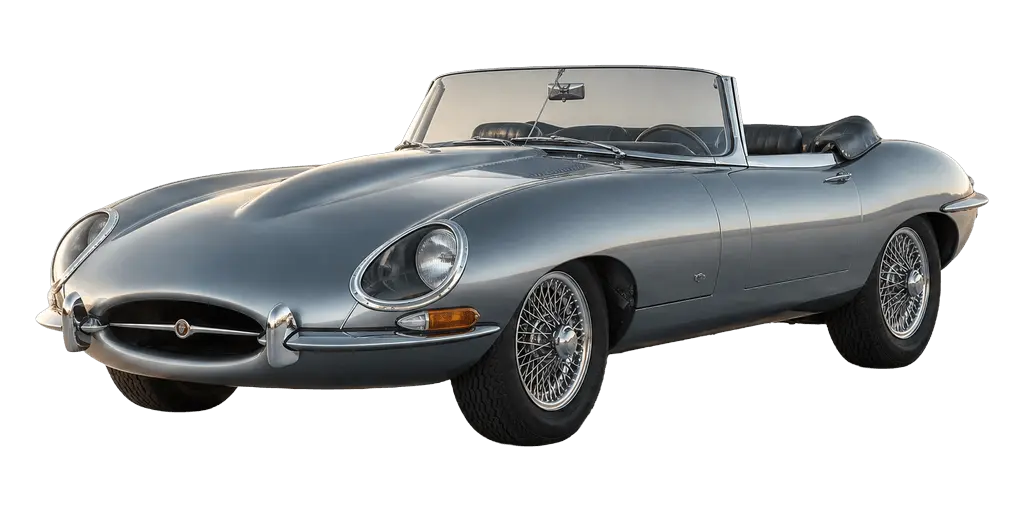
Transfer racing engineering
Jaguar develops brakes, structures and aerodynamics in competition, then carries the useful parts into road cars.
Coventry, England · est. 1935
Jaguar's collector hierarchy follows the transfer of racing structures into road cars.
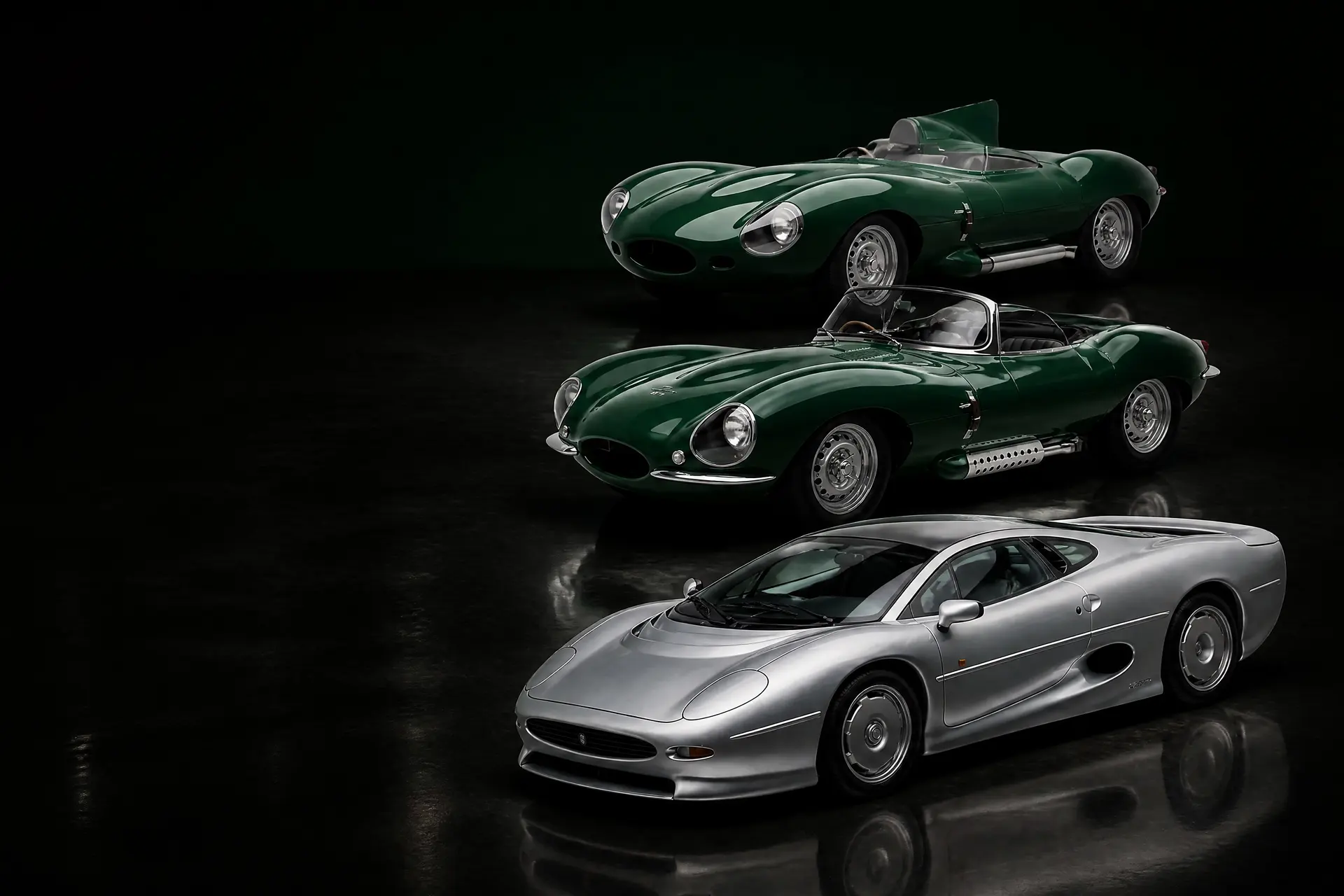
Curated entry points
Three cars that explain the manufacturer: its origins, its engineering peak and the shape of its modern ambition.
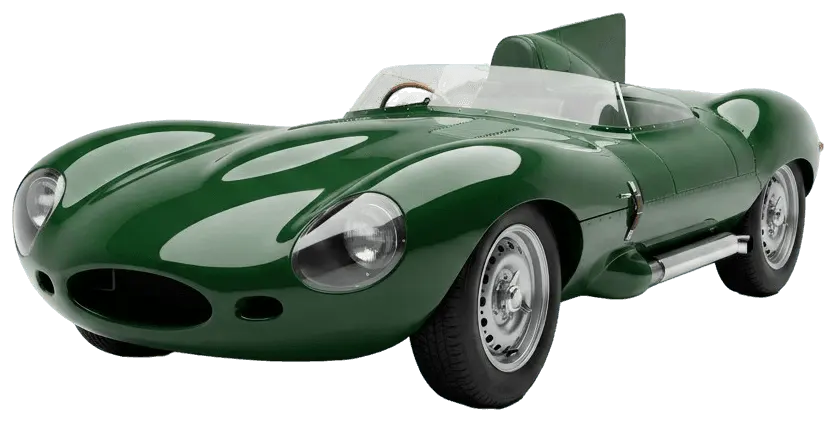 1954–1957
Three Le Mans wins — the monocoque racer with the tail fin.
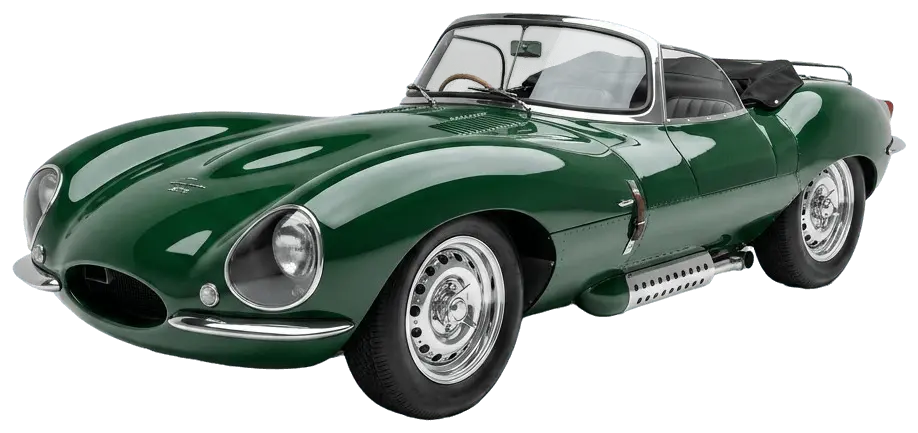 1957
1957The road-going D-Type — 16 built, McQueen provenance.
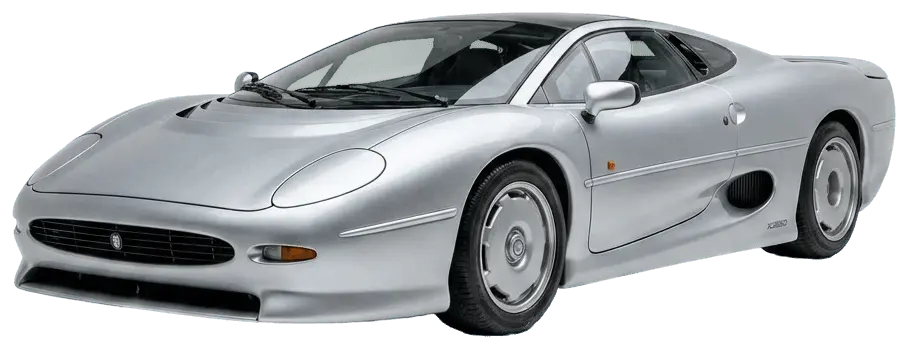 1992–1994
Fastest car in the world in 1992 — 275 built, appreciating hard.
Complete catalogue
4 models · 3 families
The works racers that won Le Mans three years running, and the sixteen road-registered XKSS conversions that followed — the pinnacle of British 1950s motorsport.
Malcolm Sayer's calculated ellipses over a monocoque and front subframe taken straight from the D-Type — about 72'500 built across three series, sold for a third of a Ferrari's price.
Jaguar’s one true supercar — fastest production car of its day, built in Bloxham in a short, turbulent run that makes survivors genuinely rare.
The house
Jaguar won Le Mans five times in the 1950s, and the D-Type took three of them — an aviation-inspired monocoque with a tail fin, built when aerodynamics was still an act of faith.
When the racing programme ended, Sir William Lyons converted the unsold D-Types into road cars: the XKSS, sixteen built before the Browns Lane fire destroyed the rest. Steve McQueen’s example made it the most famous Jaguar in the world.
The XJ220 arrived in 1992 as the fastest production car on earth — 349 km/h from a twin-turbo V6 in a body like a land-bound aircraft. Undervalued for decades, it is now appreciating harder than almost any car of its era.
Selected milestones
1935
The Jaguar name appears
The SS Jaguar saloon introduces the name; the company adopts Jaguar Cars as its corporate identity in 1945.
1948
The XK line begins
The XK120 launches Jaguar's twin-cam straight-six and a road-car family that will supply its competition programme.
1954
The D-Type changes the structure
Jaguar replaces a full tubular frame with a central aluminium monocoque and develops the body around high-speed stability.
1957
D-Type becomes XKSS
Jaguar approves 25 road conversions, but the Browns Lane fire destroys nine unfinished cars and fixes original XKSS output at sixteen.
1988
XJ220 shown as a concept
Jaguar presents a V12, four-wheel-drive concept developed by a small internal team and receives enough demand to approve production.
1992
XJ220 reaches customers
The production car arrives with a shorter aluminium structure, twin-turbo V6 and rear-wheel drive, materially different from the concept.
What defines Jaguar
Jaguar develops brakes, structures and aerodynamics in competition, then carries the useful parts into road cars.
The D-Type's alloy tub and the XJ220's bonded aluminium honeycomb chassis put structural efficiency ahead of engine size alone.
The XKSS adds road equipment without replacing the D-Type beneath it, while the XJ220 retains touring trim around a high-speed package.
The mark
Blackpool, 1922: William Lyons and William Walmsley build sidecars under a winged roundel. Cars follow, then a better name — SS Jaguar from 1935 — until the war makes the initials unspeakable. In 1945 the shareholders vote, and only the cat remains.
The leaper began as an insult: Lyons saw an aftermarket mascot on a customer’s car and called it a cat shot off a fence. Publicity man Bill Rankin, an amateur sculptor, made a first attempt; illustrator F. Gordon Crosby got the leap right in 1938, sold through dealers at two guineas. It has outlasted every wordmark since.
Leaper: F. Gordon Crosby, 1938 · after a first attempt by publicity chief Bill Rankin
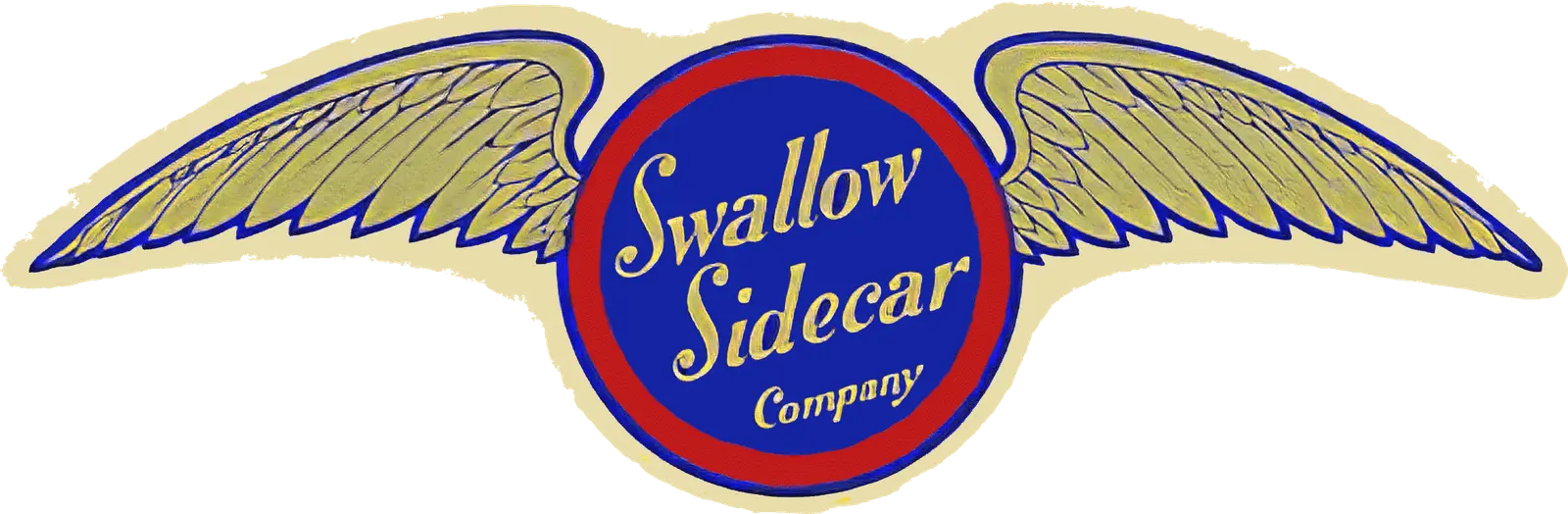
1922–1935
Sidecars first — Lyons and Walmsley’s winged Swallow roundel.
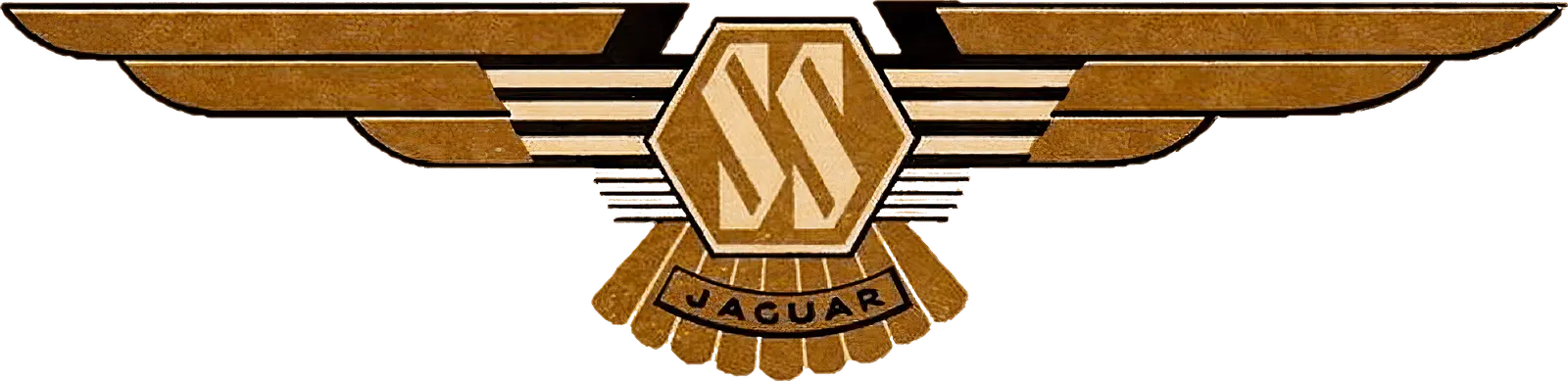
1935–1945
SS Jaguar: the cat name arrives above the hexagon.
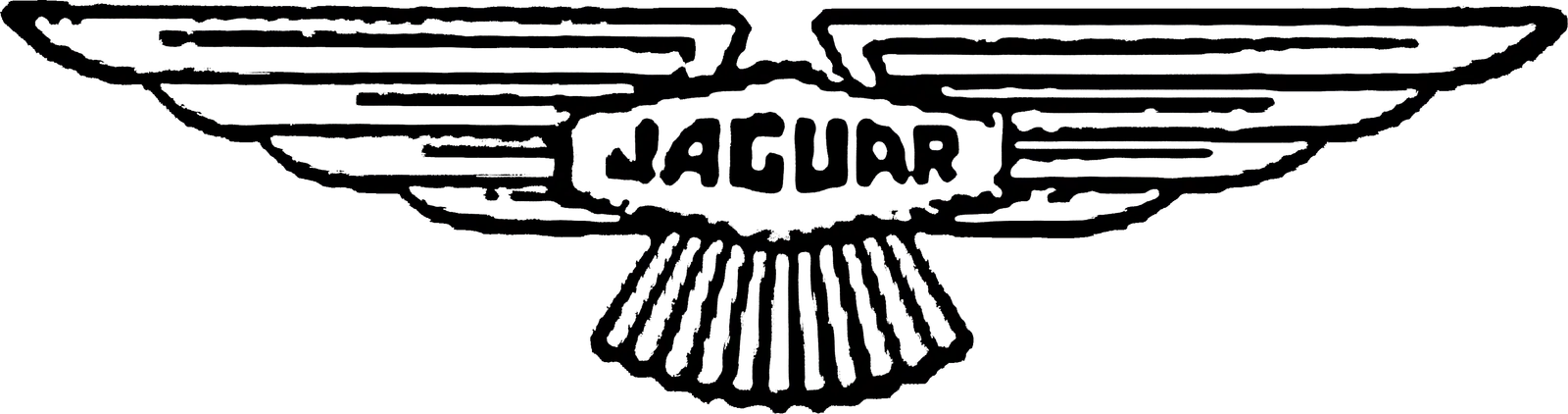
1945–1951
The initials go — shareholders vote SS off the badge in 1945.
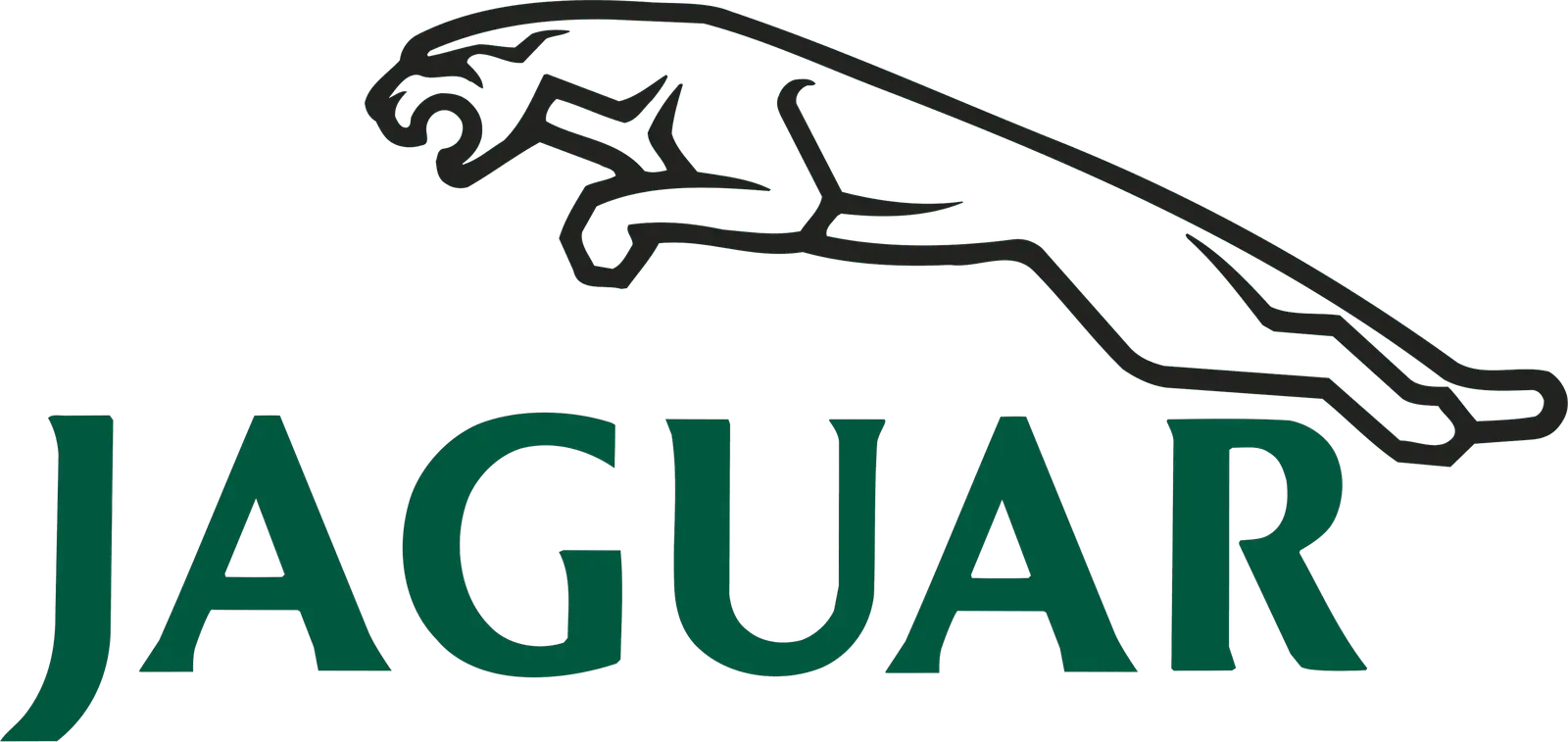
1982–2001
The wordmark in British Racing Green — type carries the brand.
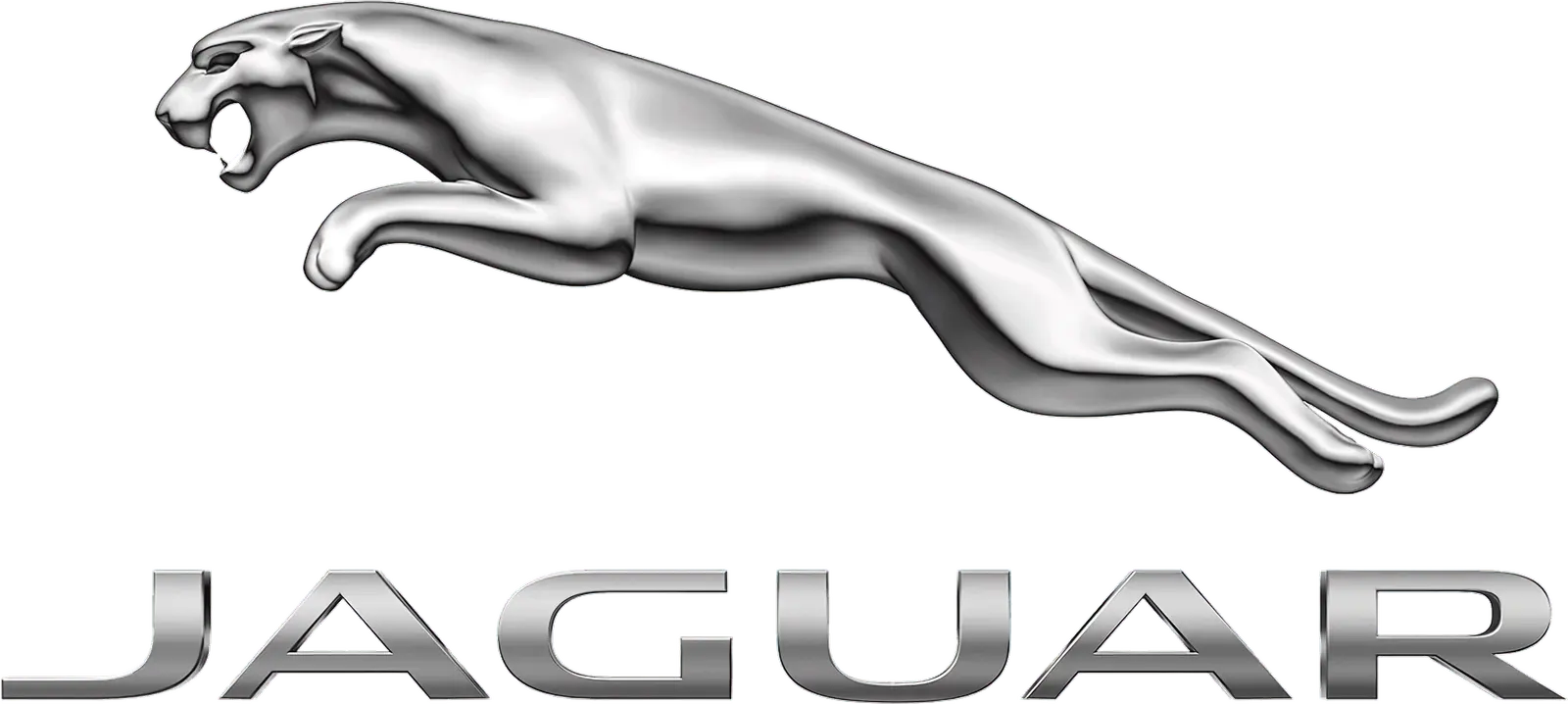
2012–2021
Crosby’s leaper, polished to metal, becomes the logo itself.
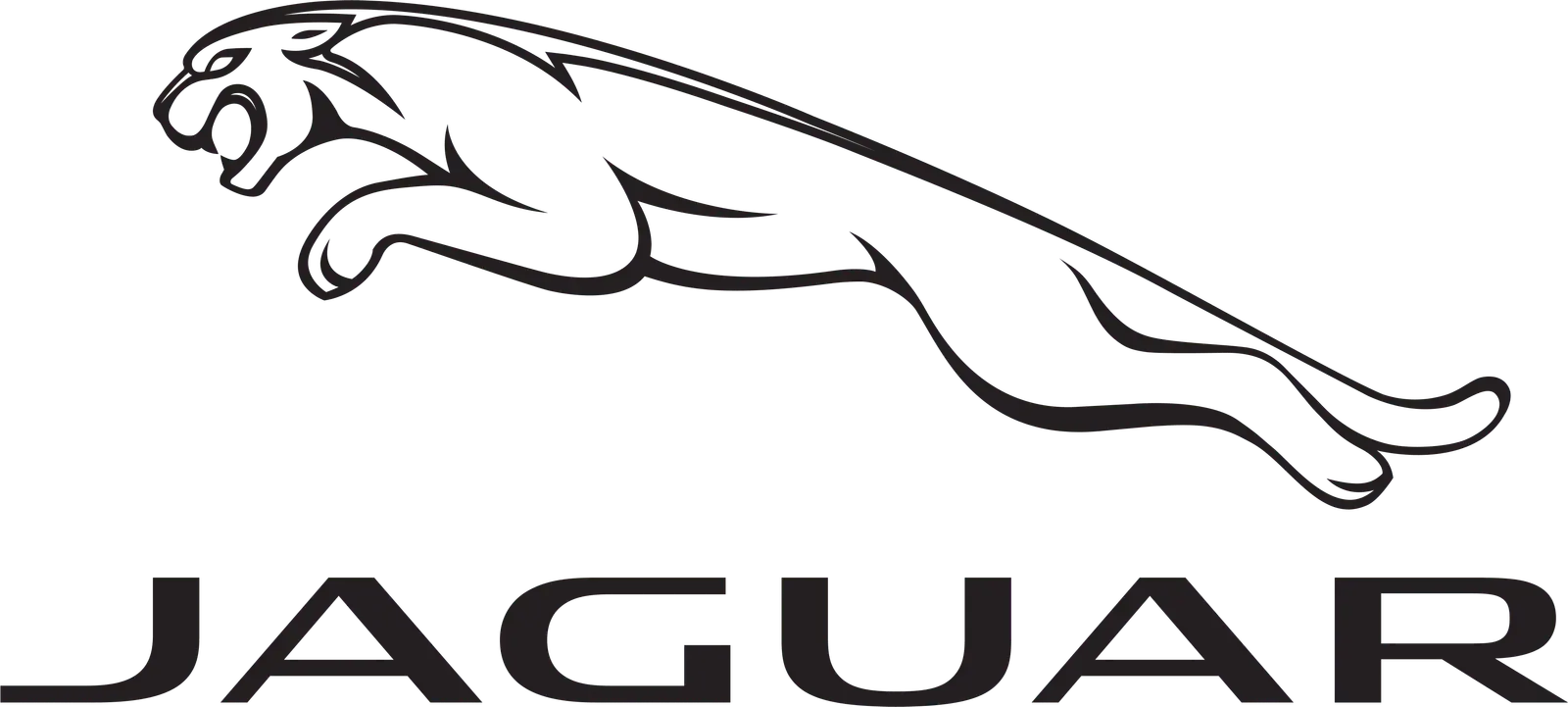
2021–2024
Flattened for screens — the leaper’s last cut before the 2024 rebrand.