Reduce mass at the component
The Type era used hollow axles and integrated wheels; the EB110 and modern cars use carbon structures.
Molsheim, France · est. 1909
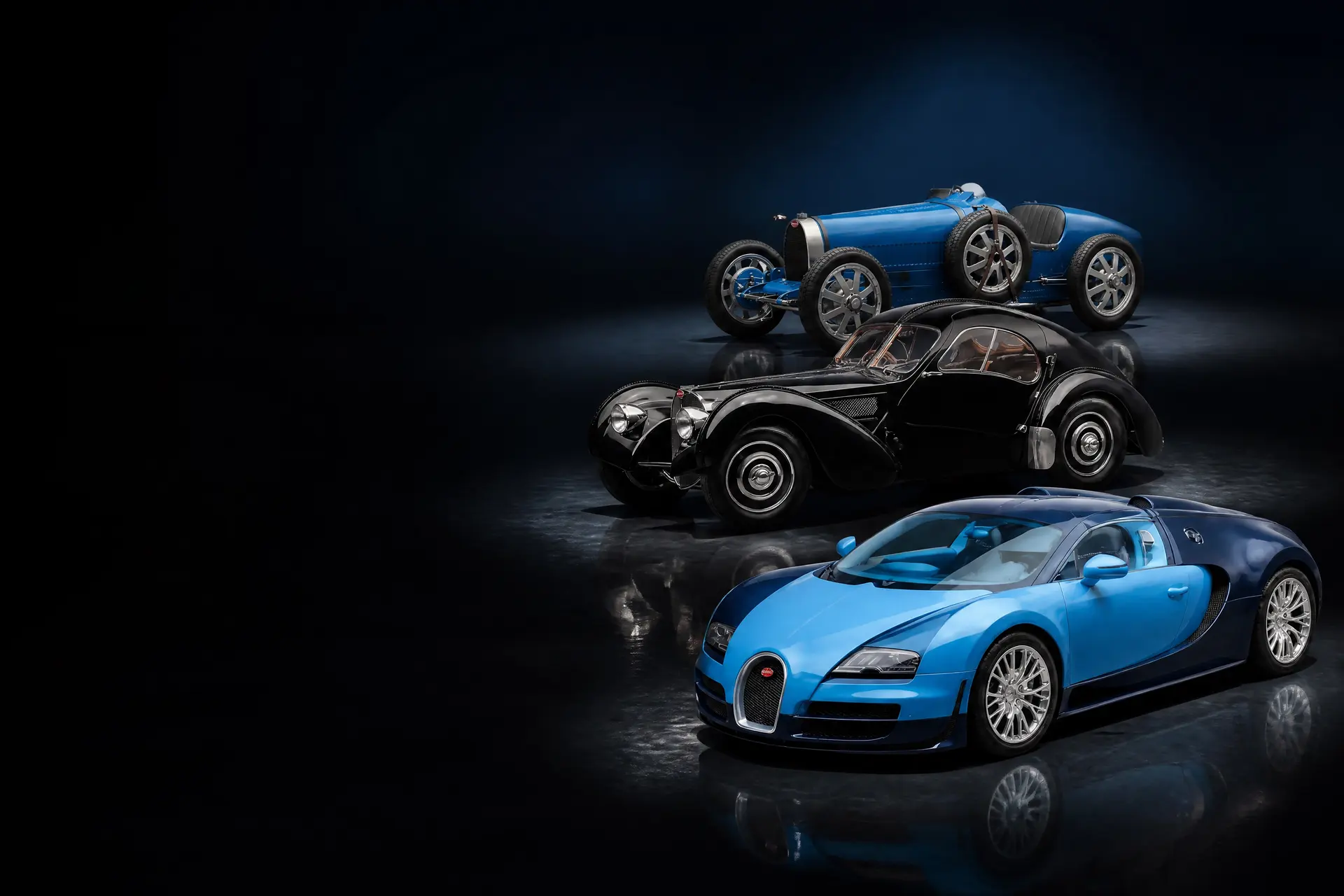
Three production eras, each defined by low-volume engineering.
Curated entry points
Three cars that explain the manufacturer: its origins, its engineering peak and the shape of its modern ambition.
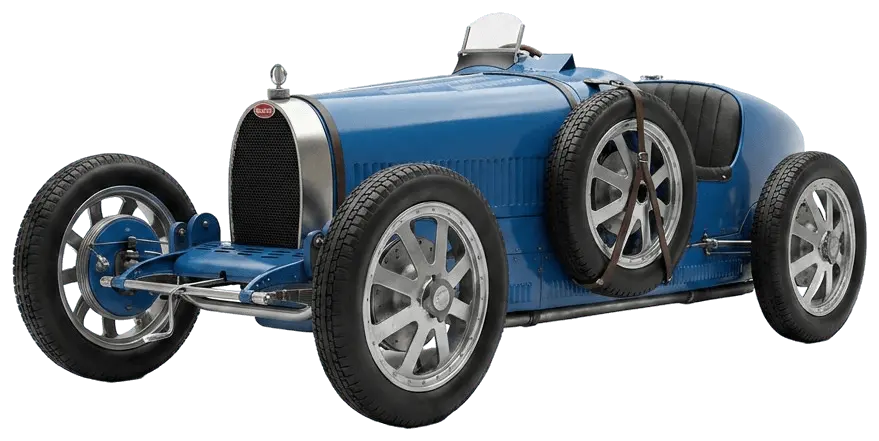 1924–1930
The most successful racing car ever — thousands of wins.
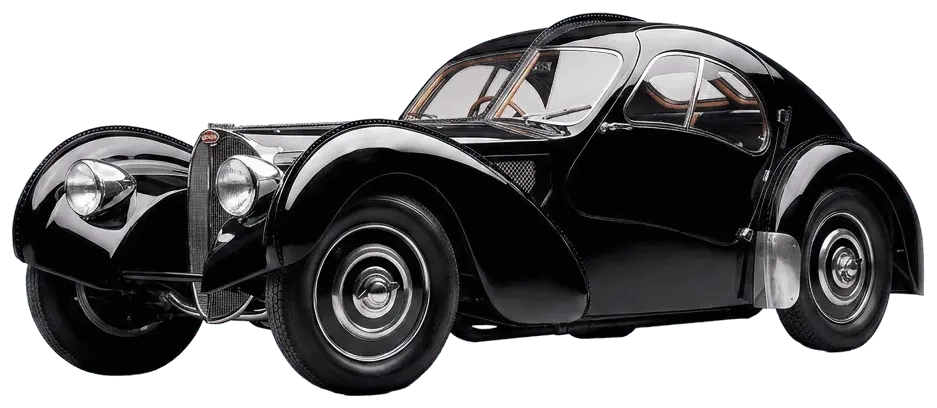 1936–1938
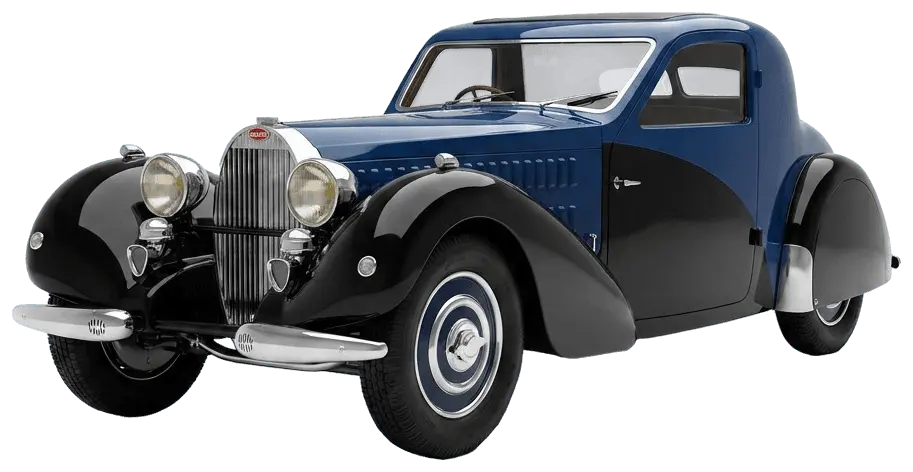
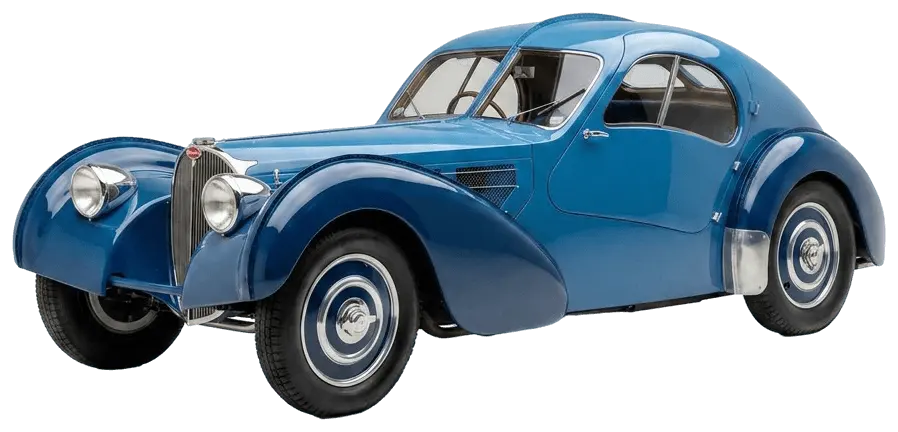
Riveted-spine coupé, four built — the holy grail.
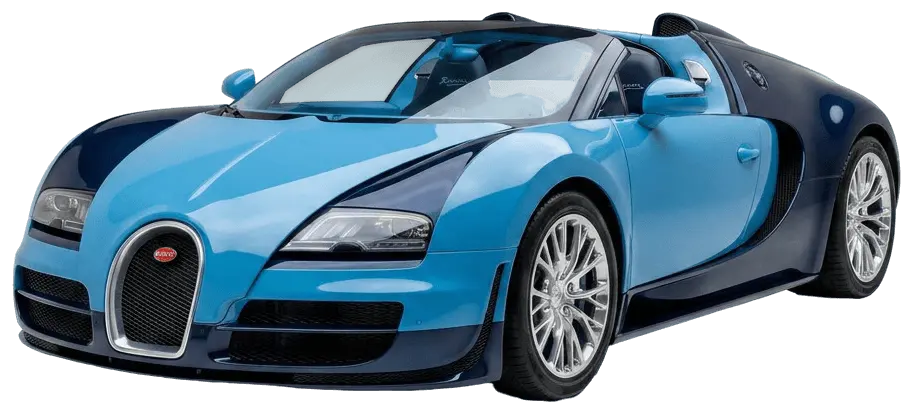 2005–2015
1,001 hp W16 — the first road car past 400 km/h.
Complete catalogue
14 models · 3 families
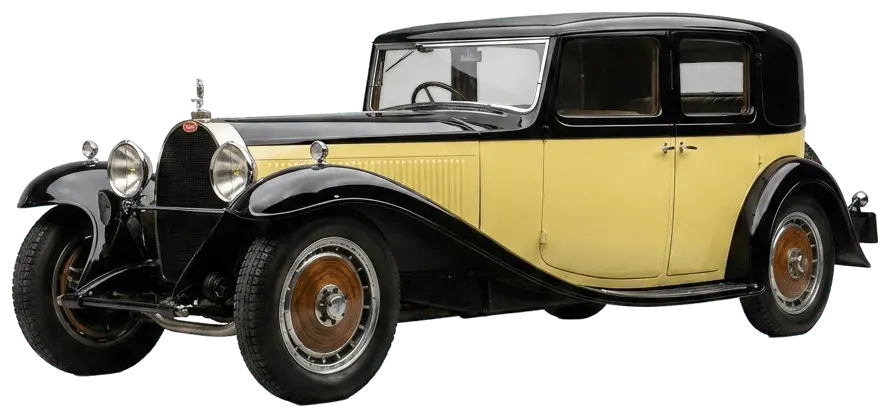
The cars Ettore Bugatti built in Molsheim between the wars — the dominant Grand Prix Type 35, the impossible Royale, and the Type 57 family crowned by the Atlantic. The very top of the vintage market.
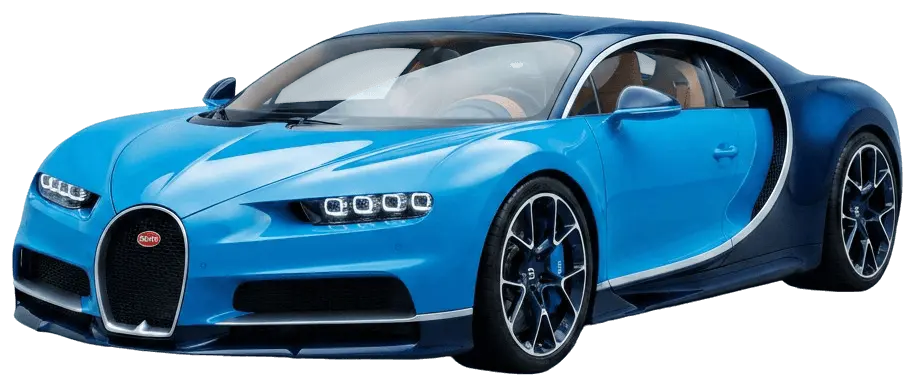
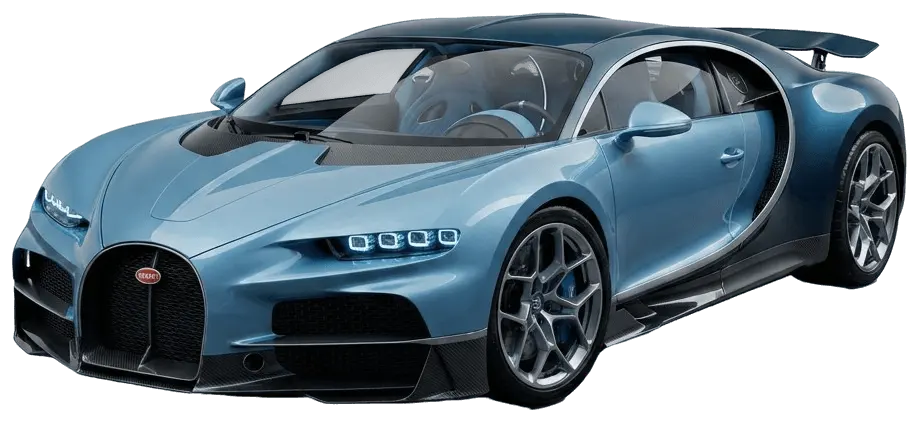
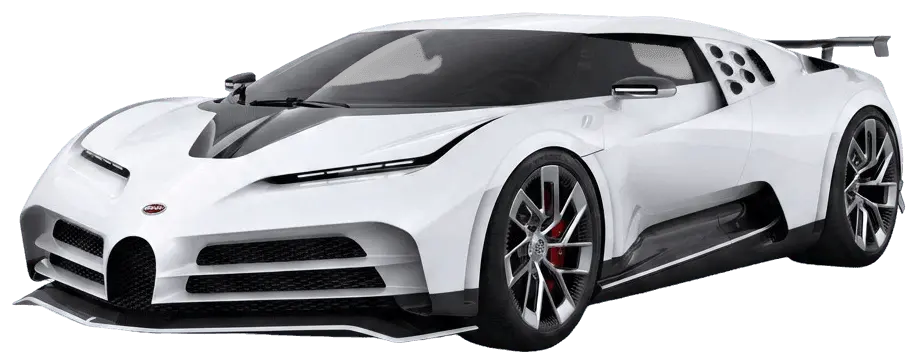
The line that brought the name back — from the Campogalliano EB110 to the W16 era of Veyron and Chiron, and on to the Tourbillon. Each one the fastest, most extreme road car of its day.
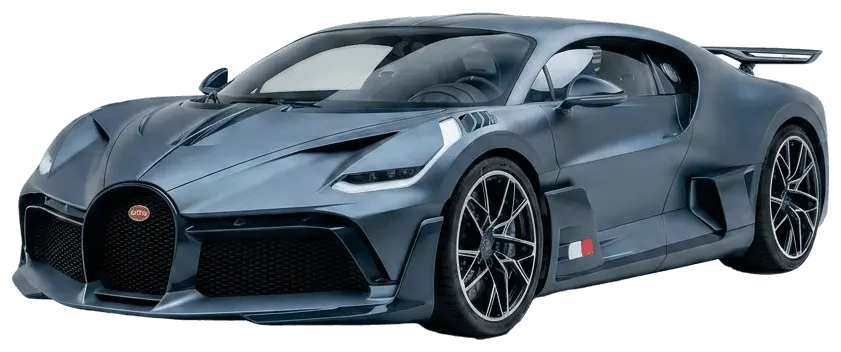
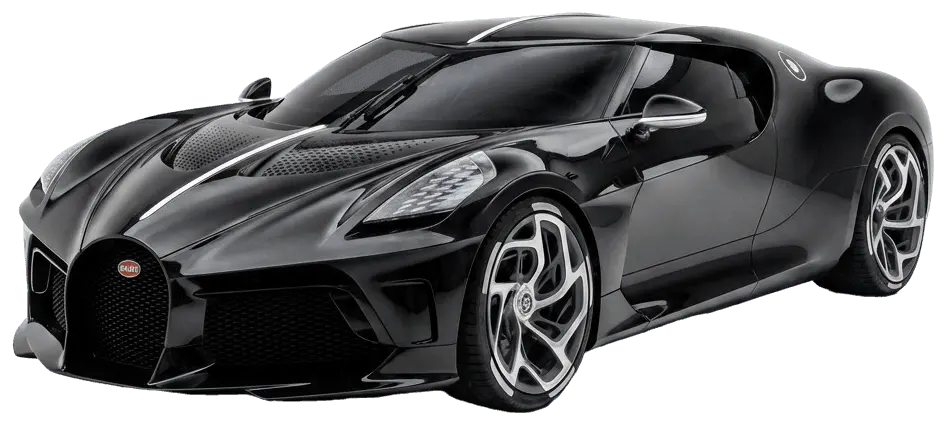
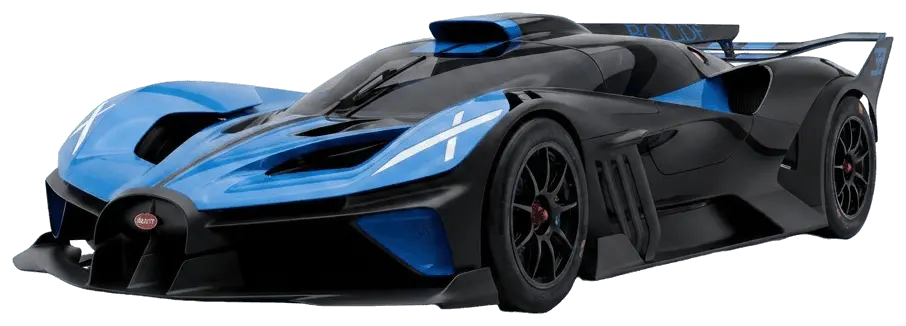
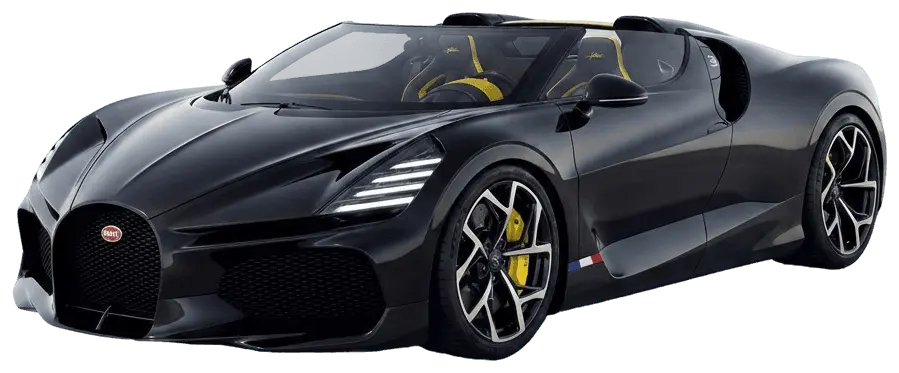
The Chiron-era specials built in tiny runs or for a single client — track weapons, design tributes and the great one-offs. By definition the rarest cars Molsheim makes.
The house
Ettore Bugatti built cars the way a jeweller sets stones — every casting finished by hand, every line drawn for beauty before function. From the little Molsheim works came the Type 35, the most successful racing car of its era, and the colossal Type 41 Royale, of which only six were ever made.
The Type 57 SC Atlantic is the high-water mark: a riveted-spine coupé of which just four were built, and the car most often called the most valuable in the world. When the original company faded after the war, the name carried a weight no successor could ignore.
Volkswagen reinvented Bugatti for the modern age with the Veyron — a 1,001 hp, quad-turbo W16 that rewrote what a road car could do — and the Chiron that followed. Today, under Rimac, the marque builds the Tourbillon and a stream of coachbuilt one-offs that sell out before they are shown.
Selected milestones
1909
The Molsheim company
Ettore Bugatti establishes his own automobile company in Molsheim.
1924
Type 35
The new Grand Prix car debuts at Lyon with cast-aluminium wheels and integrated brake drums.
1934
A common Type 57 base
Jean Bugatti consolidates the road-car range around one base model offered with different engines and bodies.
1991
The Campogalliano return
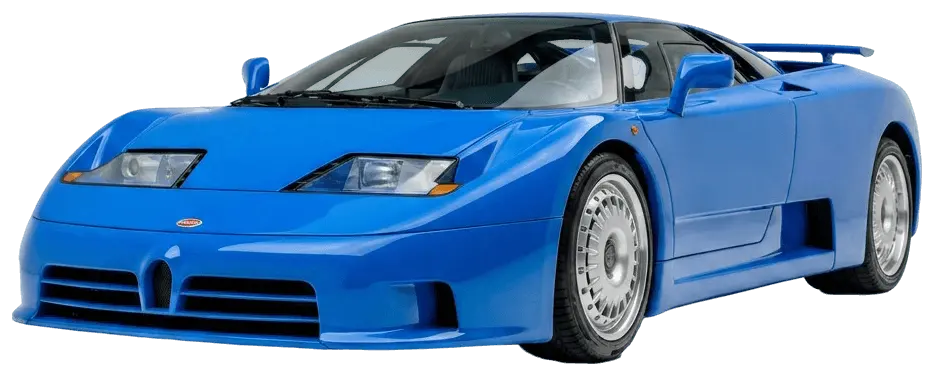
The EB110 brings the name back to production with a carbon monocoque, quad-turbo V12 and all-wheel drive.
2005
Veyron production begins
The 1,001 PS Veyron enters production at the new Molsheim Atelier after recording 407 km/h.
2024
A V16 hybrid platform
The Tourbillon is unveiled with a naturally aspirated 8.3-litre V16 and three electric motors in place of the W16 platform.
What defines Bugatti
The Type era used hollow axles and integrated wheels; the EB110 and modern cars use carbon structures.
The road cars combine high-speed engineering with the cooling, braking and cabin requirements of sustained road use.
Limited production and detailed factory configuration make exact identity central to collecting the later cars.
The hands
One name in the register stands behind this manufacturer. Their own file follows the work wherever it went.
The mark
Molsheim, 1909: Ettore Bugatti fixes an enamelled oval to the radiator of the Type 13, his first car under his own name. The design is family work — his father Carlo, celebrated maker of Art Nouveau furniture and jewellery, is its presumed hand, and it shows: sixty pearls set around a red oval, the reversed-E-and-B monogram above the name.
No badge in the industry is more literally jewellery: today’s macaron is struck in solid 970 sterling silver by a Bavarian mint. Through five owners and a half-century pause, the oval itself has barely changed.
Attributed to Carlo Bugatti, 1909 — the founder’s father
1909–1963
The macaron: red oval, sixty pearls, the reversed-E monogram above the name.
1963–2007
New owners, same badge — proportions tightened, the monogram enlarged.
2007–2015
The Veyron era: deeper crimson, a cooler rim, more compact type.
2015–2022
Rendered as metal — silver rim, gradients, the pearls cut through.
2022–
Interbrand flattens the macaron for the Rimac era; the oval itself stays put.