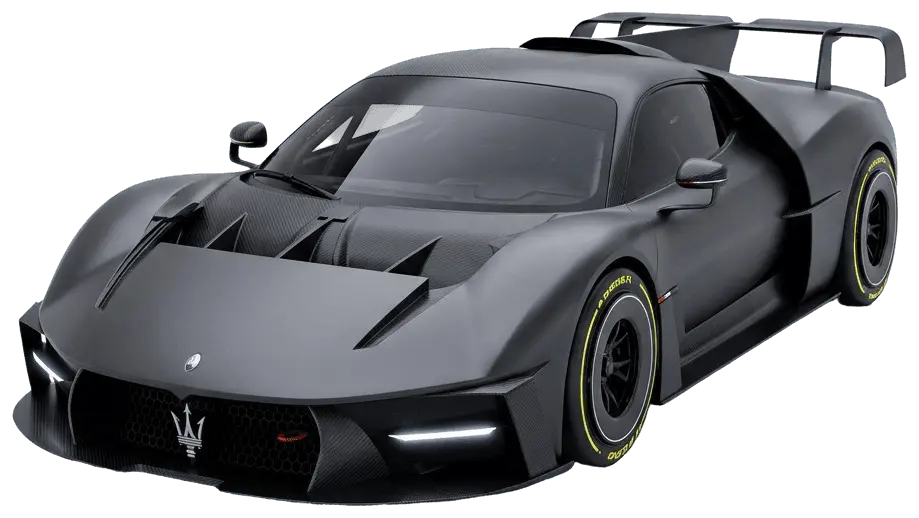
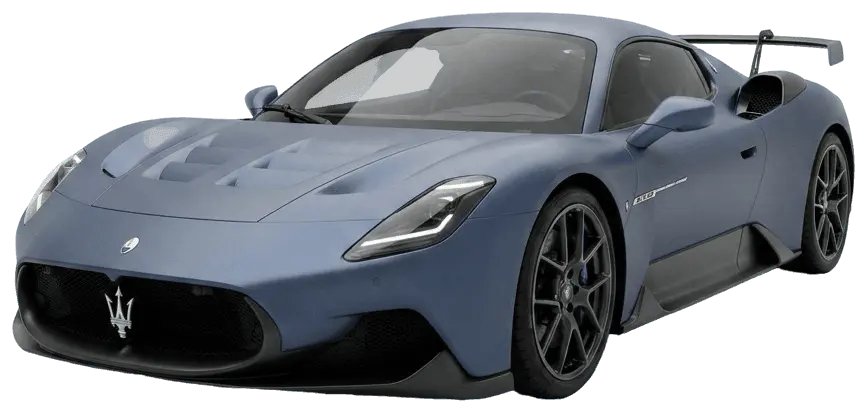
Competition informs the road cars
The 3500 GT reused a 350S engine lineage, the MC12 homologated a GT1 programme, and the MC20 brought pre-chamber combustion into series production.
Modena, Italy · est. 1914
The racing cars established the method; the grand tourers established the market.
Curated entry points
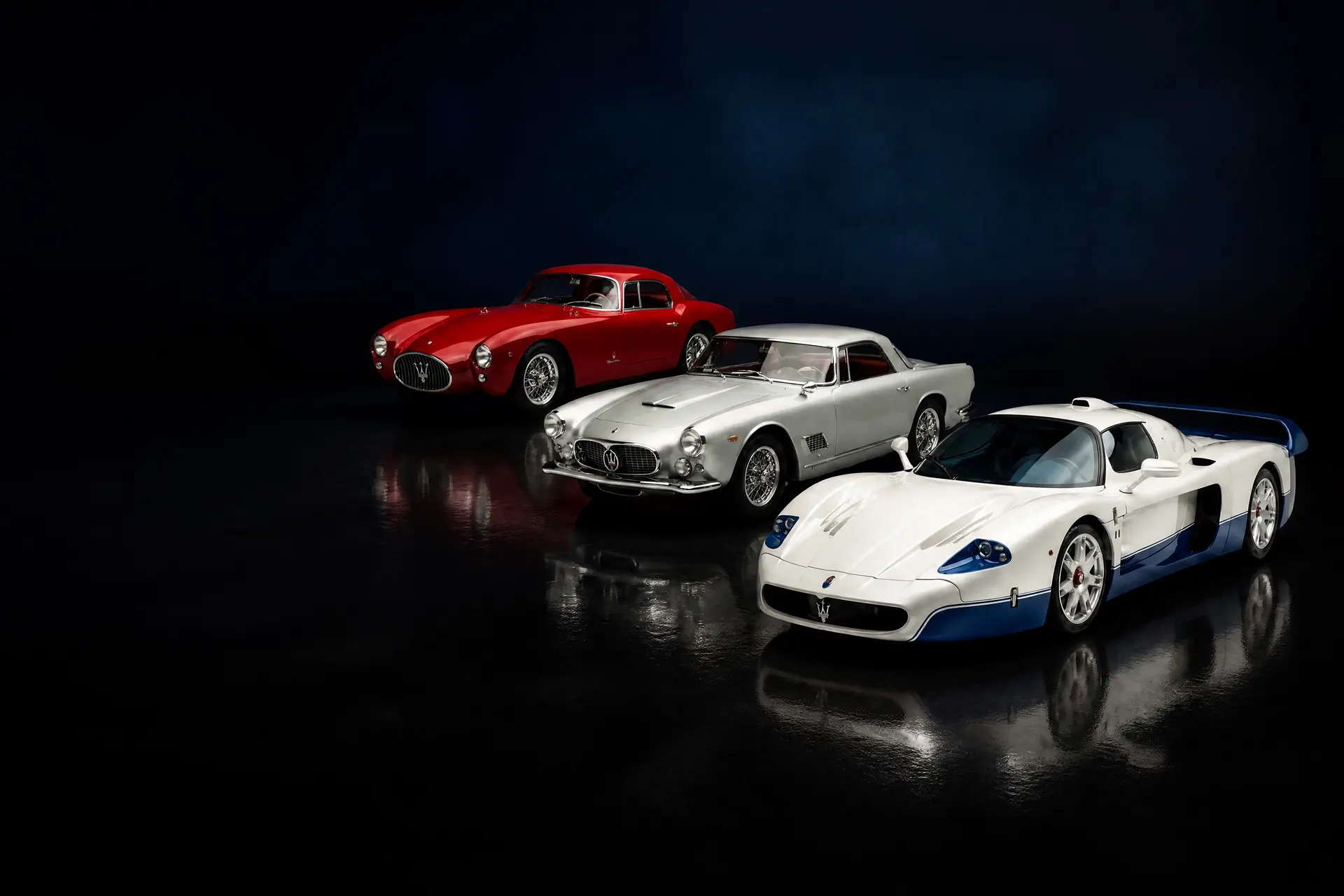
Three cars that explain the manufacturer: its origins, its engineering peak and the shape of its modern ambition.
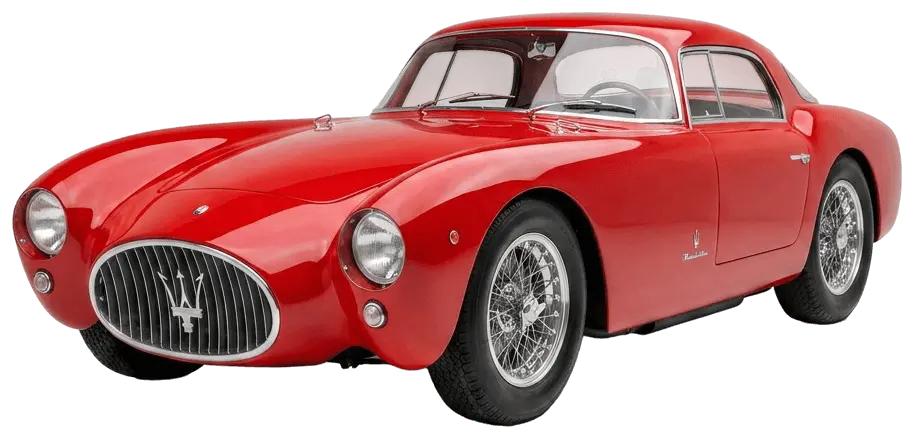 1953–1955
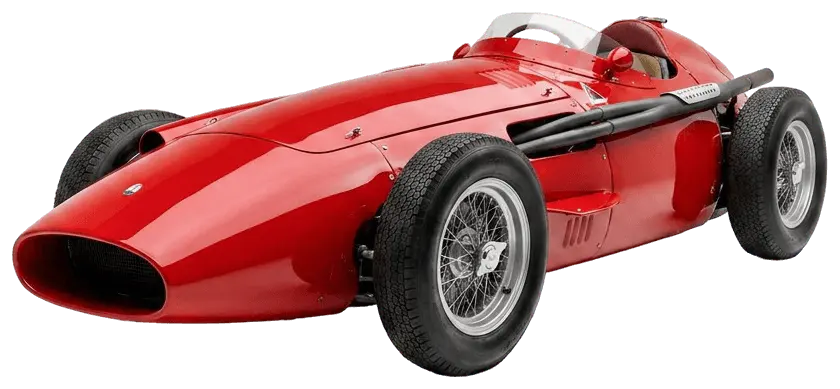
The works sports racer; the Pinin Farina berlinetta is a blue-chip jewel.
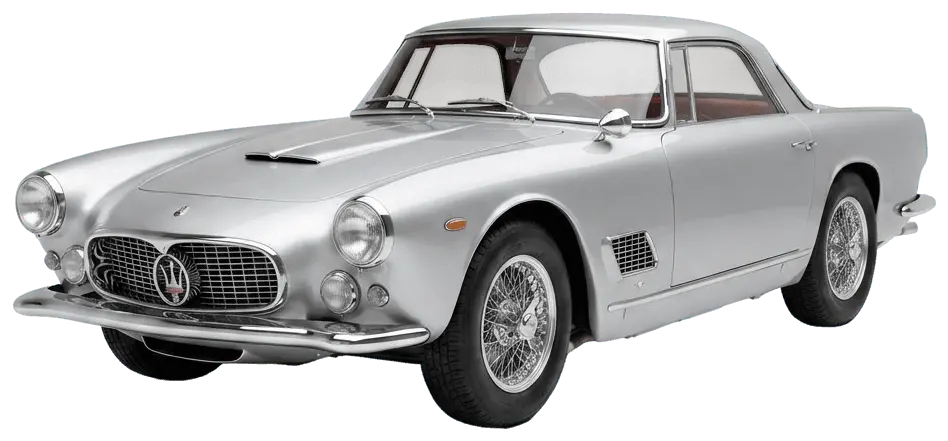 1957–1964
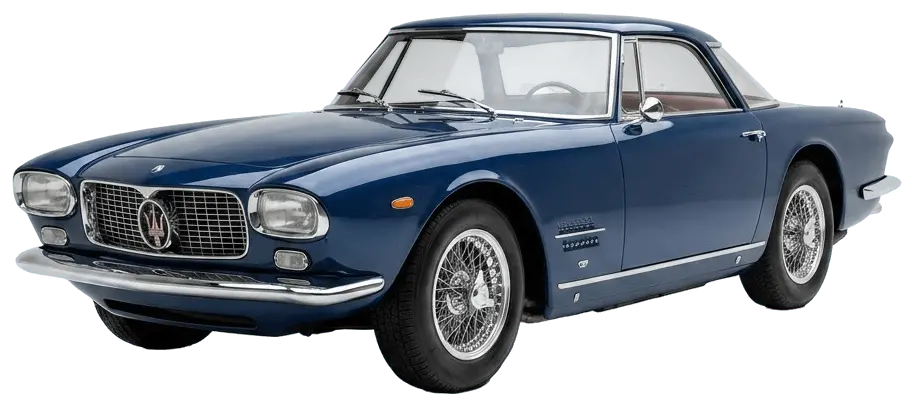
The first series-built road Maserati — a Touring grand tourer.
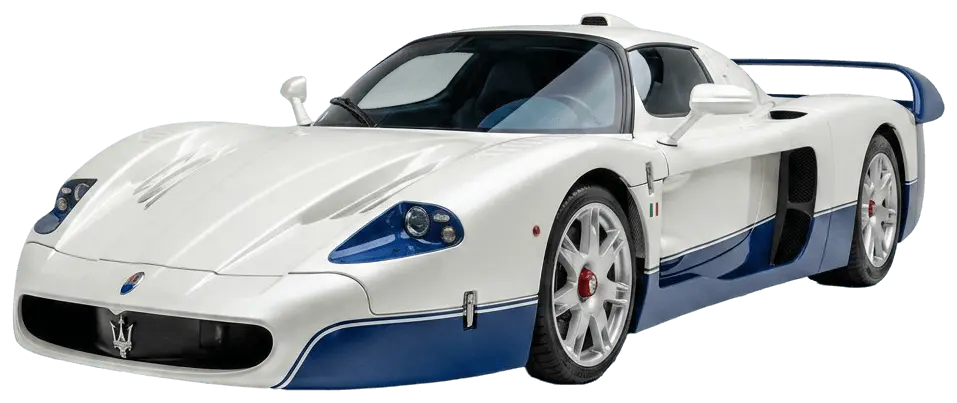 2004–2005
The Enzo-based GT1 homologation car; 50 road Stradales built.
Complete catalogue
13 models · 3 families
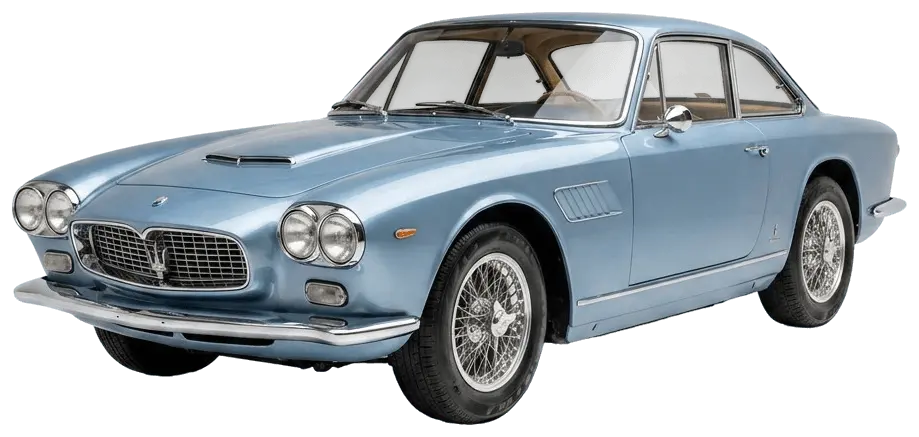
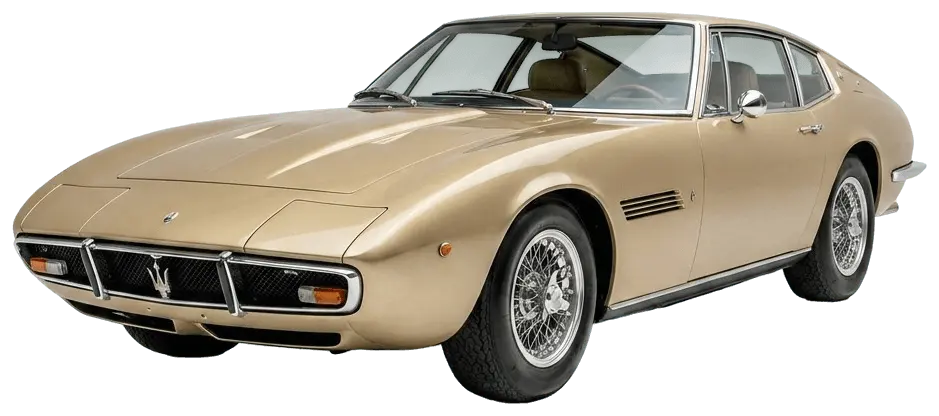
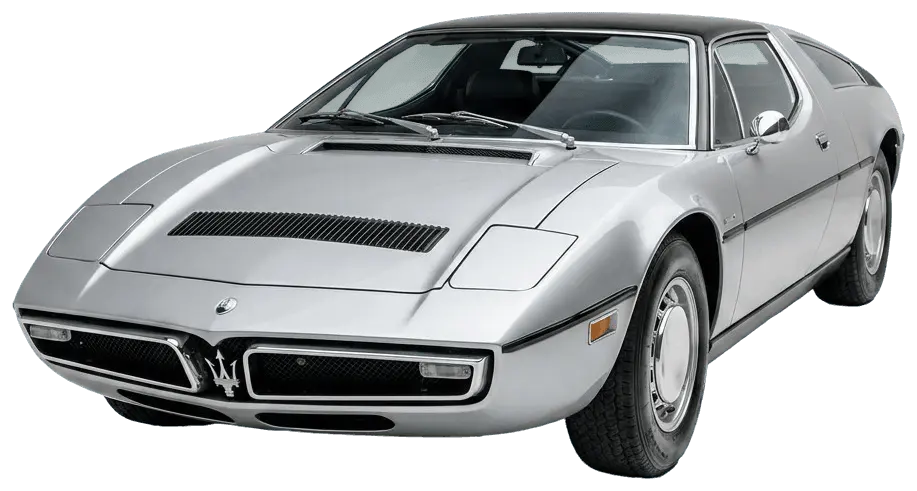
The cars that built the name — the A6GCS and 250F that raced at the front, and the 3500/5000 GT, Ghibli and Sebring grand tourers that turned competition pedigree into the prettiest berlinettas in Modena.
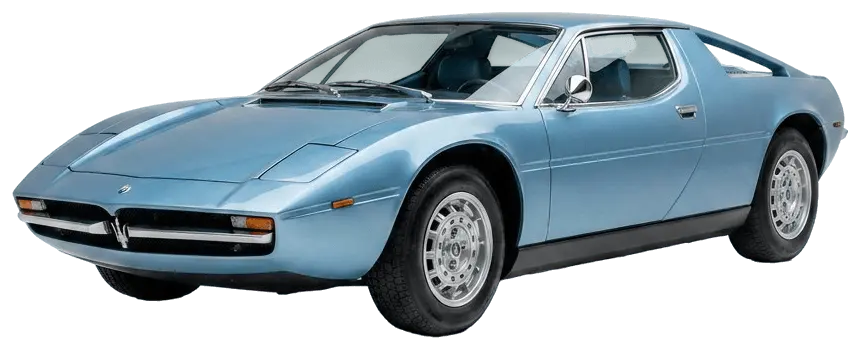
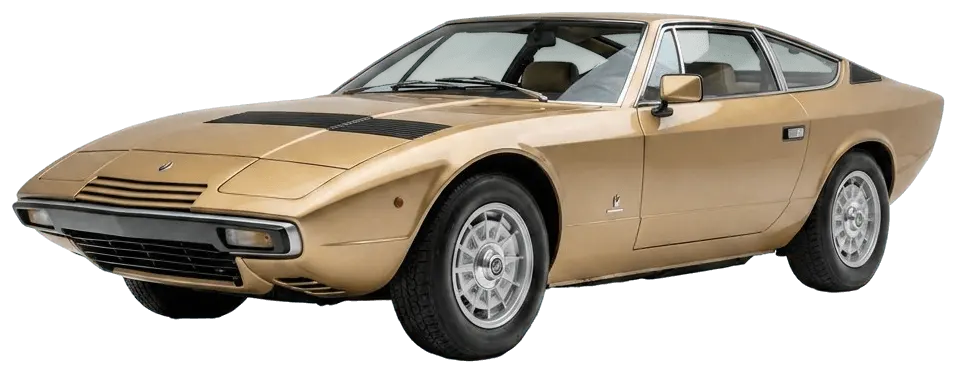
Maserati’s answer to the mid-engined revolution under Citroën ownership — Giugiaro’s Bora and Merak and Bertone’s Khamsin, sharp-edged 1970s exotics with Modena V6 and V8 power.
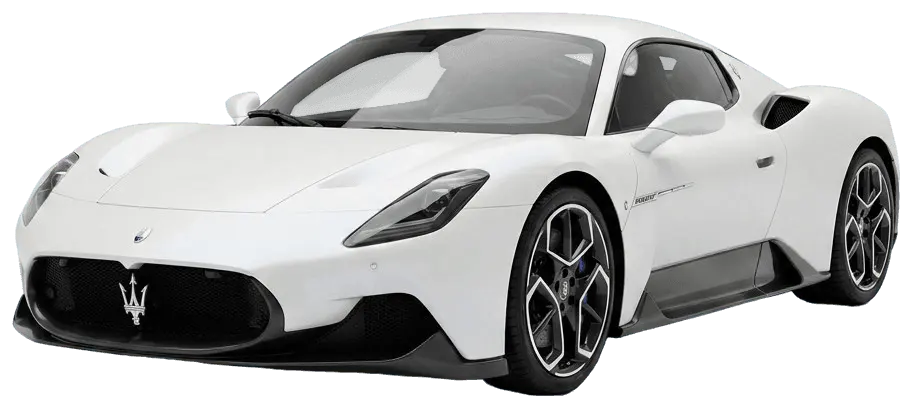
The cars that put the Trident back at the top — the Enzo-derived MC12 that swept the FIA GT championship, and the clean-sheet MC20 with its Nettuno V6 that reopened the supercar line.
The house
Founded in Bologna in 1914 by the Maserati brothers, the marque took its badge from Neptune’s trident on the Fountain of Bologna. Racing came first: the 250F won on debut in Argentina in 1954 and carried Fangio to the 1957 world title, one of the most revered front-engined Grand Prix cars ever built.
Through the 1950s and 60s the road cars turned coachbuilt grand tourers — the 3500 GT, the Ghibli, the Sebring — into some of the most elegant berlinettas in Italy. The wedge era that followed gave the Citroën-owned firm the mid-engined Bora, Merak and Khamsin, the Trident’s answer to the supercar.
In 2004 the MC12 took the marque back to the top: a Enzo-derived GT1 racer that swept the FIA GT championship. Two decades on, the MC20 and its Nettuno V6 reopened the same chapter — a clean-sheet supercar that put Maserati back among the halo makers.
Selected milestones
1914
The Bologna workshop
Alfieri, Ettore and Ernesto Maserati establish Ditta Alfieri Maserati, initially preparing Isotta Fraschini cars for competition.
1926
The first Trident car
The Tipo 26 becomes the first car to carry the Trident and wins its class on its Targa Florio debut.
1947
The first road car
The A6 1500 opens Maserati's road-car programme as the founding brothers' formal collaboration with the company ends.
1957
Series production replaces works racing
The 3500 GT combines Touring coachwork with a 350S-derived straight-six as Maserati withdraws as a factory racing entrant.
1971
A mid-engined road car
The Bora debuts at Geneva as Maserati's first rear-mid-engined road model; 564 are built through 1978.
2004
A homologation-led return
The road-going MC12 is created to homologate Maserati's GT1 programme; 50 are produced across 2004 and 2005.
2020
An in-house powertrain again
The MC20 restores Maserati engine development and production after more than twenty years, pairing the Nettuno V6 with a carbon-fibre monocoque.
What defines Maserati
The 3500 GT reused a 350S engine lineage, the MC12 homologated a GT1 programme, and the MC20 brought pre-chamber combustion into series production.
Touring, Pinin Farina, Vignale, Frua, Ghia and Bertone gave related Maserati chassis distinct bodies; builder, specification and original configuration therefore matter.
Maserati's road-car baseline is the gran turismo: sustained speed paired with usable torque, cabins and long-distance comfort.
The hands
4 names in the register stand behind this manufacturer. Each has a file of their own, following the work wherever it went.
The mark
Bologna, the mid-1920s: the Maserati brothers build racing cars — all but Mario, the family’s painter, who is asked for a badge instead. The idea comes from a friend of the house, Marchese Diego de Sterlich: take the trident from Giambologna’s Neptune, the bronze in the city’s main square.
Mario’s drawing went racing in 1926 on the first car to carry the family name, the Tipo 26 — class winner in the Targa Florio at its first attempt. The company left Bologna for Modena in 1940; Neptune’s trident stayed on the nose.
Mario Maserati, 1926 · after Giambologna’s Neptune, Bologna
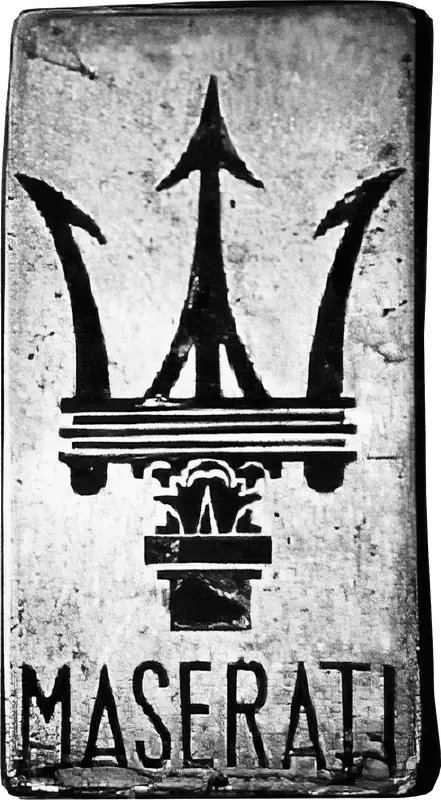
1926–1937
Mario’s first plate, screwed to the Tipo 26 — a class win in the Targa Florio on debut.
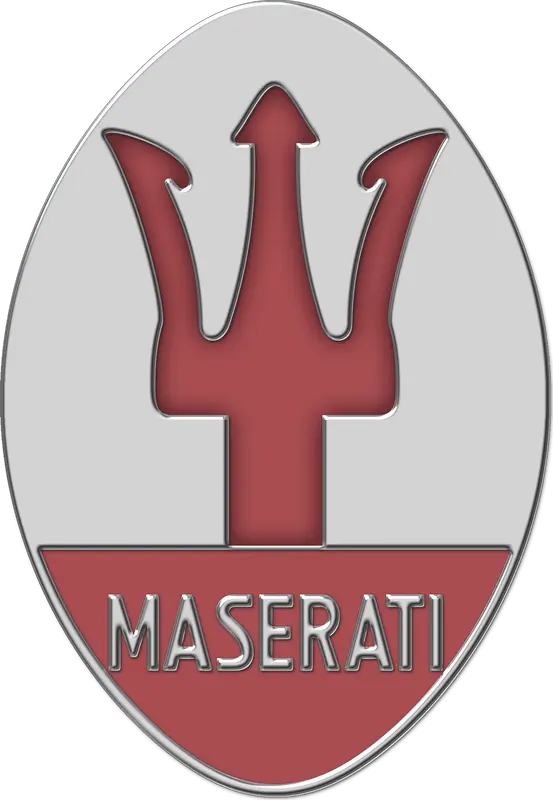
1937–1943
The oval arrives with Orsi ownership — red trident on polished metal.
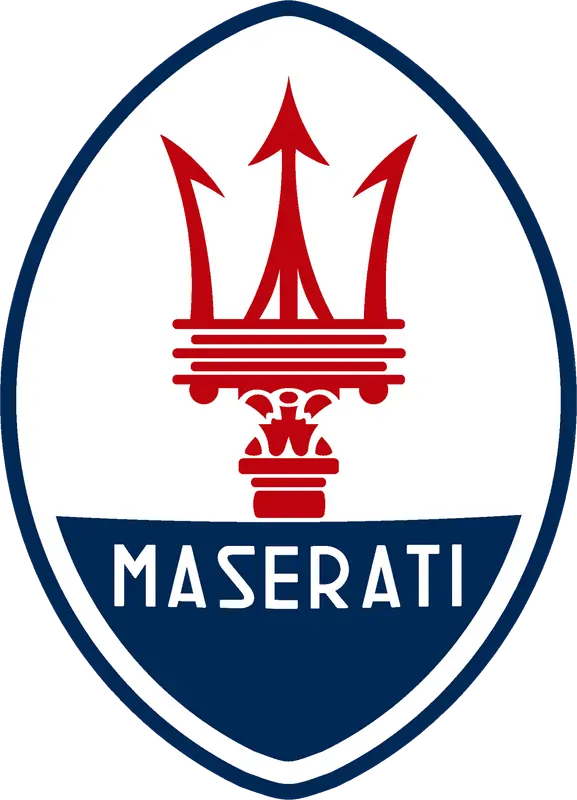
1954–1983
The classic cut — white and blue, the name set on its navy band.
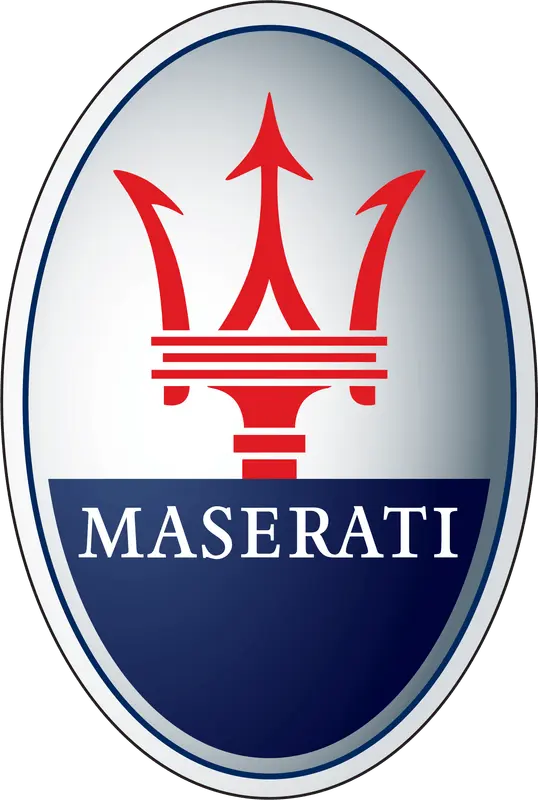
2006–2015
Drawn into three dimensions — chrome, shadow and a sharpened trident.

2020–
Flat black for the screen age: the trident pared back, the longhand script beneath.