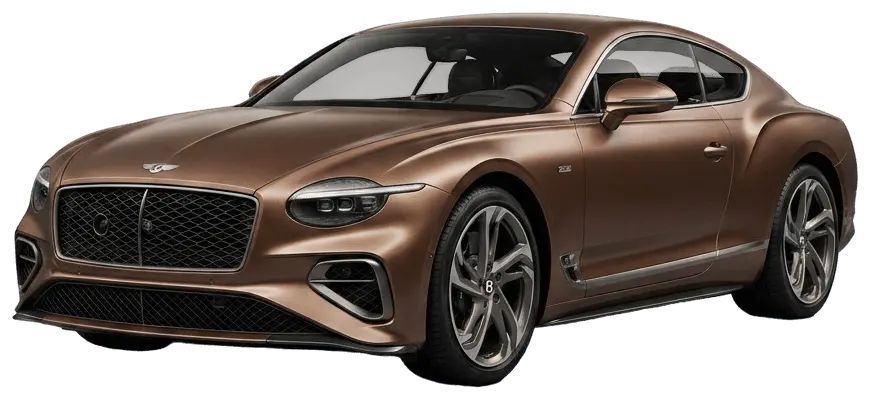
Torque before revs
Bentley engines are developed to deliver sustained pace and useful output from low engine speeds.
Crewe, England · est. 1919
Endurance engineering became a line of high-speed grand tourers.
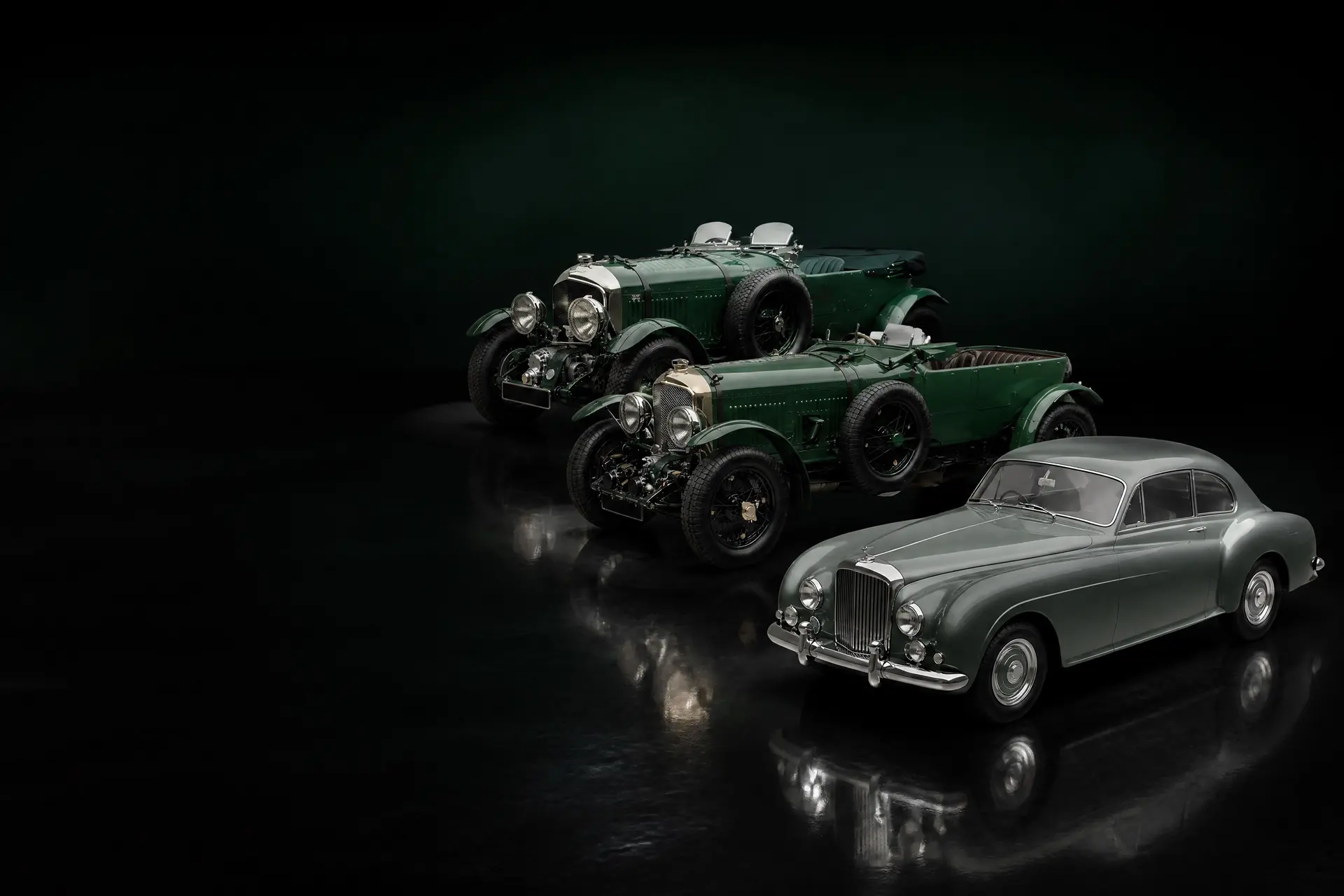
Curated entry points
Three cars that explain the manufacturer: its origins, its engineering peak and the shape of its modern ambition.
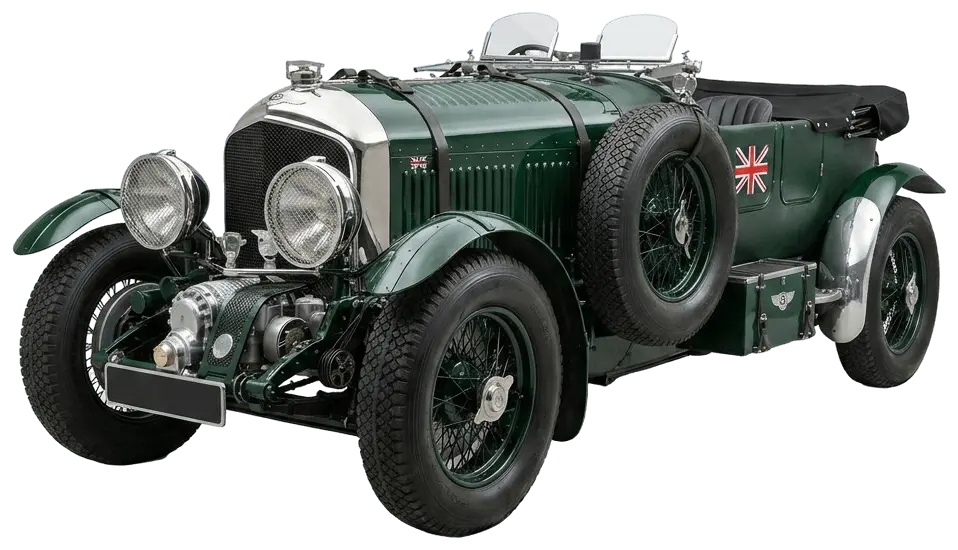 1929–1931
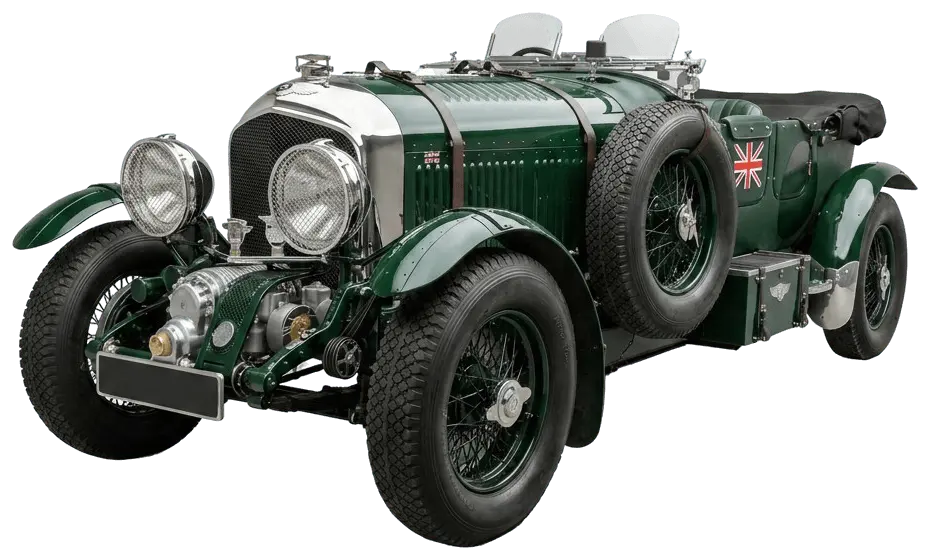
Birkin’s supercharged icon — the most romantic Bentley of all.
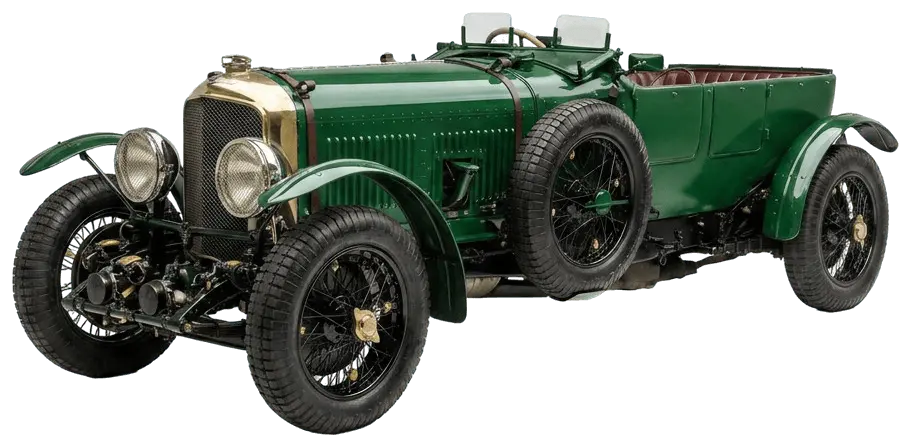 1928–1930
The most successful racing Bentley — back-to-back Le Mans wins.
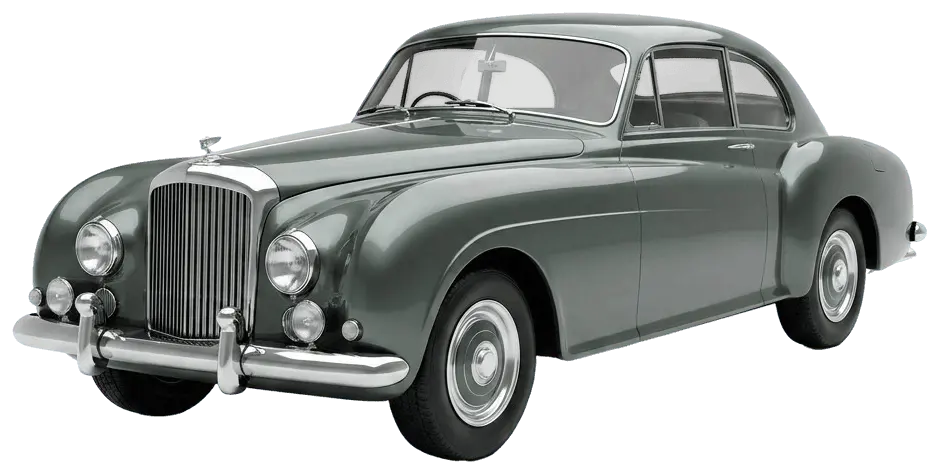 1952–1955
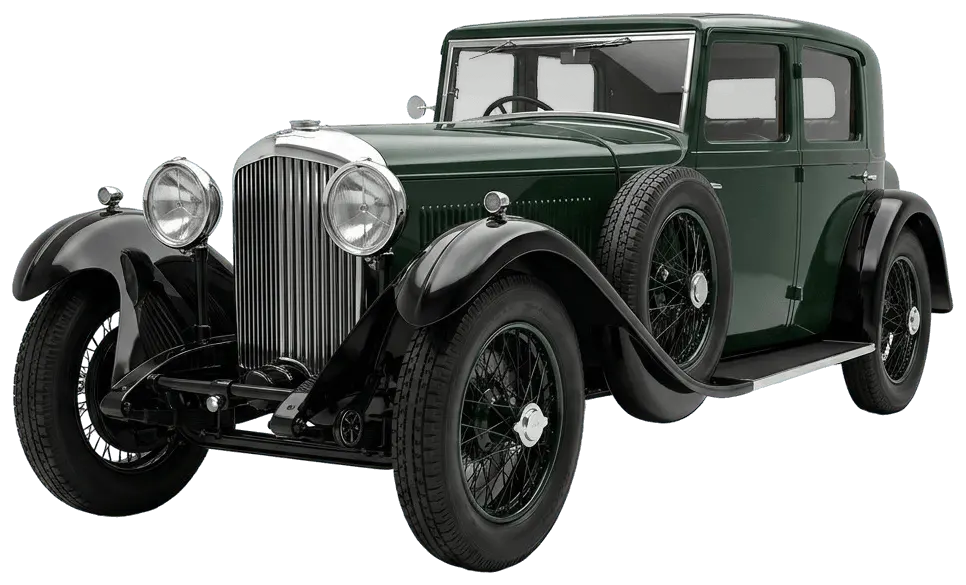
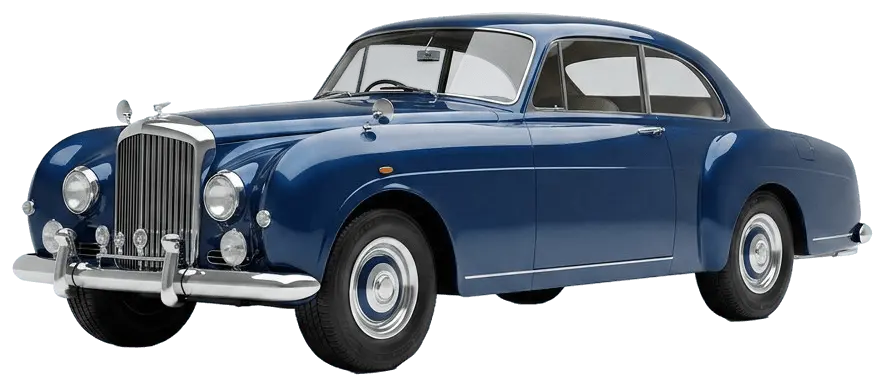
The fastest four-seater of its day; a fastback masterpiece.
Complete catalogue
11 models · 3 families
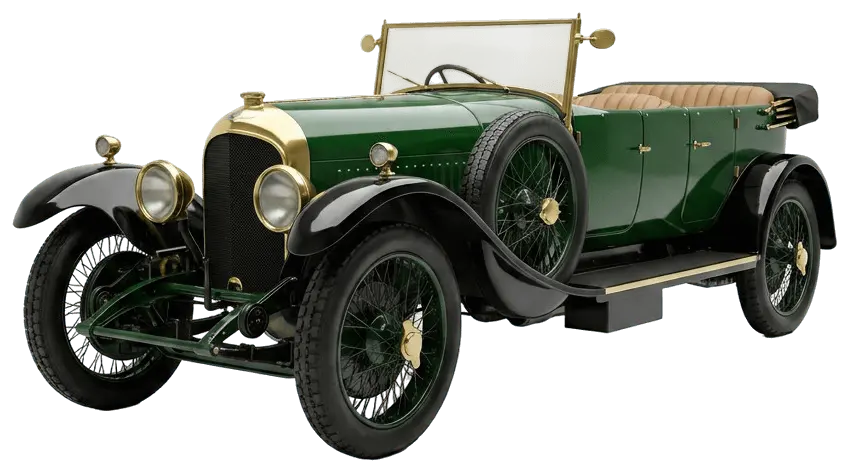
The cars W.O. Bentley built between the wars — vast, torquey machines that took the Bentley Boys to five wins at Le Mans. The blue-chip core of any pre-war collection.
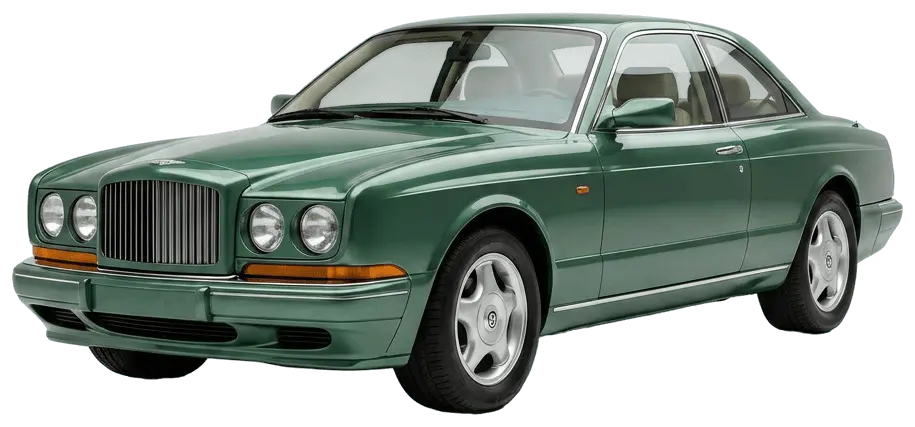
The cars that carried the name through the Rolls-Royce years — the R-Type Continental was the fastest four-seater on earth, and the Continental R revived a great badge.
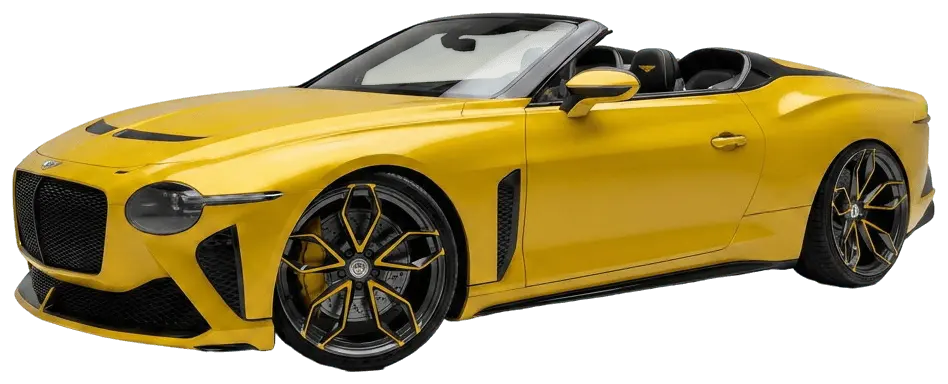
Bentley’s in-house coachbuilder at full craft — bespoke, open-top specials built in runs of barely more than a dozen, each tailored to its single owner.
The house
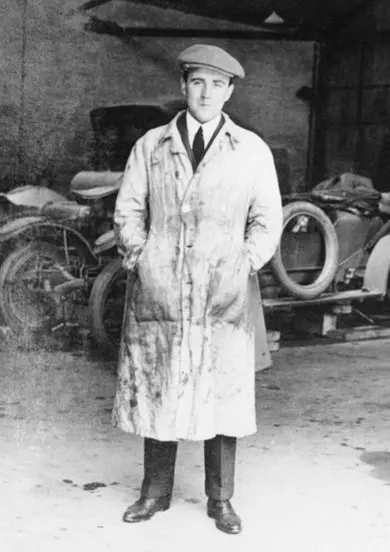
W.O. Bentley set out in 1919 to build “a fast car, a good car, the best in its class,” and his big, slow-revving engines did exactly that. Ettore Bugatti famously dismissed them as “the world’s fastest lorries” — and then watched them win.
The Bentley Boys, a clutch of wealthy amateur racers, drove the green cars to five Le Mans victories between 1924 and 1930. Tim Birkin forced through the supercharged "Blower" against W.O.’s wishes; it never won the 24 Hours, but it became the most romantic Bentley of all.
After Rolls-Royce absorbed the marque the R-Type Continental carried the spirit forward as the fastest four-seater of its day. Today Mulliner — the in-house coachbuilder — has revived the craft with the Bacalar and Batur, hand-built specials in runs of barely more than a dozen.
Selected milestones
1919
Bentley Motors is founded
W.O. Bentley establishes the company in London and begins developing the 3 Litre.
1921
The first production Bentley is delivered
The first customer 3 Litre leaves in September, four months after EXP 2 gives Bentley its first race win at Brooklands.
1924
Le Mans becomes the proving ground
John Duff and Frank Clement win the 24 Hours in a 3 Litre, beginning the run of five Bentley victories in the decade.
1931
Rolls-Royce acquires Bentley
Financial difficulty ends the independent Cricklewood period; production subsequently moves to Derby.
1952
The Continental line begins
The H.J. Mulliner-bodied R-Type Continental establishes the light, high-speed four-seat Bentley as a distinct collector category.
1998
Volkswagen Group takes ownership
New investment in Crewe separates Bentley’s next product cycle from its long Rolls-Royce association.
2003
The modern Continental enters production
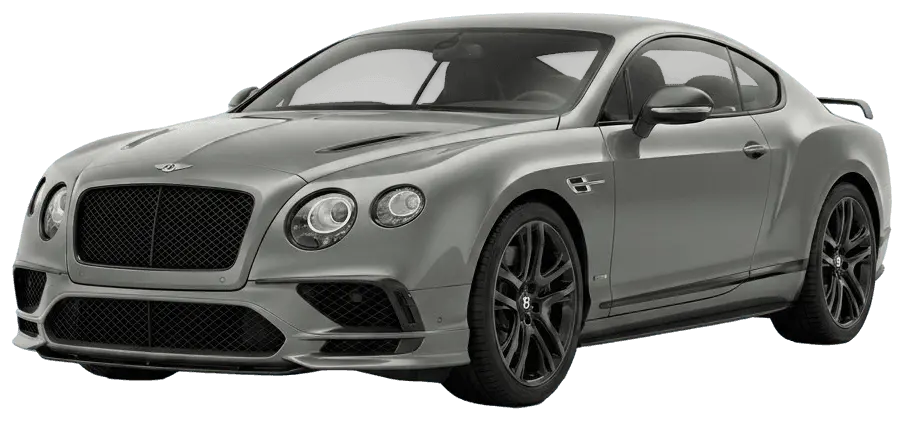
The Continental GT moves Bentley into higher-volume series production while returning the Continental name to the centre of the range.
2020
Mulliner returns to coachbuilding
The twelve-car Bacalar begins a new run of limited coachbuilt Bentleys.
What defines Bentley
Bentley engines are developed to deliver sustained pace and useful output from low engine speeds.
From the R-Type Continental onward, the central grand-tourer line combines high-speed ability with space for passengers and luggage.
Body maker, original configuration and matching chassis and engine records materially affect how a Bentley is understood and valued.
The hands
One name in the register stands behind this manufacturer. Their own file follows the work wherever it went.
The mark
London, 1919: W.O. Bentley needs a badge before his first car is finished, and F. Gordon Crosby — The Autocar’s great motoring illustrator — draws him a winged B by hand. Crosby’s quiet insurance policy: the wings do not match, a different feather count on each side, so that any forger copying them symmetrically would expose himself.
The wings have been redrawn only a handful of times in a century — under Rolls-Royce, under Vickers, under Volkswagen. The latest cut arrived in July 2025 from an internal competition won by interior designer Young Nam: falcon-sharp geometry, and the tail feathers gone for the first time.
F. Gordon Crosby, 1919 · redrawn by Young Nam under Robin Page, 2025

1919–1931
Crosby’s hand-drawn original — asymmetric feathers as built-in forgery protection.

1931–1991
Redrawn under Rolls-Royce ownership; the wings soften, the B slims.

1991–2002
The Vickers-era lightening: thinner lines, finer feathers — still mismatched.

2002–2025
The Volkswagen-era cut: sculpted silver feathers, the Continental GT’s badge.

2025–
Young Nam’s redraw — peregrine-sharp, diamond-cut, the tail feathers gone for the first time.