Technical solutions first
Lancia adopted structural and powertrain ideas early, from the Lambda's unitised body to the Aurelia's production V6.
Turin, Italy · est. 1906
Technical invention culminated in purpose-built homologation cars.
Curated entry points
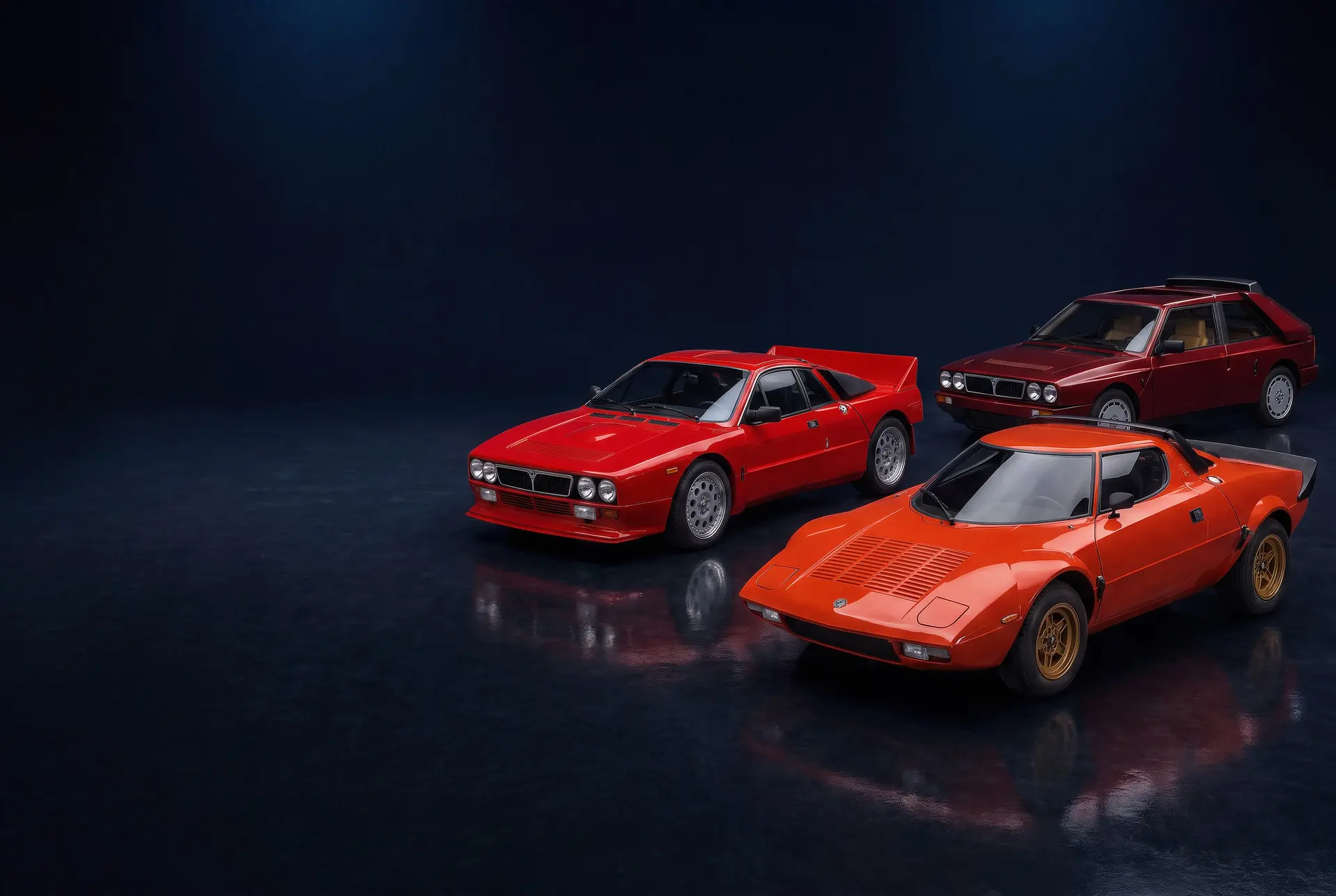
Three cars that explain the manufacturer: its origins, its engineering peak and the shape of its modern ambition.
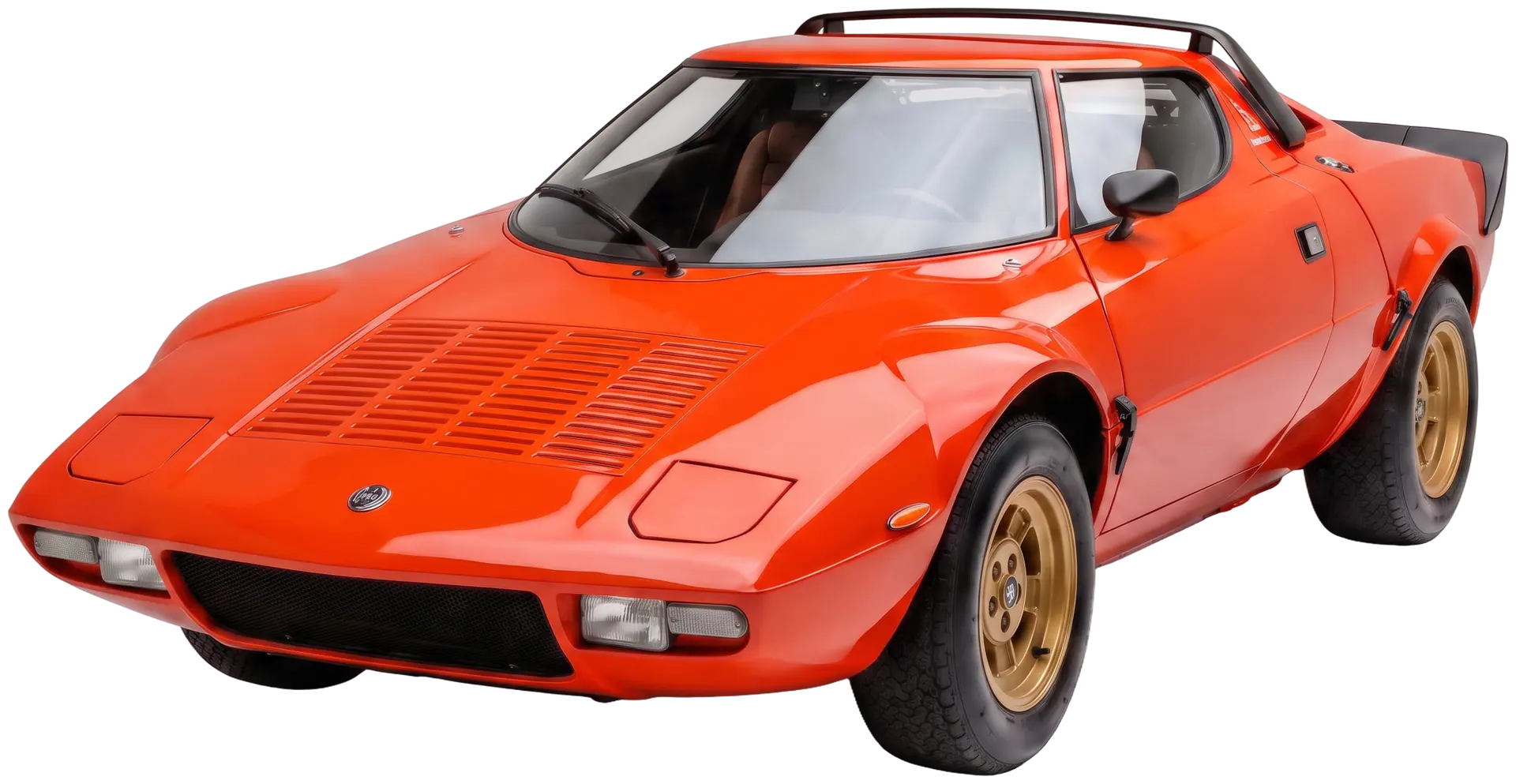 1972–1975
The clean-sheet rally wedge that gave Lancia three straight world titles.
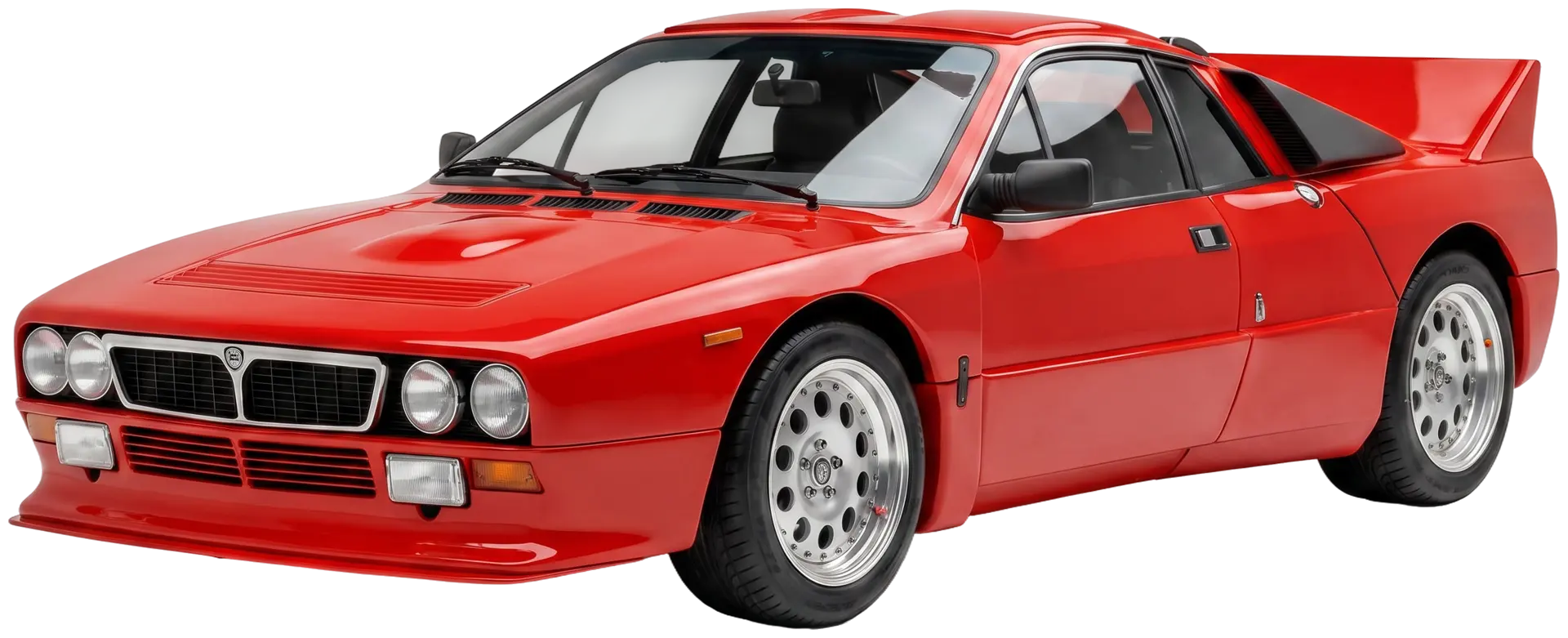 1982–1984
The supercharged rear-drive homologation car that beat Audi to the 1983 manufacturers’ title.
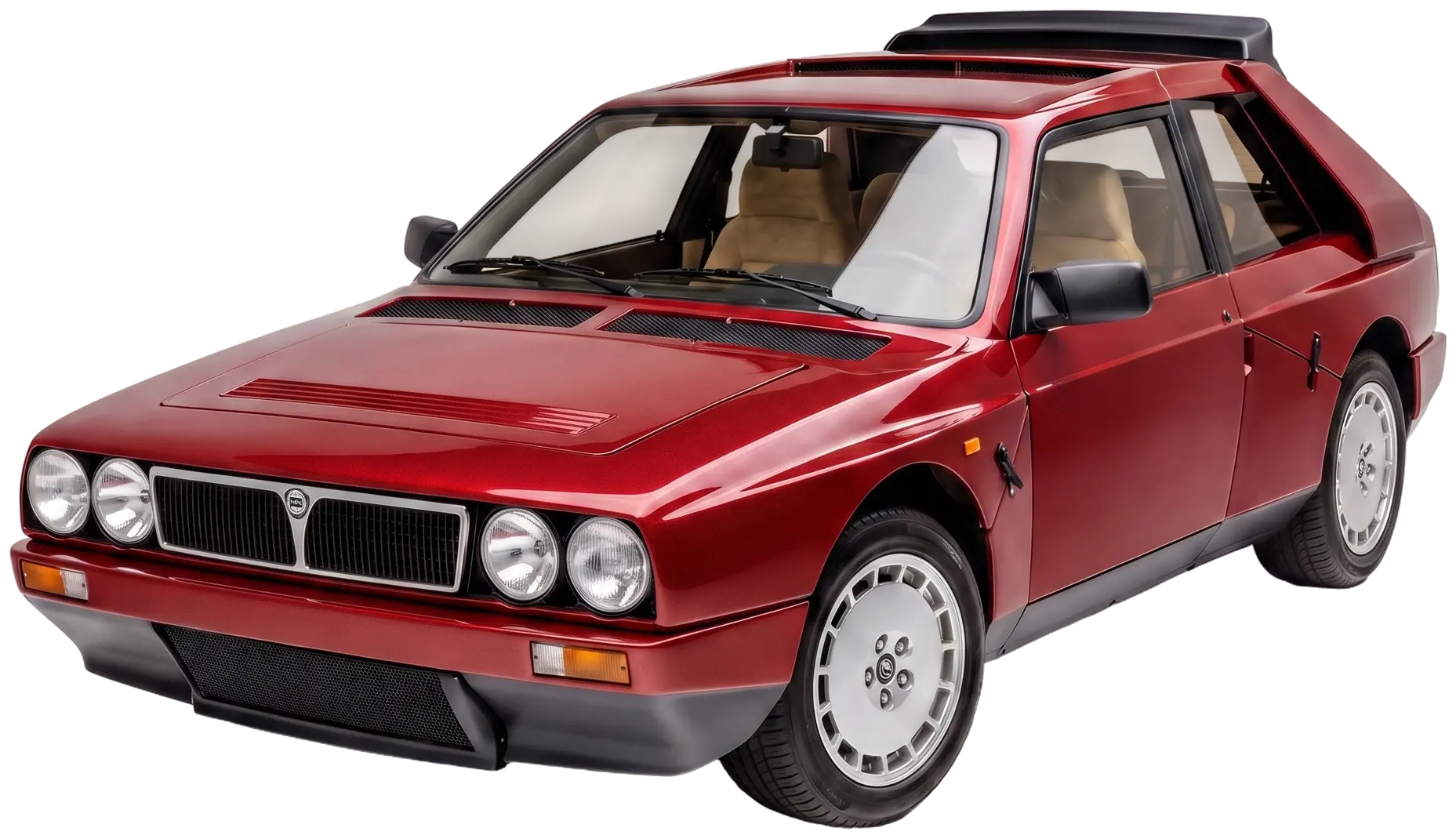 1985–1986
Twincharged Group B homologation special — 200 homologated, ≈71 believed sold.
Complete catalogue
3 models · 1 families
The street versions Lancia was obliged to build — a purpose-designed rally wedge and the last rear-drive world champion, both in strictly limited runs.
The house
No marque has won more world rally championships than Lancia, and the road cars it built to homologate its racers are collectibles of the first order.
The Stratos was the first car ever designed for rallying from a clean sheet — a Bertone wedge around a Dino V6 that won three straight championships from 1974. The ~492 Stradale cars are pure driver-focused theatre.
The 037 followed in 1982: a supercharged, mid-engined silhouette that took the 1983 makes’ title against Audi’s four-wheel-drive Quattro — the last rear-wheel-drive car ever to win the crown.
The Delta S4 closed the Group B years: twincharged, four-wheel driven, a debut win at the 1985 RAC — and roughly 200 Stradales built to make it legal. When the category was banned for 1987, the S4 became the last of rallying’s homologation specials.
What followed was the longest winning streak the championship has seen — six straight manufacturers’ titles for the Group A Delta, 1987 to 1992 — after world endurance titles in 1980 and 1981 had already proven the house on circuits.
Selected milestones
1906
Lancia & C. is established
Vincenzo Lancia and Claudio Fogolin establish the company in Turin.
1922
The Lambda changes the structure
Its unitised body and independent front suspension move beyond the separate-chassis convention.
1950
The Aurelia introduces the production V6
Lancia puts the first series-production V6 engine into a road car and pairs it with a rear transaxle.
1974
The Stratos is homologated
Group 4 approval gives Lancia's purpose-built rally car its full international programme; three consecutive manufacturers' titles follow.
1983
The 037 takes the manufacturers' title
The rear-wheel-drive 037 secures the World Rally Championship against established four-wheel-drive opposition.
1985
The Delta S4 changes the drivetrain
Permanent four-wheel drive and combined supercharging and turbocharging replace the 037 formula for Group B.
What defines Lancia
Lancia adopted structural and powertrain ideas early, from the Lambda's unitised body to the Aurelia's production V6.
The Stratos and its Group B successors were conceived around rally requirements, with road cars built for homologation.
Original trim, components and documentary history define the strongest homologation examples.
The mark
Turin, 1911: Vincenzo Lancia asks Count Carlo Biscaretti di Ruffia — artist, aristocrat, later a founder of the city’s automobile museum — for a badge, and receives six watercolour sketches back. He picks the pun: a lance flying a pennant with the name on it, lancia being Italian for lance, set over a four-spoke steering wheel with the hand throttle still on its spoke.
Every mark since has been an edit of that drawing: folded into a shield in 1929, chromed for the Flaminia in 1957, flattened in 1974, stripped to the bare shield in 2007. When the 2022 team wanted a future, they went back to 1957 to find it.
Carlo Biscaretti di Ruffia, 1911
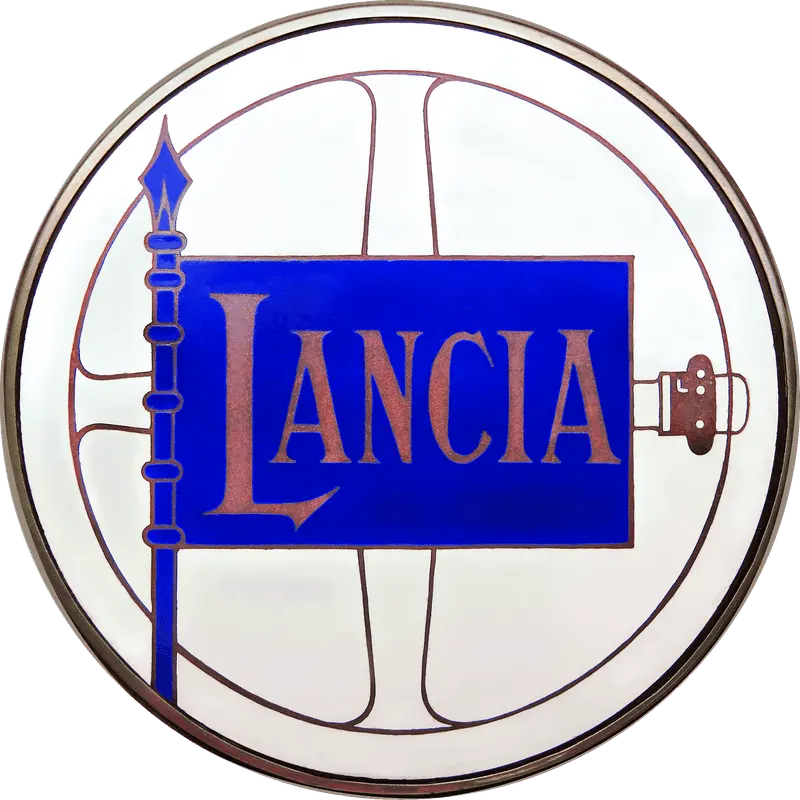
1911–1929
Biscaretti’s winning sketch — lance, pennant and steering wheel, hand throttle on the spoke.
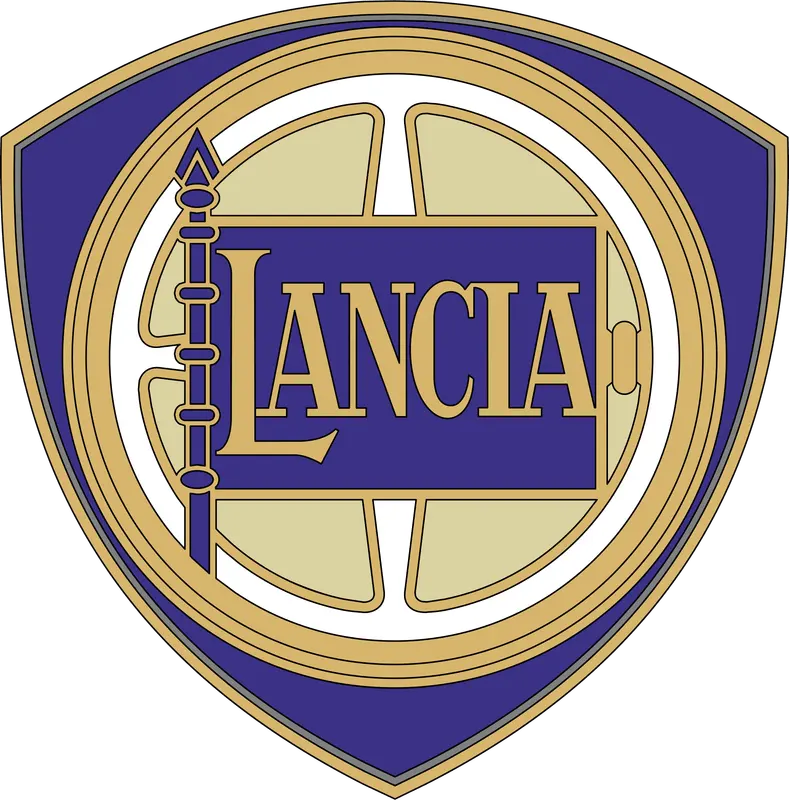
1929–1950
The roundel folds into a blue shield.
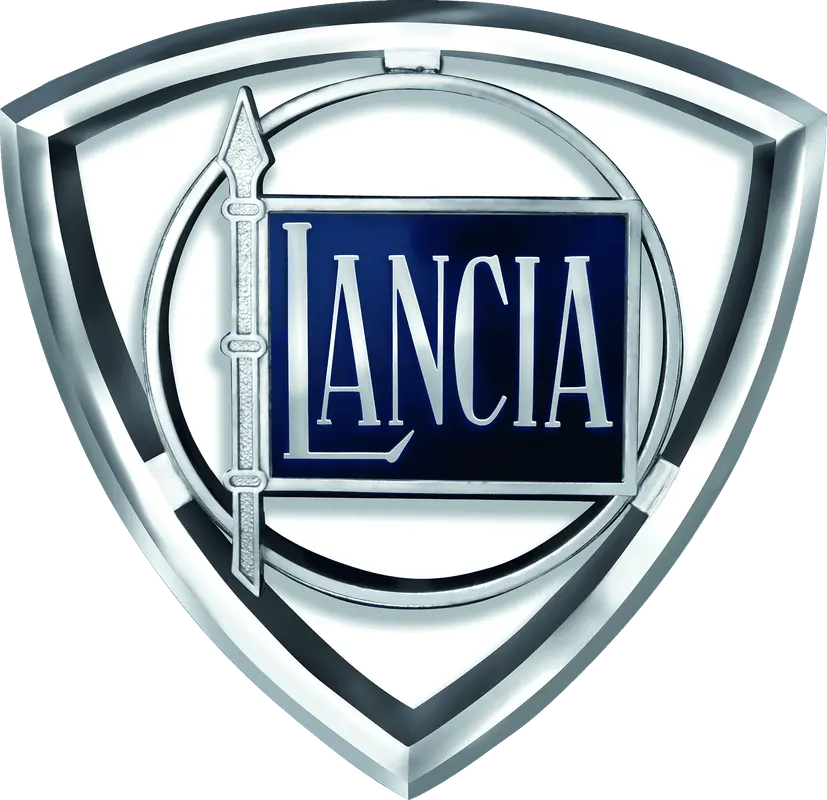
1957–1974
Chromed into three dimensions for the Flaminia.
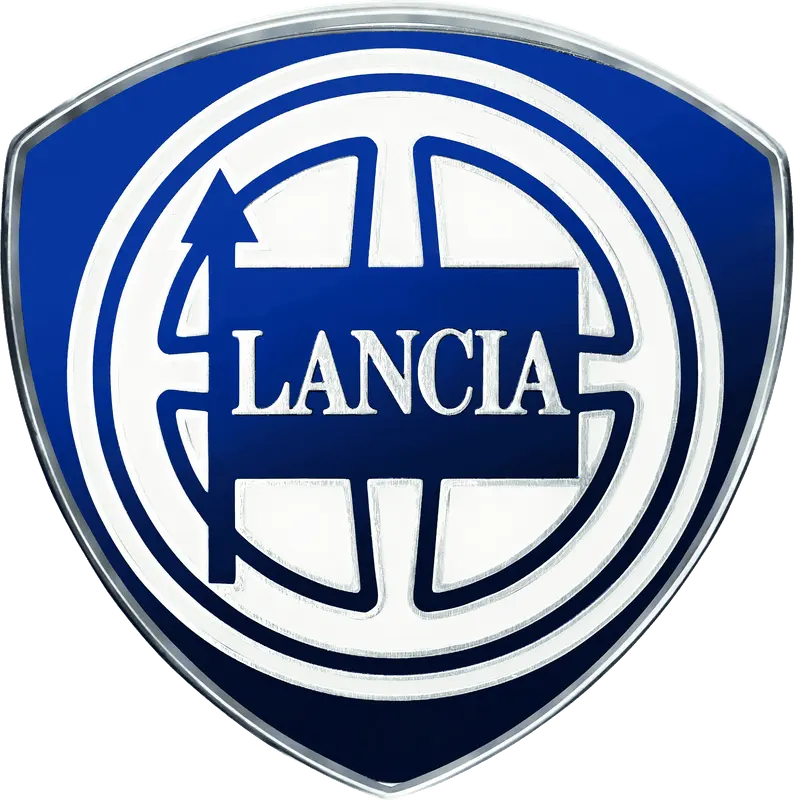
1974–2007
Flattened to silver, white and blue — the last detail lines pared away.
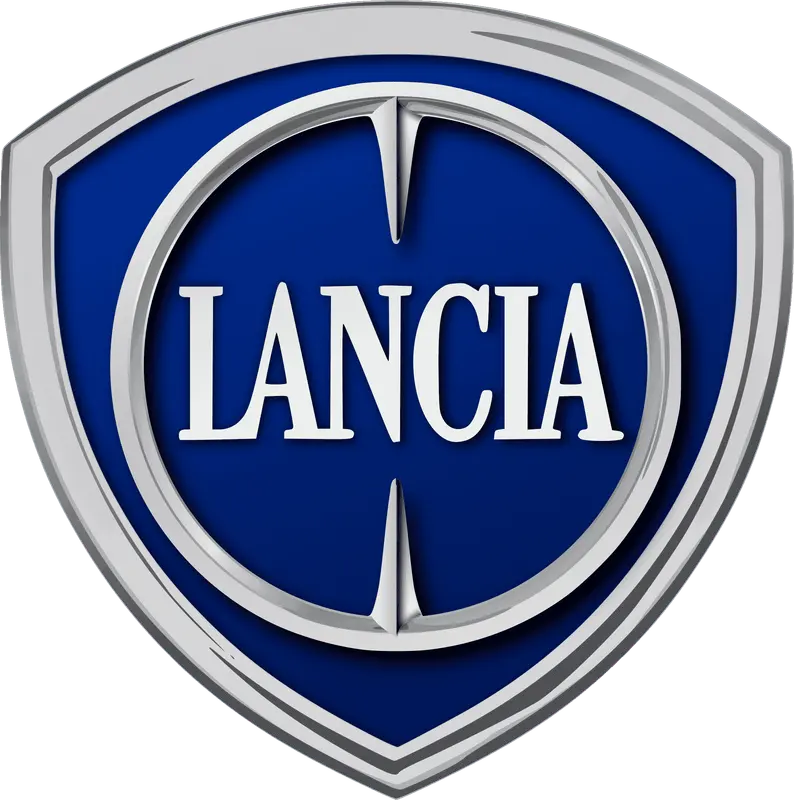
2007–2022
The lance and flag put away — shield, ring and the name alone.
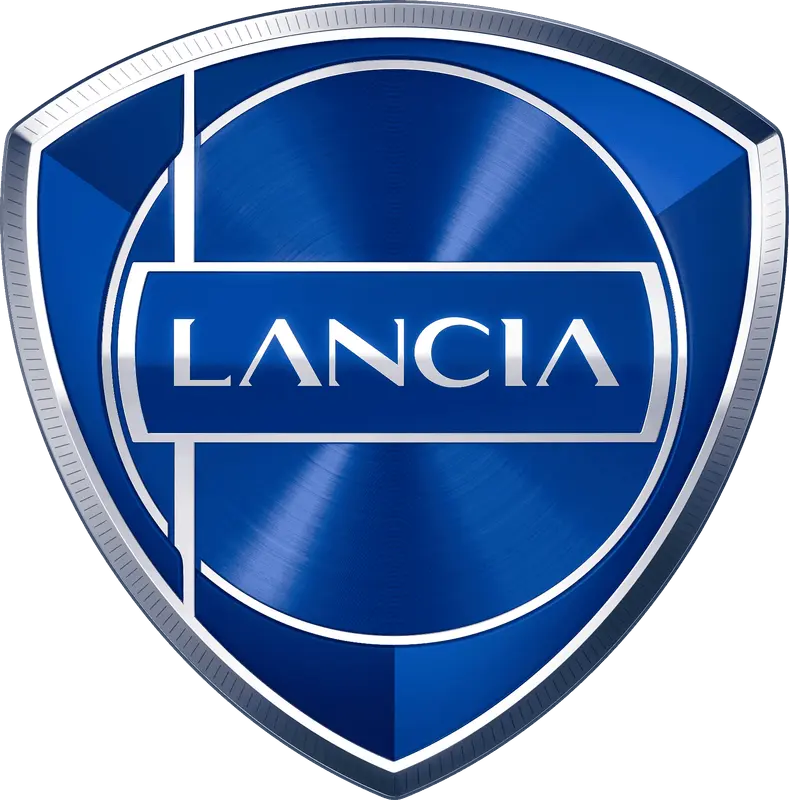
2022–
The Pu+Ra redraw under Jean-Pierre Ploué — flag and lance recovered from the 1957 badge.