Engineer for production
Ford treats manufacturing method as part of the car, from the Model T line to the repeatable carbon construction of the modern GT.
Dearborn, USA · est. 1903
Mass production built Ford; Le Mans defines its collector-car peak.
Curated entry points
Three cars that explain the manufacturer: its origins, its engineering peak and the shape of its modern ambition.
Complete catalogue
2 models · 1 families
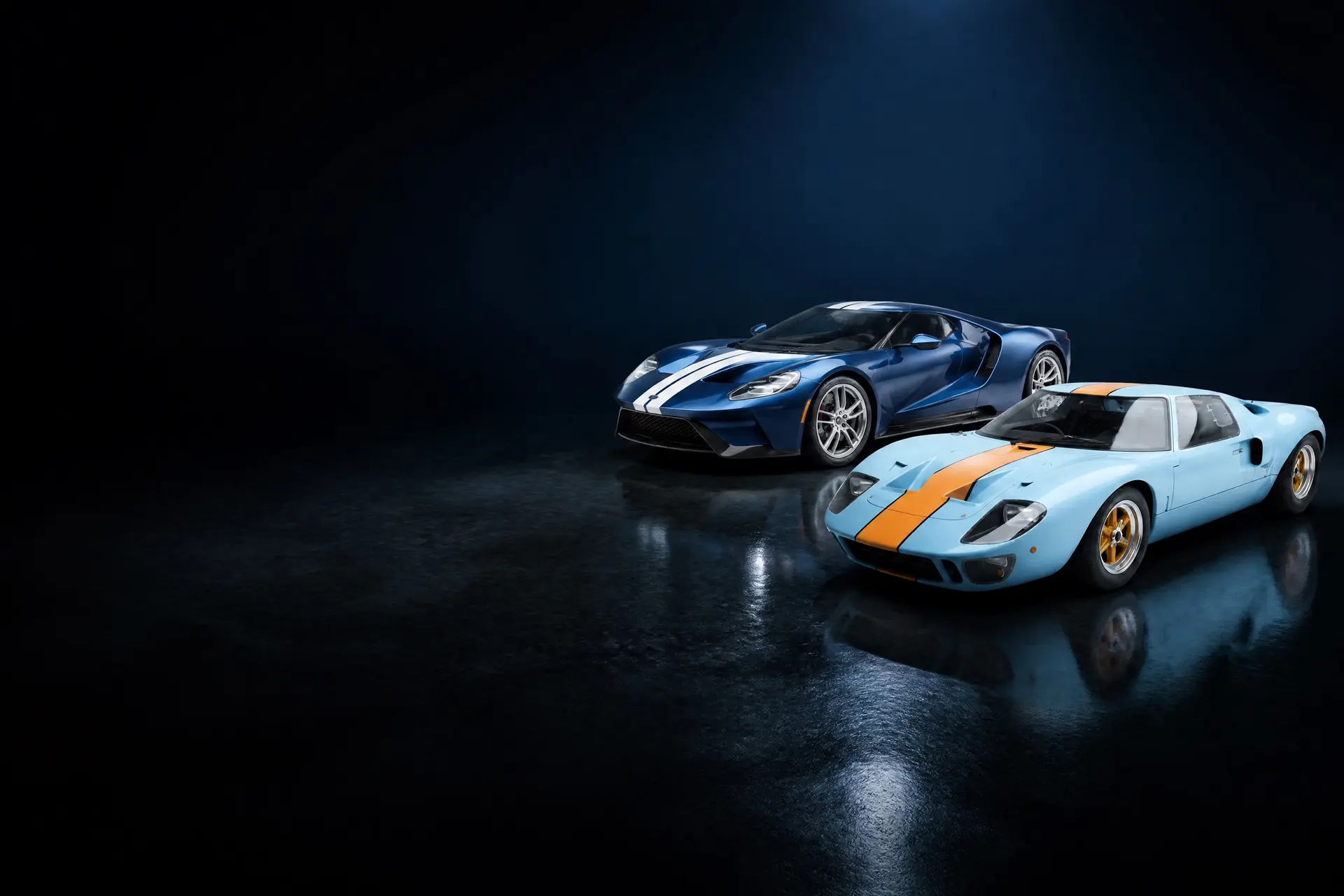
The cars built to beat Ferrari at Le Mans — the original GT40 in all four marks, and the 2017 GT that repeated the class win on the anniversary.
The house
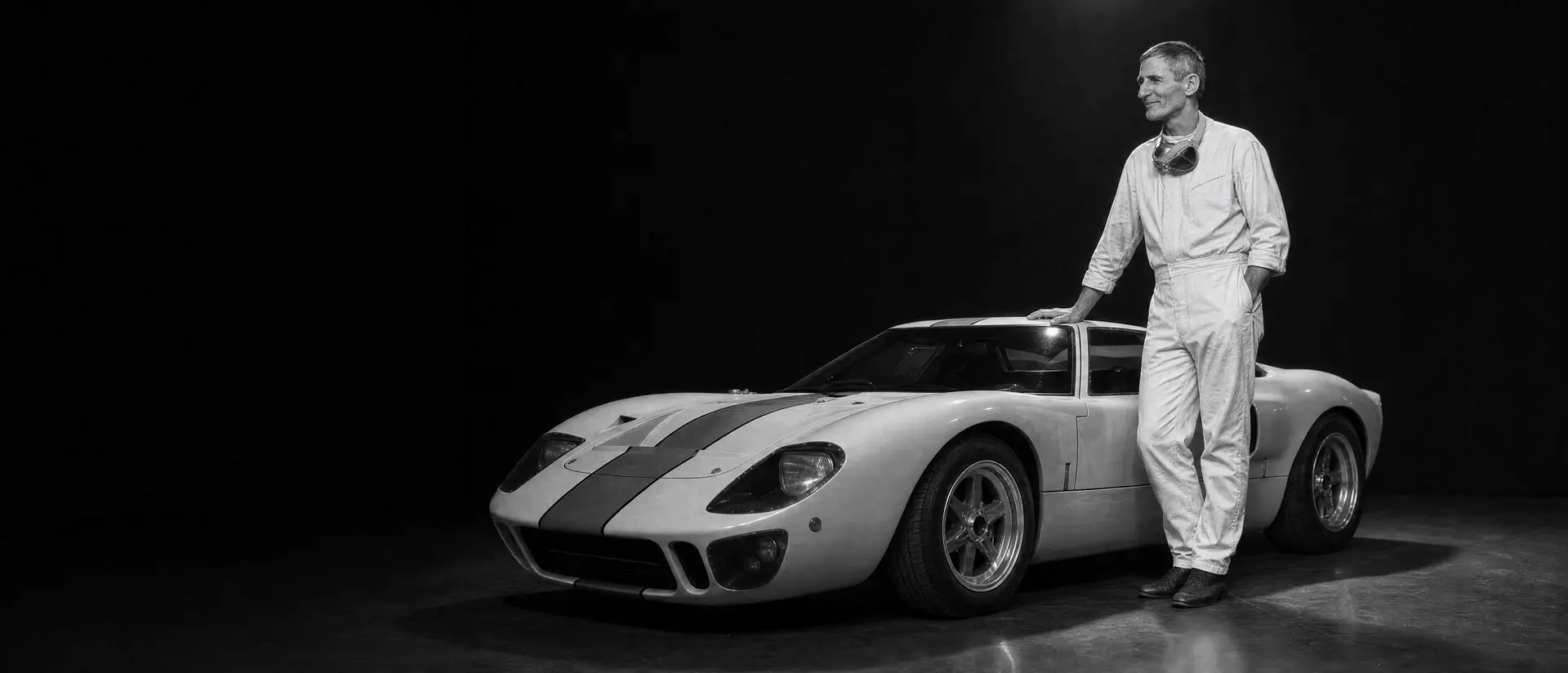
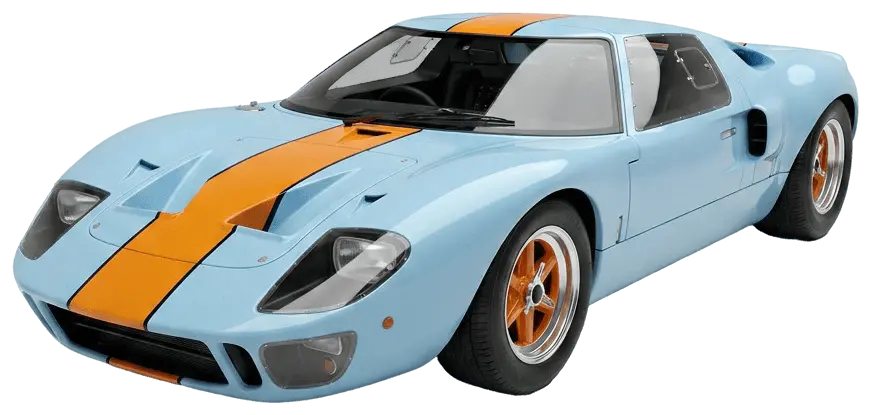
When Enzo Ferrari walked away from Henry Ford II’s buyout in 1963, Ford built a weapon instead. The GT40 won Le Mans in 1966, ’67, ’68 and ’69 — the 1-2-3 photo finish of 1966 remains motorsport’s most famous corporate revenge.
Just over a hundred were built across the four marks, from raw racers to the road-trim Mk III. Genuine cars trade in the millions, with works race history multiplying the number.
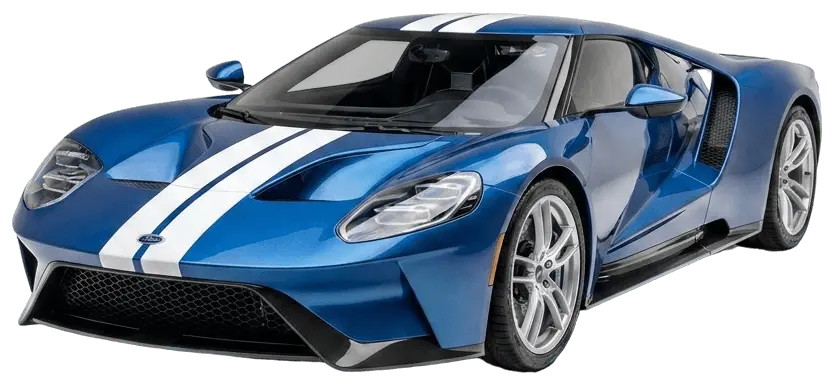
In 2016 — fifty years after the first win — the carbon-tub GT returned to Le Mans and won its class on debut. The road version was sold by application only, and the special editions already clear seven figures.
Selected milestones
1903
Ford Motor Company is incorporated
The company begins in Detroit with the Model A and a production-led approach to the motor car.
1908
The Model T enters production
A simple, durable car designed for broad use gives Ford the product around which it can build mass production.
1913
The chassis line starts moving
Highland Park applies an integrated moving assembly line to automobile production, cutting time and cost at scale.
1963
The GT programme receives its brief
Ford creates a unit to develop a purpose-built racing GT capable of contesting Sebring and Le Mans.
1966
The GT40 sweeps Le Mans
Three GT40 Mark IIs finish first, second and third, beginning four consecutive Ford victories at the 24 Hours.
2015
The carbon-fibre GT is presented
Ford returns the mid-engined GT as a carbon-fibre, twin-turbo V6 programme developed for both road and endurance racing.
What defines Ford
Ford treats manufacturing method as part of the car, from the Model T line to the repeatable carbon construction of the modern GT.
The GT40 and later GT programmes use endurance racing to test aerodynamics, structures, powertrains and reliability.
The modern GT keeps the two-seat, mid-engined brief while replacing visual imitation with a carbon tub, active aerodynamics and a turbocharged V6.
The hands
One name in the register stands behind this manufacturer. Their own file follows the work wherever it went.
The mark
Dearborn, 1907: Childe Harold Wills, Ford’s first chief engineer, had earned pocket money as a teenager printing calling cards, and when the company needed lettering he set the name in the same Spencerian script — the flowing capital F, the tail under the d. Trademarked in 1909, it has never been redrawn.
The oval began in Britain, where Ford’s agents stamped the name into a “hallmark for reliability and economy”; the blue arrived in 1927 on the Model A’s radiator. Script, oval, blue: three decisions, all made before 1930, still on every Ford built today.
Ford script: Childe Harold Wills, 1907 · trademarked 1909
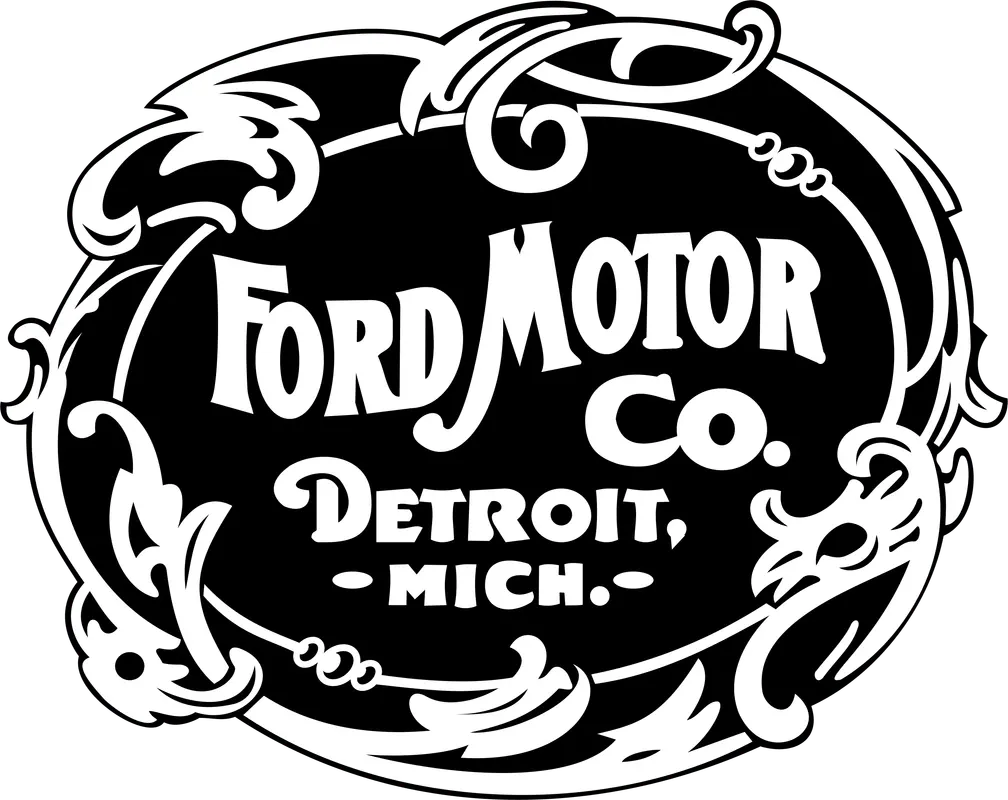
1903–1907
Art-nouveau filigree around “Ford Motor Co. Detroit, Mich.” — the badge of a start-up.
1909–1912
Wills’s script stands alone — the lettering that outlived everything around it.
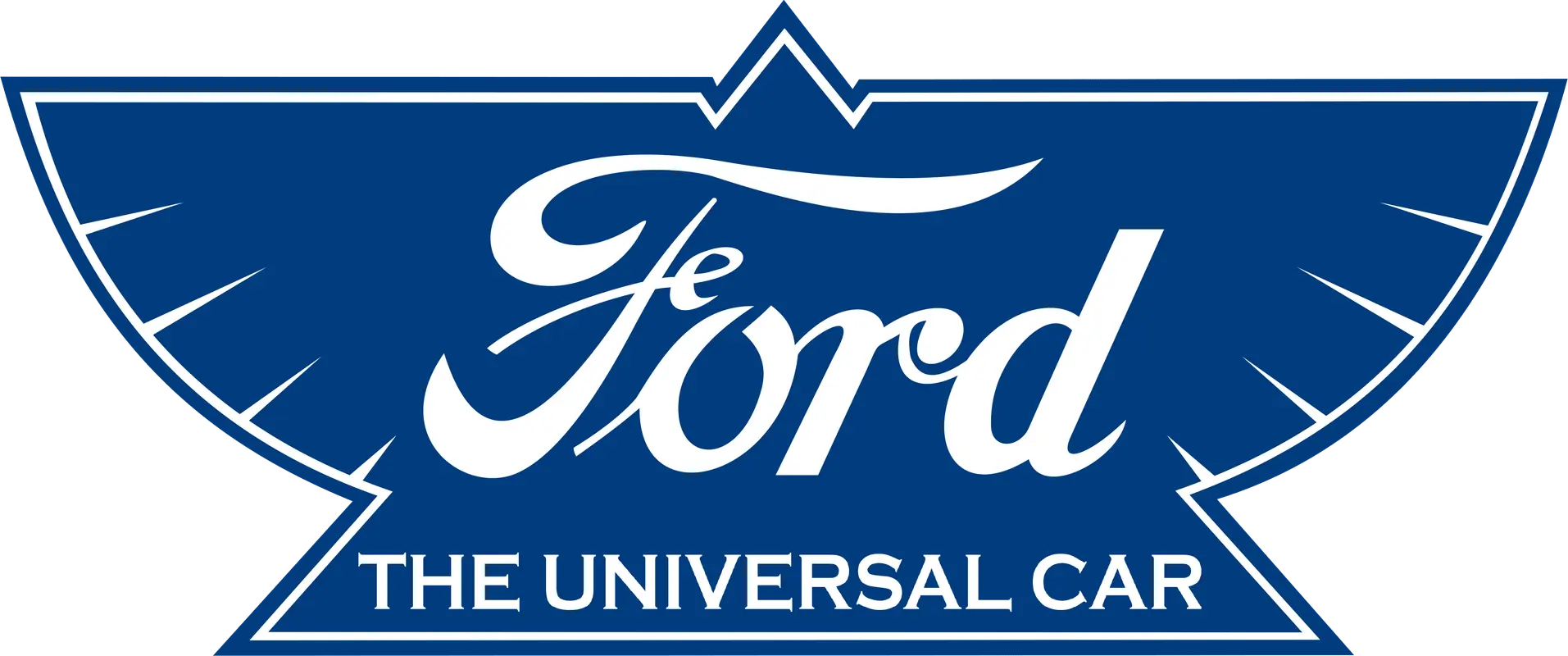
1912–1917
The winged triangle: “The Universal Car”, navy and white — dropped within five years.
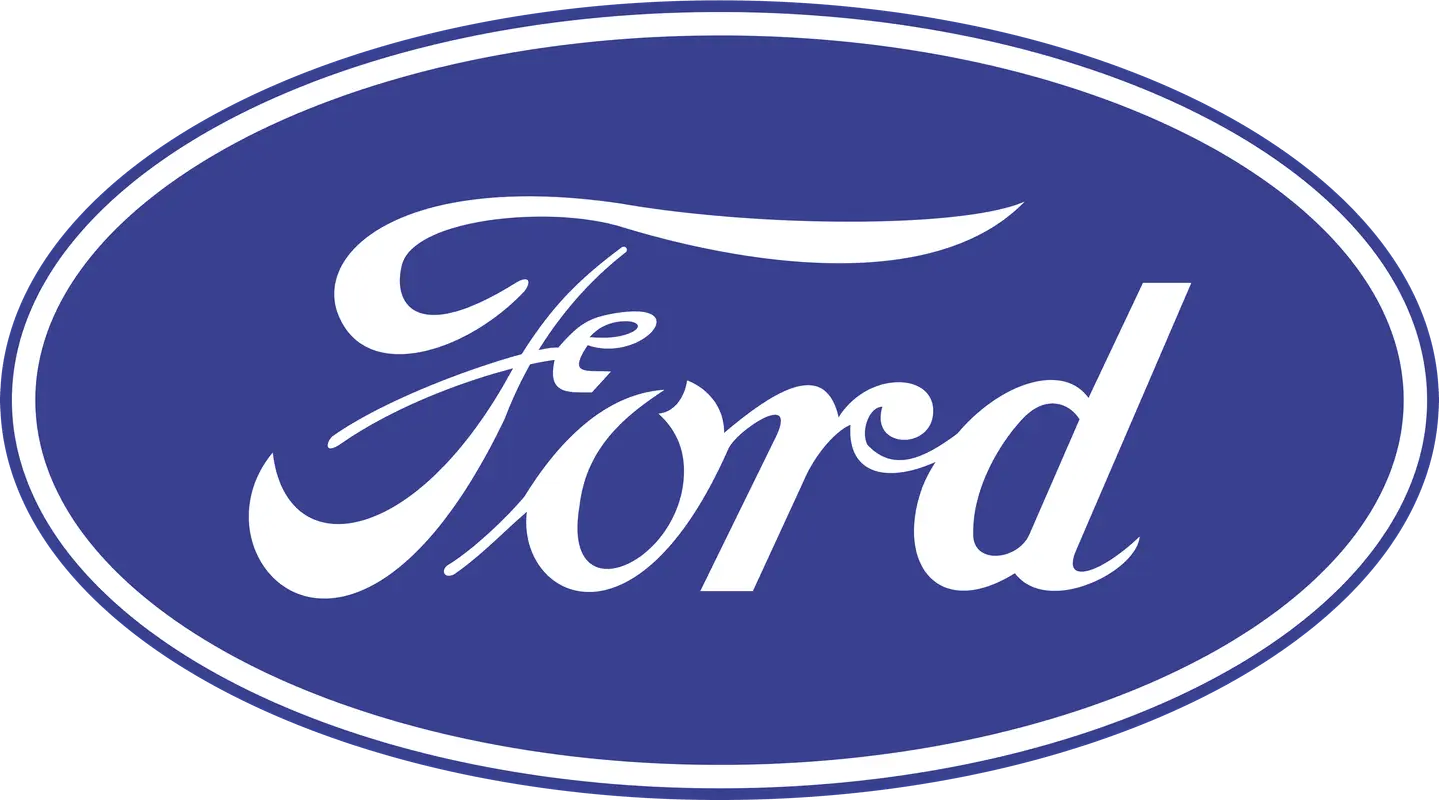
1927–1957
The blue oval arrives with the Model A — script and shape finally united.
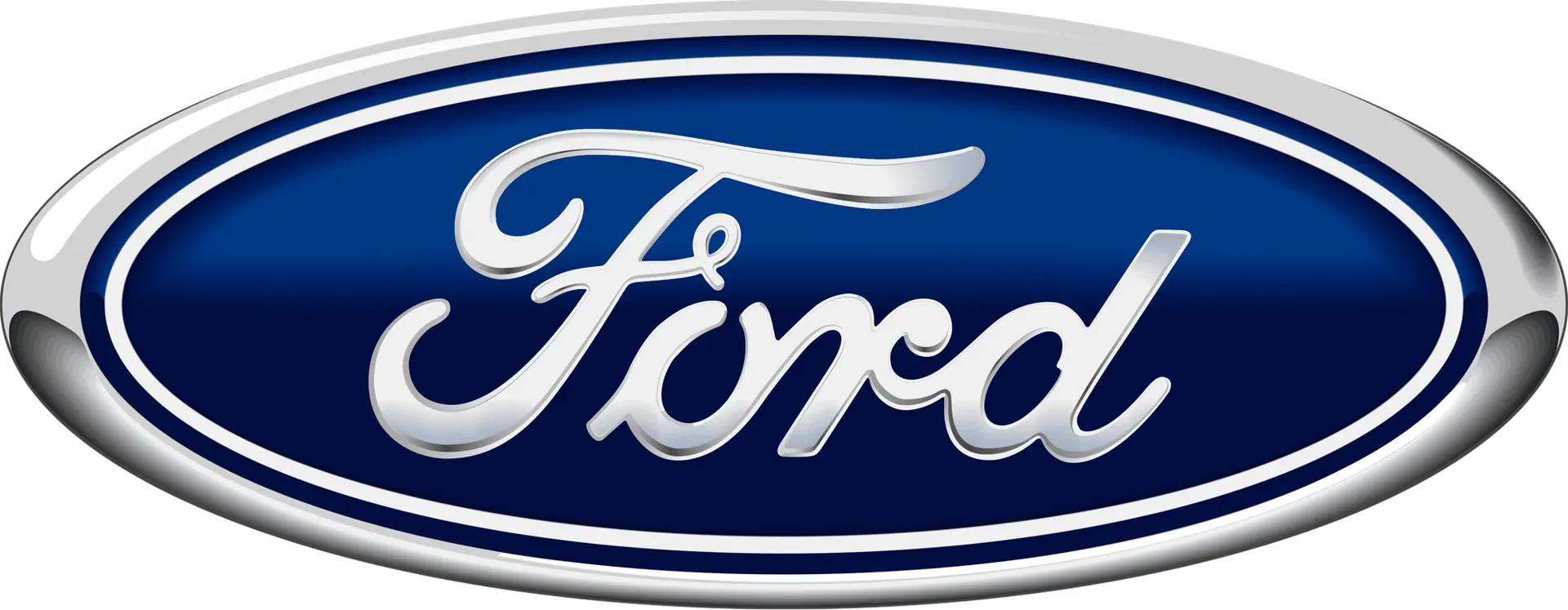
1976–2003
The chrome-rimmed oval, standardised on every plant and product worldwide.
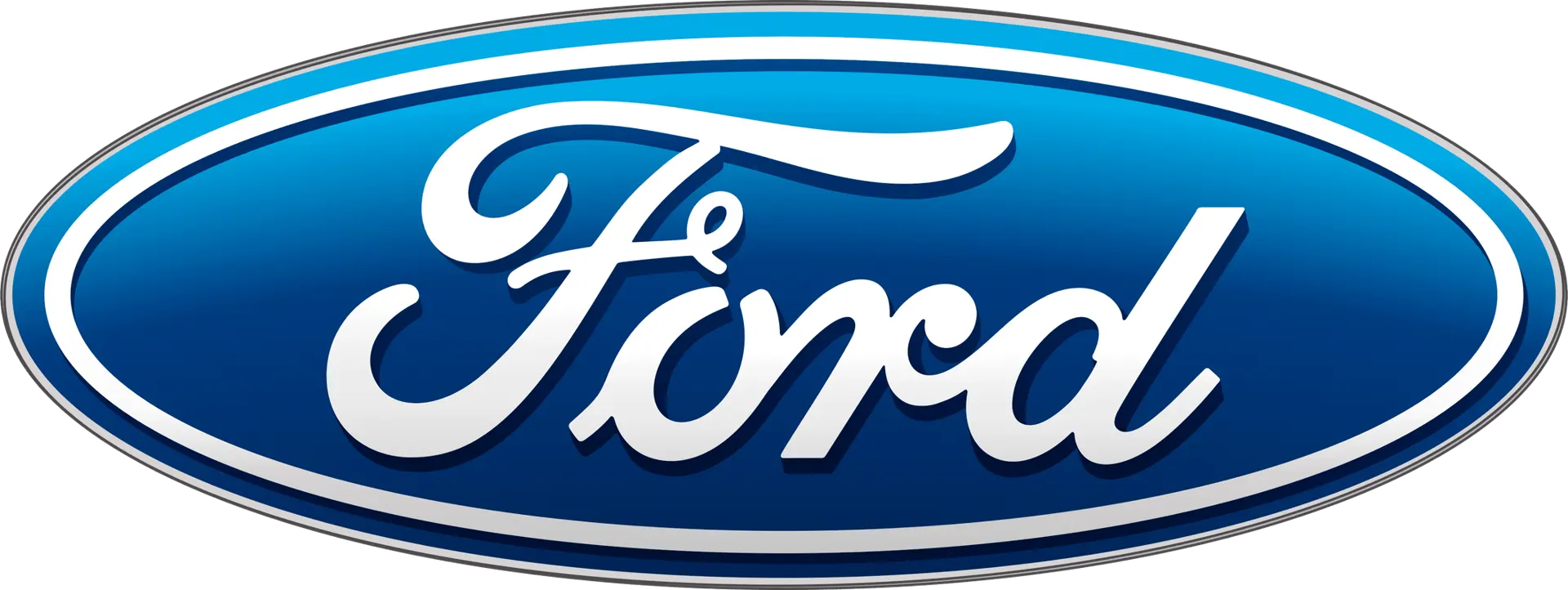
2003–
The Centennial oval — polished for the hundredth year, flattened since for screens.