
Engineer core systems
Engines, transmissions, carbon structures and control systems are developed around the company's own packaging goals.
Ängelholm, Sweden · est. 1994
Each Koenigsegg generation is built around a proprietary engineering solution.

Curated entry points
Three cars that explain the manufacturer: its origins, its engineering peak and the shape of its modern ambition.
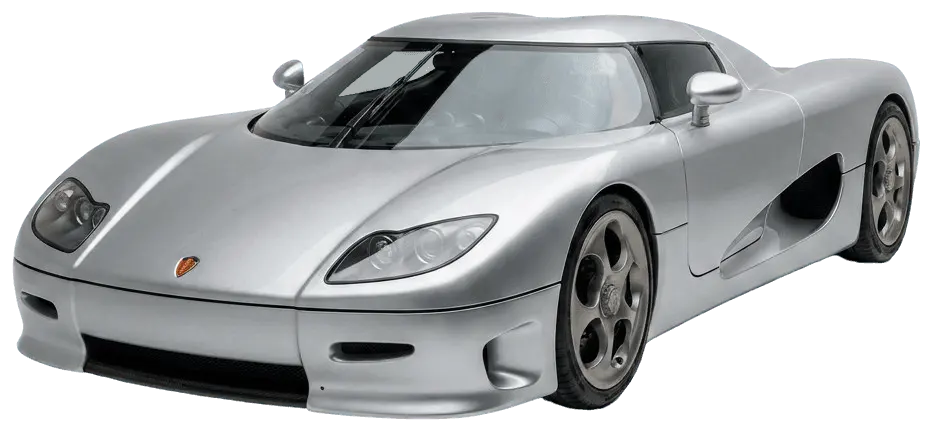 2002–2003
The first production car — supercharged V8, only six built.
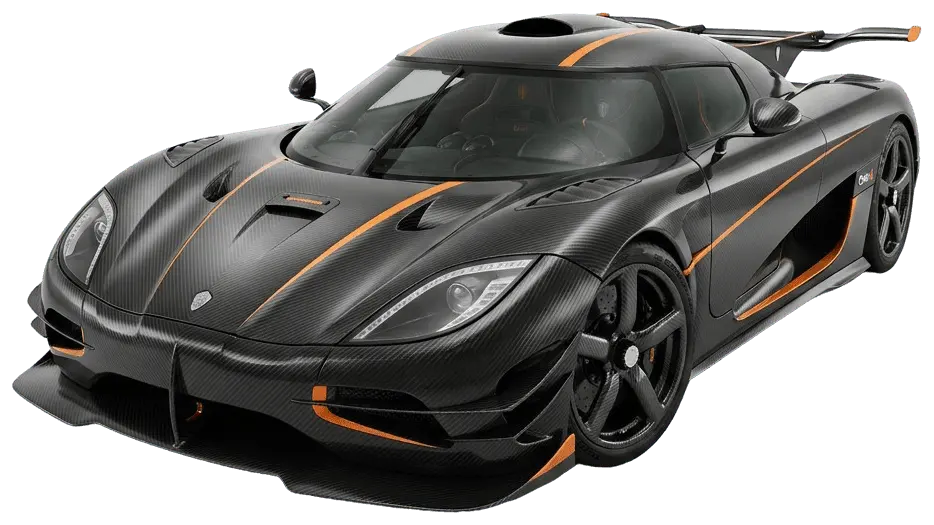 2014–2015
The first megacar — one hp per kilo, six built.
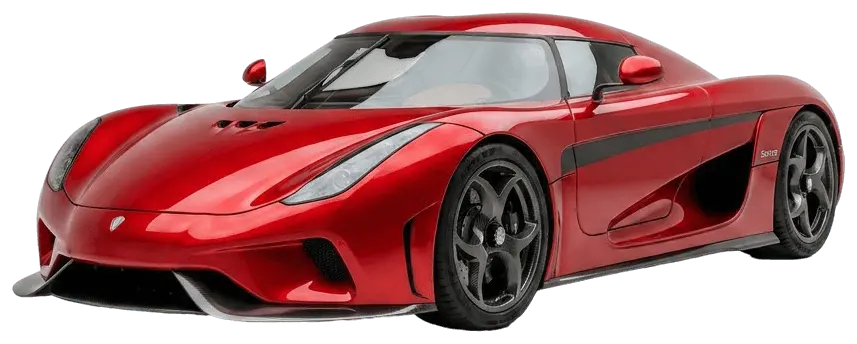 2016–2022
Direct-drive hybrid with no gearbox — 1,500 hp, eighty built.
Complete catalogue
12 models · 3 families
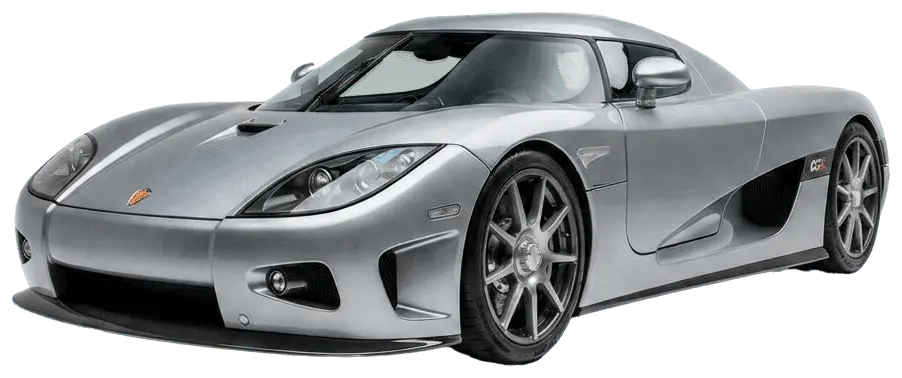
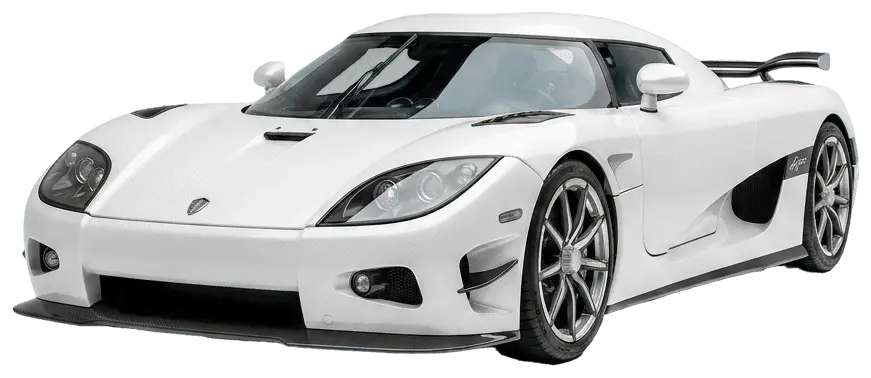
The first generation — the CC8S that put Ängelholm on the map, the record-setting CCR, and the CCX family crowned by the diamond-weave Trevita. The foundation everything since is built on.
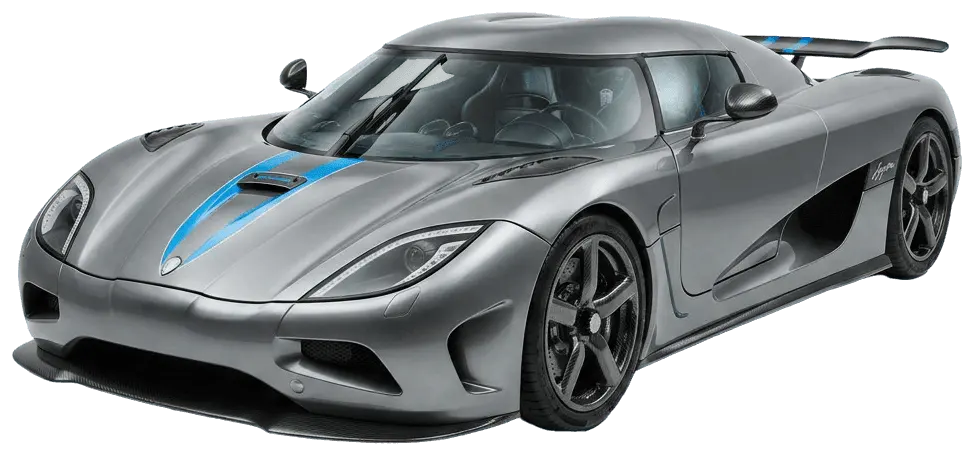
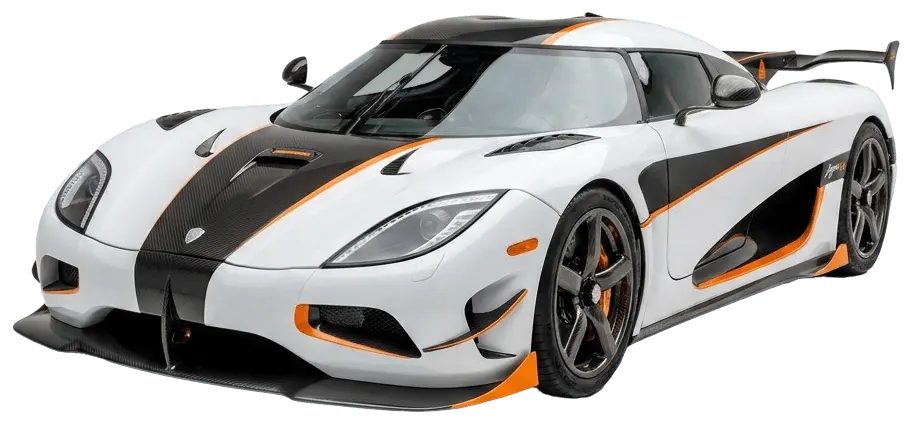
The line that chased every record worth holding — the Agera in its R, S, RS and Final forms, the megacar One:1, and the camless Regera. The era that made Koenigsegg a household name.
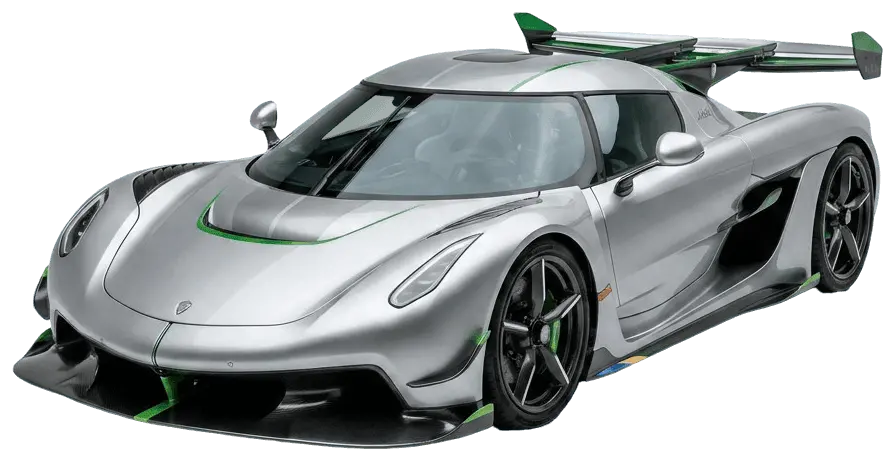
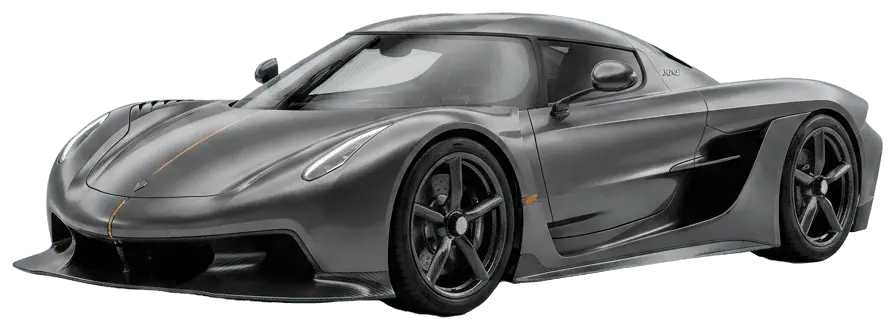
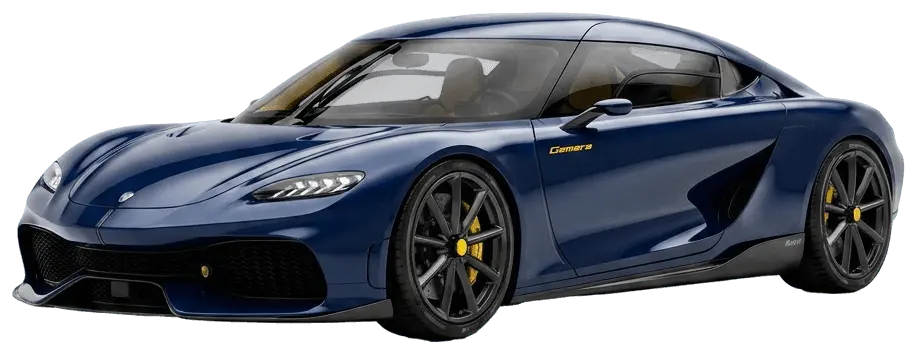
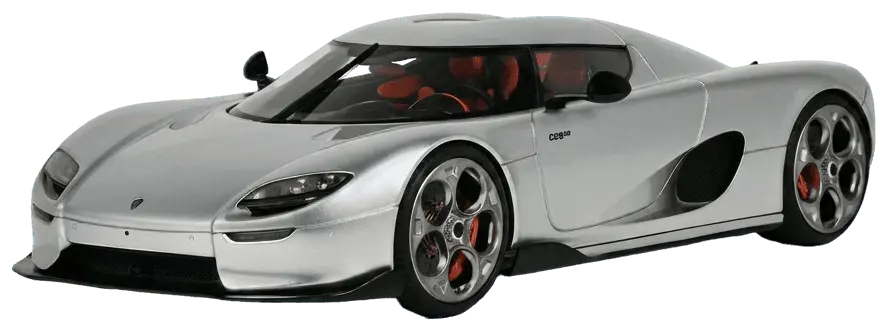
Today’s range — the Jesko with its nine-speed Light Speed gearbox and 300-mph Absolut, the four-seat Gemera, and the manual-revival CC850. Each one a fresh assault on what a road car can do.
The house
Christian von Koenigsegg founded the company at twenty-two with a single drawing and an impossible goal: to build the best supercar in the world from a country with no supercar industry. The first running CC prototype arrived in 1996; the production CC8S followed in 2002, and a Swedish farm airfield became one of the most ambitious car works on earth.
The obsession is vertical integration. Koenigsegg designs and machines almost everything in-house — its own carbon tubs, its own engines, its own dihedral doors, its own transmissions and the camless Freevalve technology. That refusal to outsource is why so few cars carry so many world firsts.
The high-water mark is the One:1 of 2014 — one horsepower for every kilogram, 1,360 of each, the car that coined the word "megacar" for crossing one megawatt of power. The Agera RS, Jesko and Gemera carried that record-chasing engineering forward into the modern range.
Selected milestones
1994
The company is formed
Christian von Koenigsegg starts the business that will develop an independent Swedish production car.
2002
Series production begins
The six-car CC8S establishes the carbon chassis, removable roof and dihedral doors as recurring marque features.
2006
The CCX reaches wider markets
A new car is engineered around worldwide safety and emissions standards, opening the United States market to Koenigsegg.
2014
A one-to-one power ratio
The One:1 matches 1,360 hp to a 1,360 kg curb weight, making the ratio the organizing idea of the car.
2015
Direct Drive is unveiled
The Regera combines a twin-turbo V8 with three electric motors and dispenses with a conventional multi-speed gearbox.
2019
The Light Speed Transmission
The Jesko debuts Koenigsegg's nine-speed Light Speed Transmission as the successor to the Agera line.
What defines Koenigsegg
Engines, transmissions, carbon structures and control systems are developed around the company's own packaging goals.
The removable roof, carbon chassis and dihedral doors established by the CC8S recur through later generations.
Limited runs support individual specifications and special derivatives, making factory documentation central to identification.
The mark
Christian von Koenigsegg never had to invent a mark: the family arms — a field of red-and-gold rhombi — go back to a knighthood under the Holy Roman Empire in the twelfth century. In 1994 his school friend Jacob Låftman set them into a shield for the new company, and it has never been redrawn from scratch since.
The second symbol is borrowed, not inherited: the works occupies a former air-force base at Ängelholm, home of the Swedish wing F 10, whose squadron flew with a ghost painted on its aircraft. Koenigsegg adopted the ghost as a tribute — it still rides on the cars, separate from the shield.
Jacob Låftman, 1994

1994–2020
Låftman’s shield: the family rhombi in red and gold, framed in blue.
2020–
Cut to black and white — the heraldry reduced to its geometry.