Measure refinement
The first LS took six years to develop, and every production car was track-tested before delivery.
Nagoya, Japan · est. 1989
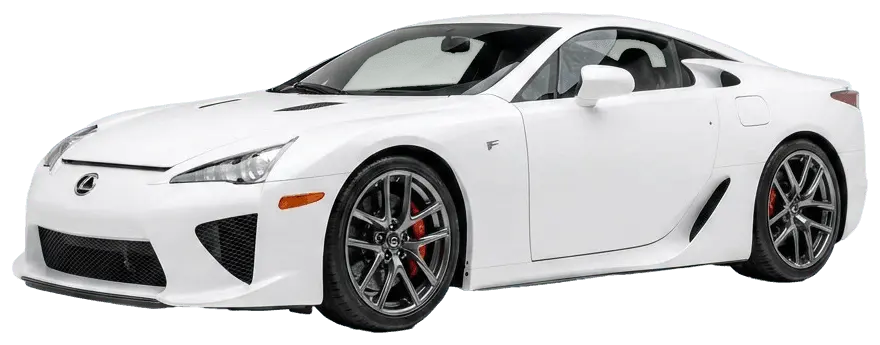
A luxury marque whose collector market is centred on one 500-car V10.
Curated entry points
Three cars that explain the manufacturer: its origins, its engineering peak and the shape of its modern ambition.
Complete catalogue
1 models · 1 families
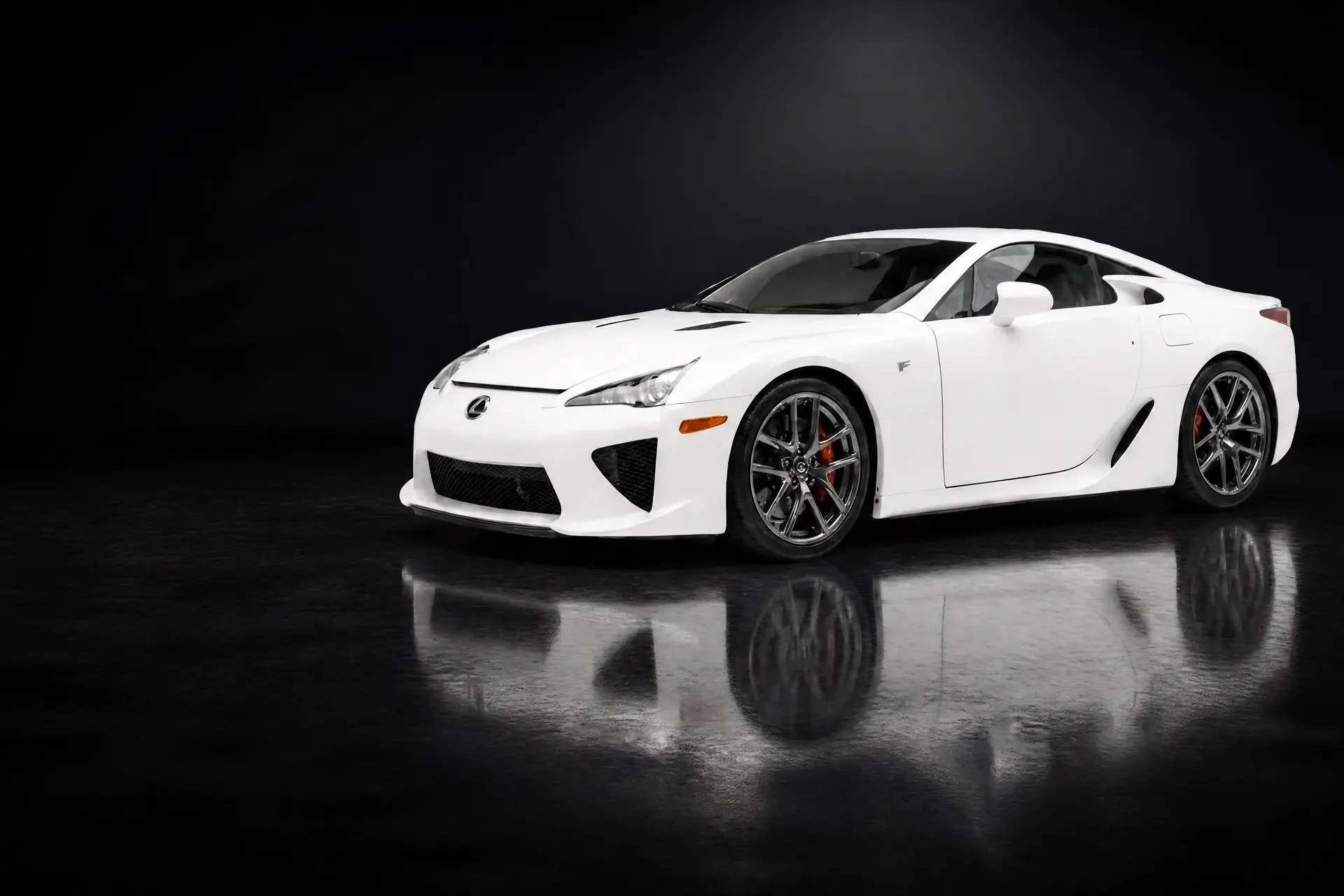
The whole marque’s collectible output in one nameplate — 500 carbon-tub V10 coupés, crowned by the 50-unit Nürburgring Package.
The house
Lexus spent ten years and abandoned an entire aluminium chassis programme mid-stream to build the LFA in carbon instead — Toyota even wove its own carbon fibre on in-house looms.
The result was a 4.8-litre V10, co-developed with Yamaha, that revs so fast the tachometer had to be digital. Its sound alone — tuned like a musical instrument — made the car a legend.
Five hundred were built and sold slowly; the world caught up a decade later. The fifty Nürburgring Package cars are the apex, now trading well past a million — Japan’s definitive modern collectible alongside nothing else.
Selected milestones
1989
The marque enters production
The first LS 400 leaves Toyota's Tahara plant in May, followed by the United States launch of the LS 400 and ES 250 in September.
2005
Hybrid enters the range
The RX 400h goes on sale in April as the first series-production luxury hybrid.
2005
The LF-A concept appears
Lexus displays a two-seat, V10-powered LF-A concept, making a dedicated sports car part of the marque's public programme.
2009
The production LFA is announced
The production car is presented with a 4.8-litre V10, a CFRP cabin and a worldwide run fixed at 500.
2010
LFA Works begins production
A dedicated area at Motomachi starts assembling the LFA at a rate of one car per day.
2012
The run is completed
Lexus finishes the 500th LFA on 14 December after adding the circuit-focused Nürburgring Package to production that year.
What defines Lexus
The first LS took six years to develop, and every production car was track-tested before delivery.
The RX 400h put hybrid drive into the Lexus range in 2005, and the system then spread across several model lines.
The LFA was limited to 500 cars and assembled at one car per day in a dedicated works.
The mark
Toyota launched its luxury division with nothing borrowed: new name, new dealers, new mark. Three firms pitched the badge in 1987 — Saatchi & Saatchi, Molly Designs and Hunter/Korobkin — and the drawing that won was a forward-set L inside a bevelled oval.
Toyota then had the curves redrawn to a precise mathematical formula, so every plant would stamp it identically. It appeared on the LS 400 in January 1989 and has not changed since: the shortest logo history in this catalogue.
Hunter/Korobkin with Molly Designs, 1987–88
1987–1989
The winning drawing: an angled L in a bevelled oval, reduced to a formula.
1989–
In brushed metal on the LS 400 — unchanged on every Lexus since.