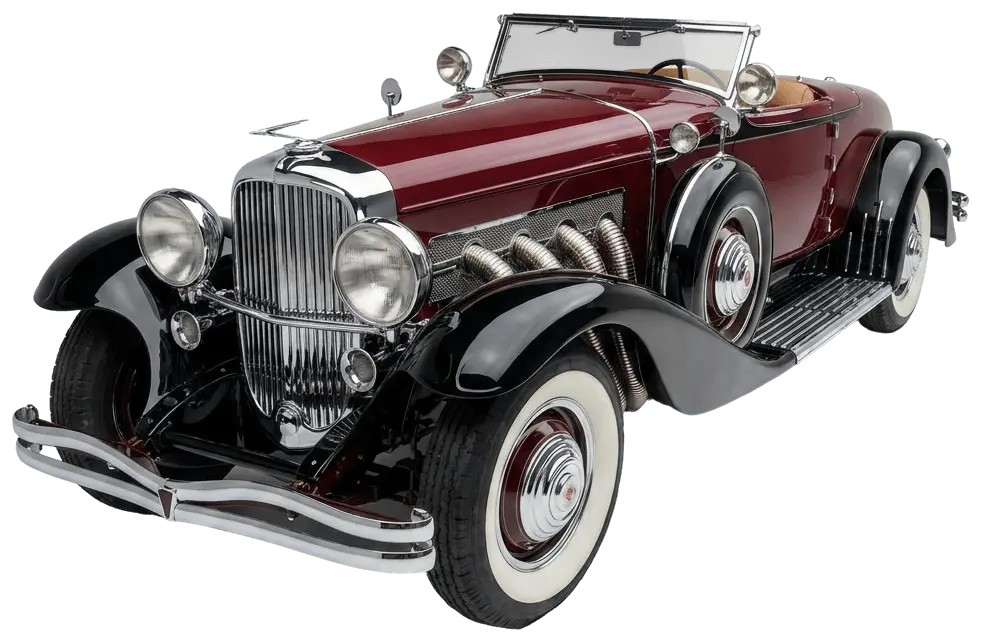
Performance before scale
Duesenberg carried racing-derived engines, brakes and high-speed capability into cars built in very small numbers.
Indianapolis, USA · est. 1913
American luxury, defined by engineering and the coachbuilder's hand.
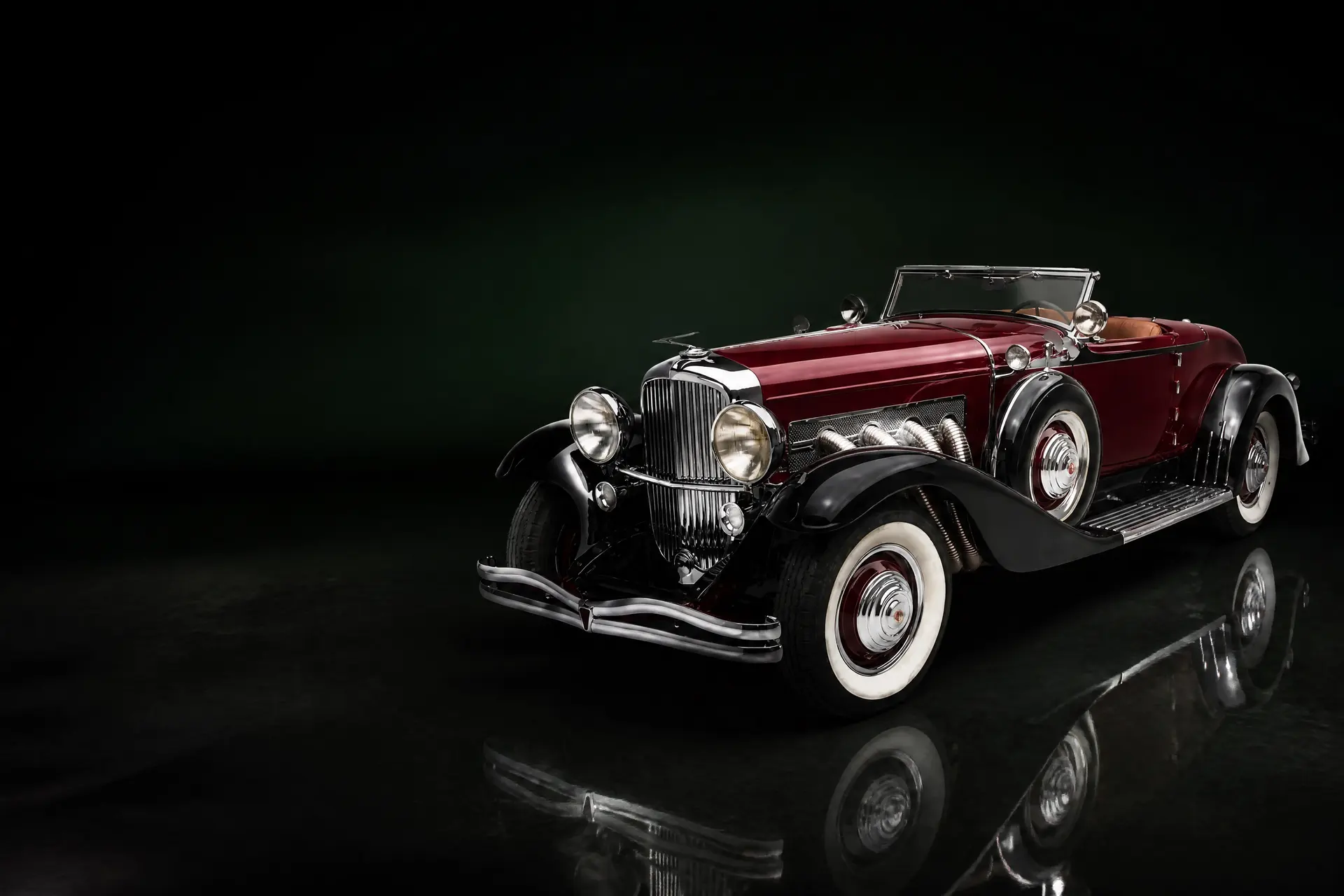
Curated entry points
Three cars that explain the manufacturer: its origins, its engineering peak and the shape of its modern ambition.
Complete catalogue
1 models · 1 families
The Model J family — naturally aspirated, supercharged SJ and the two SSJ roadsters, each body a bespoke coachbuilt commission. A blue-chip market with real trading depth.
The house
Fred and August Duesenberg built racing engines that won Indianapolis and, in 1921, made theirs the first American car to win a grand prix. E.L. Cord bought the company and ordered them to build the grandest car in the world.
The Model J of 1928 was exactly that: a 265-horsepower straight-eight when a Cadillac made 90, wearing coachwork from Murphy, LeBaron and Derham for Hollywood royalty and actual royalty alike. The phrase “it’s a Duesy” entered the language.
About 481 were built through the Depression. The supercharged SJ and the two short-chassis SSJ roadsters — Gable’s and Cooper’s — crown the market; an SSJ brought $22 million in 2018, still the record for an American car at auction.
Selected milestones
1913
The Duesenberg name enters business
Fred and August Duesenberg establish Duesenberg Motors in Saint Paul to build racing and industrial engines.
1921
The French Grand Prix
Jimmy Murphy wins at Le Mans in a Duesenberg, giving the young passenger-car operation international proof of its racing engineering.
1926
Cord takes control
E. L. Cord acquires the struggling passenger-car company and commissions a larger car aimed at the established European luxury houses.
1928
The Model J is unveiled
The Model J introduces a 420 cu in twin-cam straight-eight in a chassis intended for individually commissioned bodies.
1932
Supercharging reaches the catalogue
The centrifugal-supercharged SJ raises the factory rating from 265 hp to 320 hp and creates the performance tier above the standard Model J.
1937
Production ends
The collapse of Cord's business group closes Duesenberg; a small number of remaining chassis are bodied or completed later.
2018
The SSJ resets the American-car market
Gary Cooper's short-wheelbase supercharged car sells for US$22 million at Gooding's Pebble Beach auction.
What defines Duesenberg
Duesenberg carried racing-derived engines, brakes and high-speed capability into cars built in very small numbers.
A Model J's standing depends on the identities of its chassis, engine and coachwork rather than the badge alone.
Period bodywork, documented components, later modifications and ownership history materially change how an individual car is valued.
The mark
Fred and August Duesenberg were engine builders first and brand builders barely: the mark they left is a spread-winged eagle with the name across its feathers and the tail drawn into an 8 — the straight-eight that won Indianapolis and, in 1921, made theirs the first American car to win a grand prix.
No designer is documented and no redesign was ever commissioned. The company closed in 1937 and the eagle went with it: a one-badge marque.