Let engineering dictate form
The 300 SL's tubular frame created its high sills and roof-hinged doors; the shape records the structure beneath it.
Stuttgart, Germany · est. 1926
Mercedes-Benz turns engineering programmes into road cars and collector hierarchies.
Curated entry points
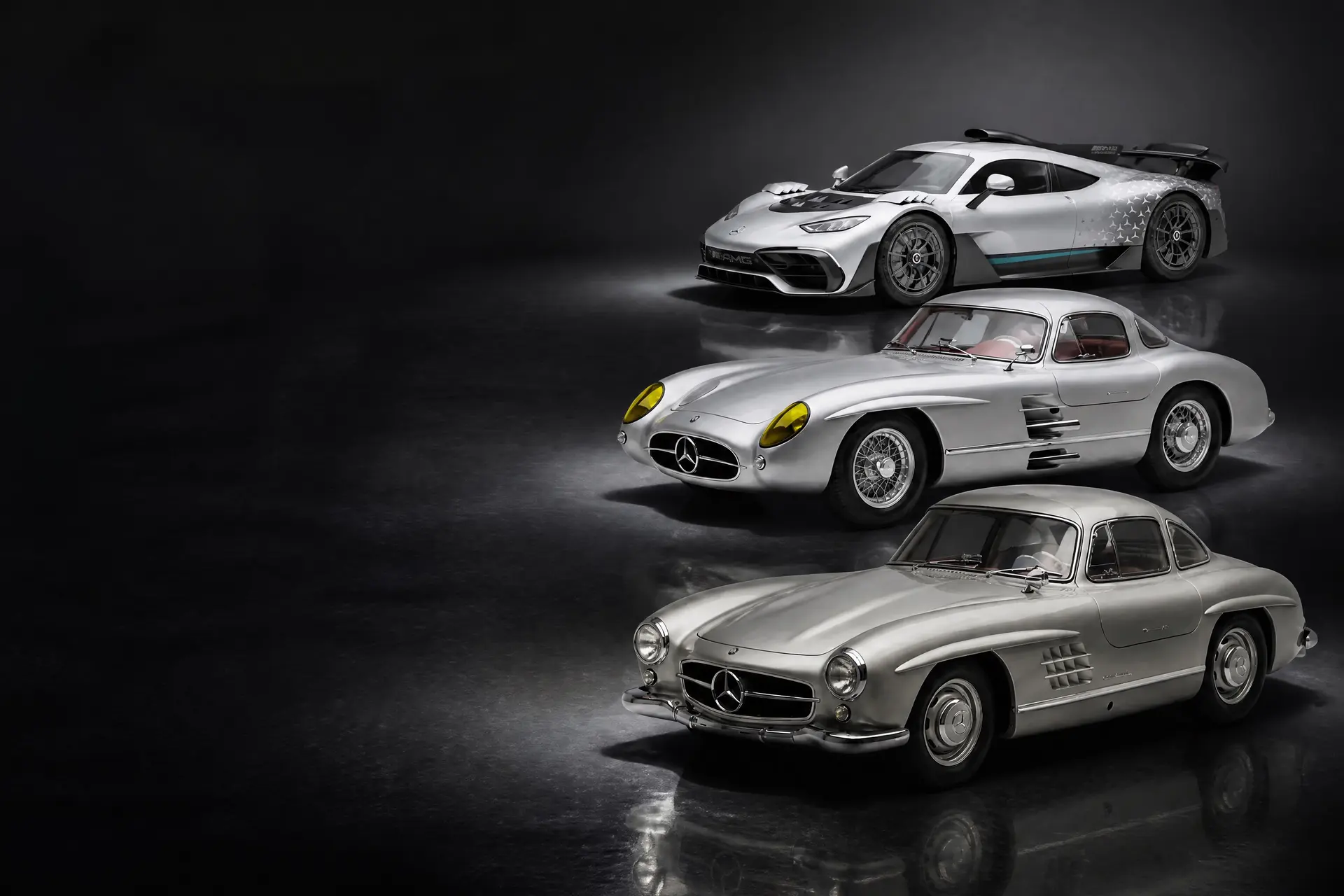
Three cars that explain the manufacturer: its origins, its engineering peak and the shape of its modern ambition.
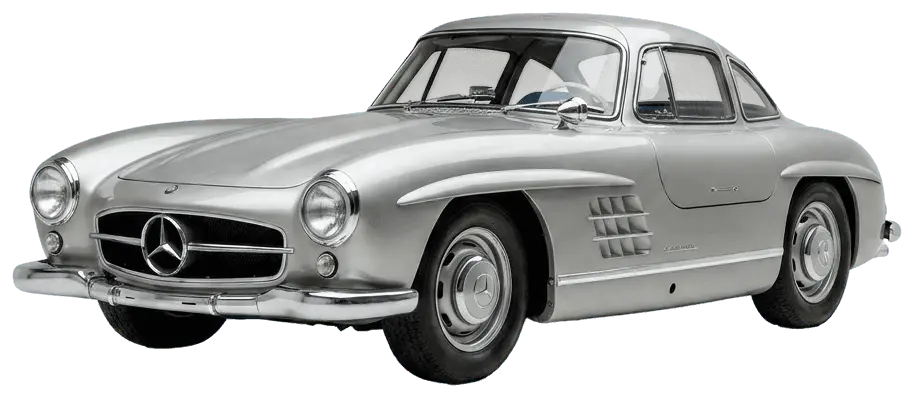 1954–1957
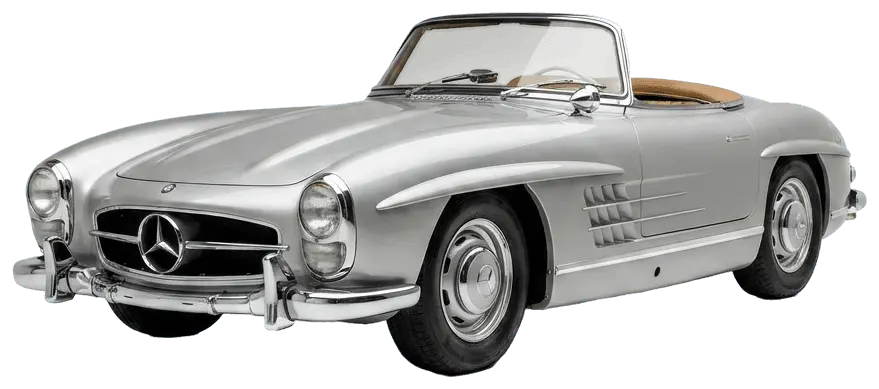
The gullwinged post-war design icon — 1,400 built, deeply liquid market.
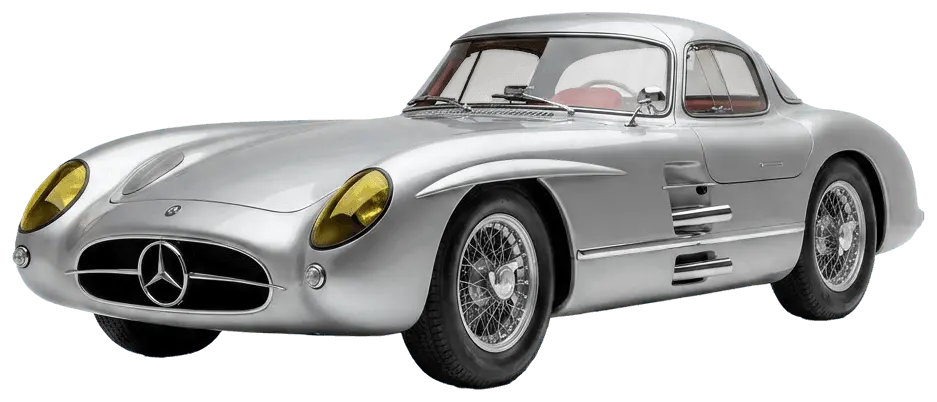 1955
1955Two built; one sold for €135M in 2022 — the most expensive car ever.
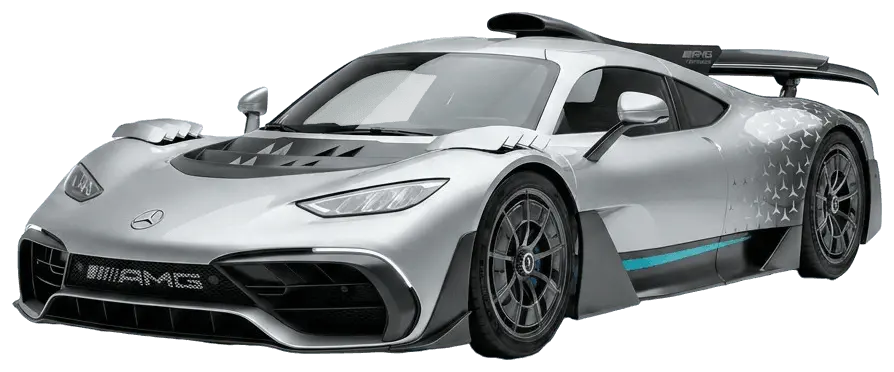 2022–2024
A genuine F1 hybrid powertrain for the road — 275 built, landmark engineering.
Complete catalogue
9 models · 4 families
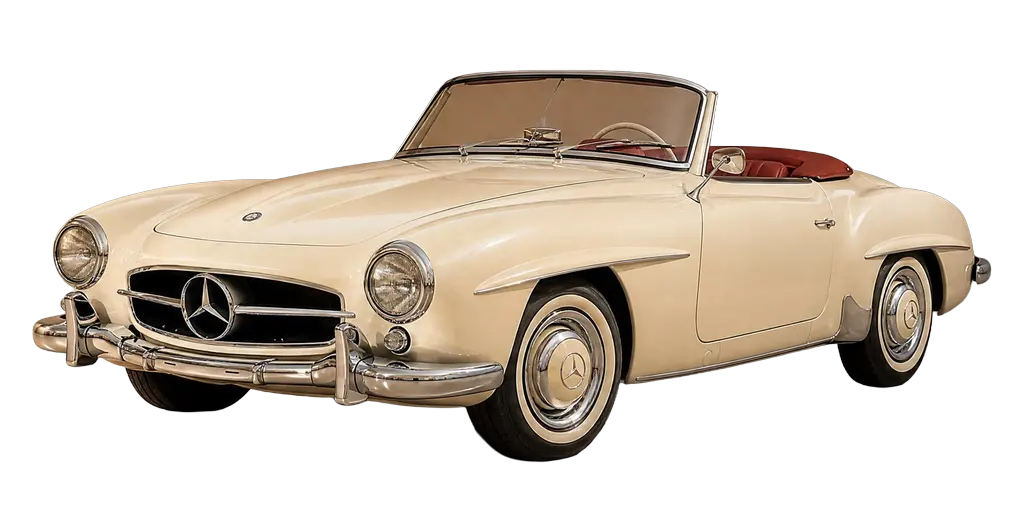
The 1950s apex — the road-going 300 SL in both bodies, the 190 SL that carried the SL face to ten times the volume, and the racing SLR that Rudolf Uhlenhaut turned into the fastest company car of all time. The most traded blue-chip family in the classic market.
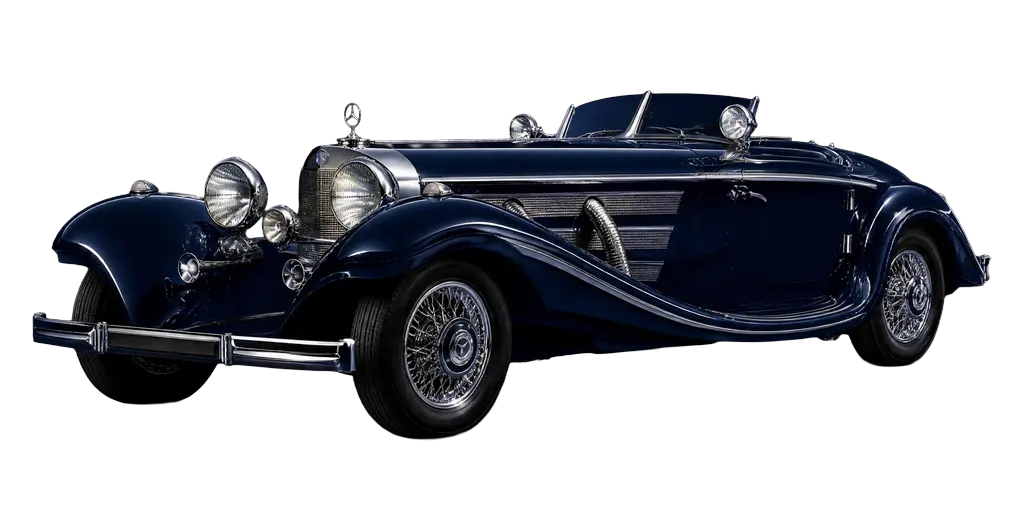
Sindelfingen Sonderwagenbau bodies on the blown straight-eight chassis — 342 cars in three years, each one an order, the Spezial-Roadster the most expensive of all.
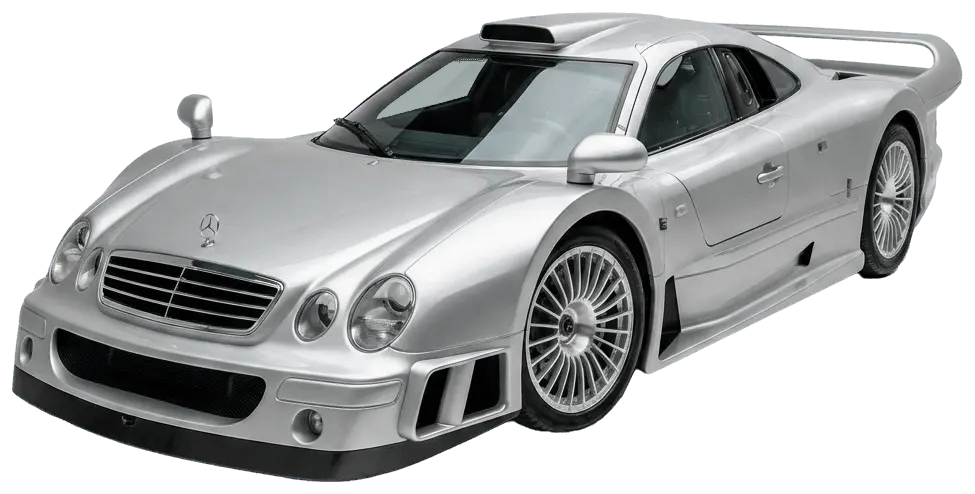
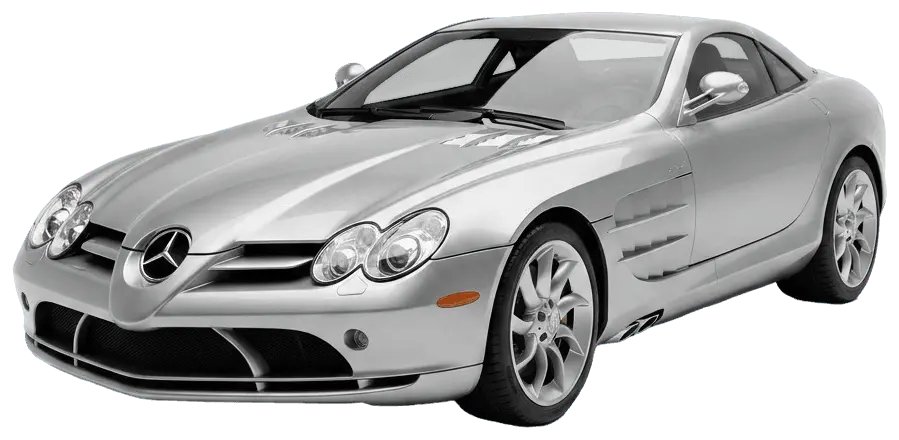
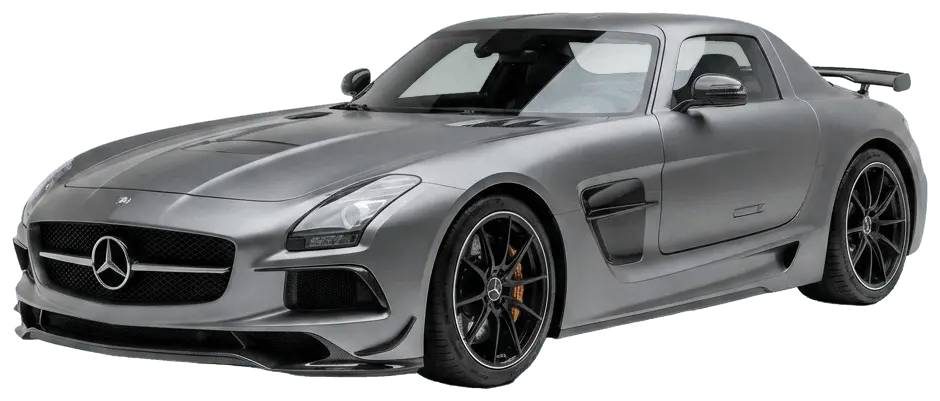
The modern collectibles — a road-legal GT1 racer built in a couple of dozen examples, the McLaren-era SLR speedsters and the sharpest of the gullwinged SLS line.
The AMG ONE took six years to tame a genuine Mercedes-AMG F1 power unit for the road — nothing else on the market carries this technology.
The house
Karl Benz patented the automobile in 1886; the company that carries his name has been setting the industry’s engineering benchmark ever since. When Mercedes goes racing, it strips the paint — the bare-metal Silver Arrows of the 1930s gave the marque its colour and its aura.
The 300 SL of 1954 turned a Le Mans-winning racer into the world’s fastest road car, with fuel injection and gullwing doors nothing else could match. Today the Gullwing and its Roadster sibling are the most liquid blue-chip classics in existence — hundreds of clean trades to price against.
At the very top sits the 300 SLR Uhlenhaut Coupé: two built, one sold in 2022 for €135 million — the most expensive car transaction in history. The modern era answers with the CLK GTR, the SLR McLaren and the AMG ONE, a Formula 1 power unit with number plates.
Selected milestones
1926
The two companies merge
Daimler-Motoren-Gesellschaft and Benz & Cie. combine as Daimler-Benz and adopt the Mercedes-Benz marque.
1952
Competition returns
The W194 300 SL returns Mercedes-Benz to racing with the light tubular spaceframe that becomes the basis of the road car.
1954
The racer becomes a series car
The 300 SL reaches production with direct injection and a spaceframe whose high sills dictate the roof-hinged doors.
1959
Safety becomes structural
The W111 introduces front and rear crumple zones around a rigid passenger cell in series production.
1997
GT1 creates a road car
AMG develops the CLK GTR for the new FIA GT series in 128 days; the road version follows the homologation requirement.
2022
A Formula 1 power unit reaches the road
AMG ONE production begins with a 1.6-litre hybrid power unit derived from the contemporary Formula 1 programme.
2022
The Uhlenhaut Coupe resets the market
Mercedes-Benz sells one of its two 300 SLR coupés for €135 million, setting the public auction record.
What defines Mercedes-Benz
The 300 SL's tubular frame created its high sills and roof-hinged doors; the shape records the structure beneath it.
The W194 led to the 300 SL, GT1 rules produced the CLK GTR road car, and the AMG ONE adapted a Formula 1 hybrid power unit.
Mercedes-Benz combines structures, restraints, braking and chassis control rather than treating safety as one component.
The hands
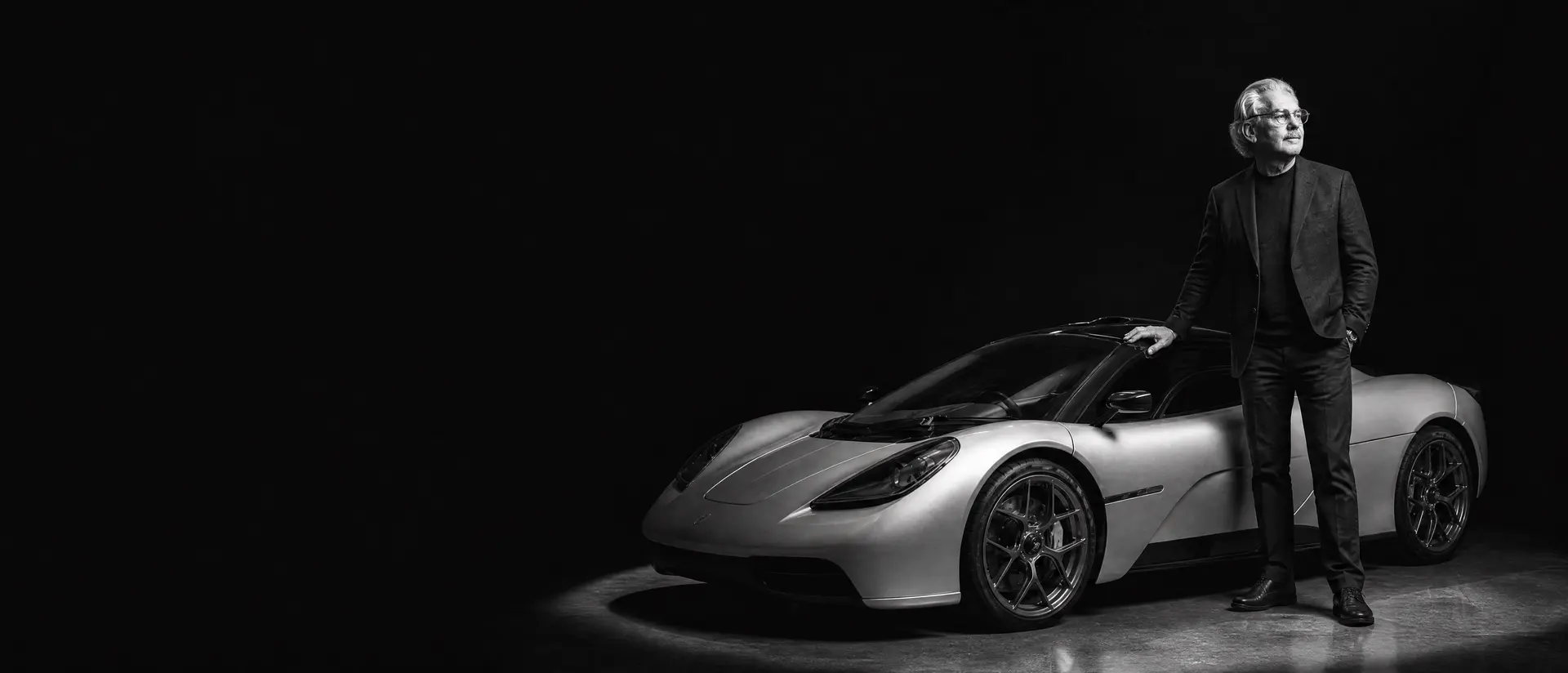
One name in the register stands behind this manufacturer. Their own file follows the work wherever it went.
The mark
Stuttgart, 1909: Daimler’s company needs a trademark, and Gottlieb Daimler’s sons remember a postcard. Years earlier their father had marked the family house on a picture of Deutz with a three-pointed star, writing to his wife that one day this star would shine over his own factory. Paul and Adolf Daimler filed it on 24 June 1909.
Three points for land, water and air — Daimler engines already powered cars, boats and airships. The 1926 merger with Benz wrapped the rival’s laurel wreath around the star; by 1933 the wreath had thinned to a plain ring, and the mark has barely moved since.
After Gottlieb Daimler’s postcard star · registered by Paul and Adolf Daimler, 1909

1902–1909
The name before the star — Mercedes, after Emil Jellinek’s daughter, registered in 1902.

1909–1926
The other half of the story: Benz’s laurel wreath, registered the same year as the star.

1916–1926
The star gains its ring — four small stars and the Mercedes name set around it.
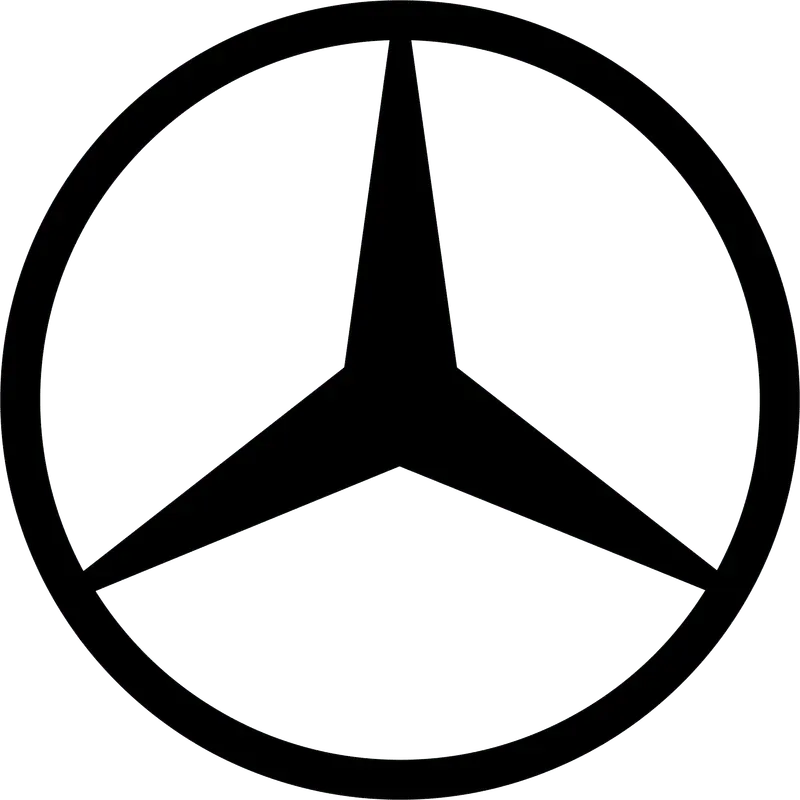
1933–1989
After the merger badge, the reduction: a line-drawn star in a plain ring.
1989–2009
The star in silver relief, the compound name set beneath.
2009–
Larger name, quieter shine — the current lockup.