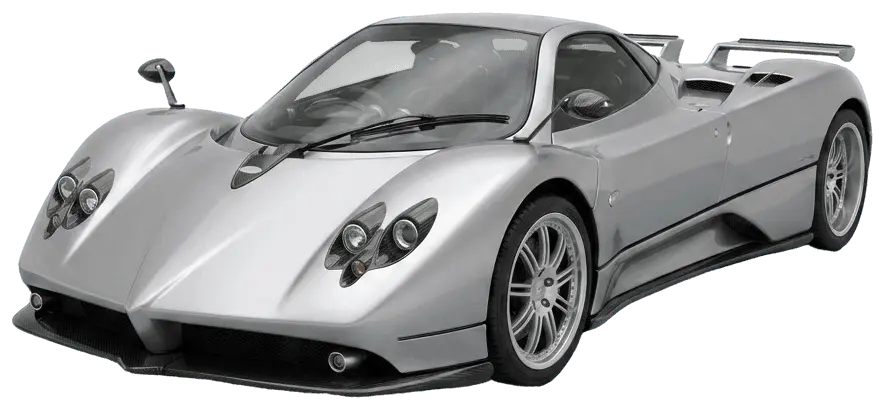
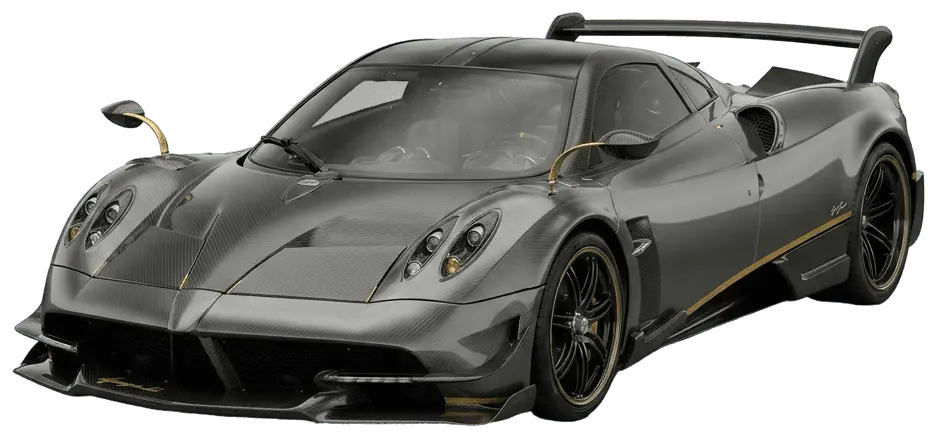
Composite structure
Carbon fibre is both structural and visible; later cars extend the approach through Carbo-Titanium and Carbo-Triax.
San Cesario sul Panaro, Italy · est. 1992
Pagani's collector market was built on continuing factory development.
Curated entry points
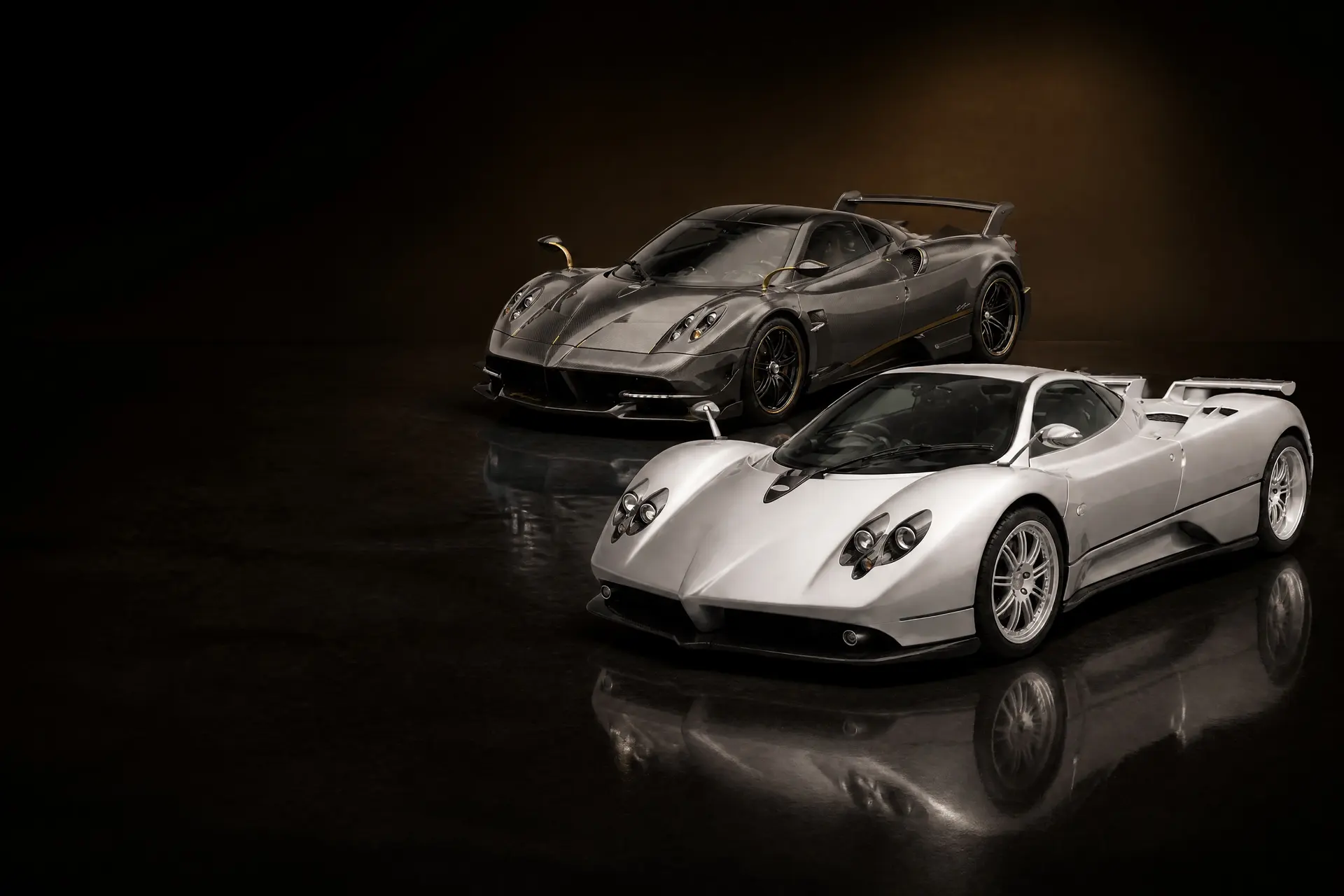
Three cars that explain the manufacturer: its origins, its engineering peak and the shape of its modern ambition.
Complete catalogue
2 models · 1 families
Both nameplates in every factory configuration — the endlessly re-issued Zonda and the active-aero Huayra, each hand-built around an AMG V12.
The house
Horacio Pagani left Lamborghini’s composites department convinced that carbon fibre was an art form. The Zonda of 1999 proved it — an AMG V12 in a jewel of carbon and titanium, every bolt engraved.
The Zonda refused to die: the factory kept building specials, one-offs and track cars for two decades, and the model’s cult only grew. A Cinque or an HP Barchetta now trades in the tens of millions.
The Huayra brought active aerodynamics and a twin-turbo AMG V12, hand-built in a workshop that looks like a Renaissance atelier. Production is tiny, bespoke and permanently sold out — the definition of a modern blue-chip.
Selected milestones
1992
The project takes shape
By 1992, Horacio Pagani and Maurizio Ferrari are working on the car project later presented as Zonda; Pagani Automobili is formally established in 1998.
1999
Zonda C12
The Zonda C12 makes its public debut at Geneva with a carbon-fibre central monocoque and a Mercedes V12.
2009
Carbo-Titanium reaches the road
The road-going Zonda Cinque introduces Pagani's carbon-and-titanium composite frame.
2011
Huayra succeeds Zonda
A new Carbo-Titanium monocoque, active aerodynamics and an AMG-developed twin-turbo V12 define Pagani's second model family.
2017
Factory restoration
The Rinascimento programme begins restoring Zondas with original moulds, methods and materials, supported by a signed factory record.
2022
A third model line
Utopia debuts in Milan as the third chapter in Pagani's production-car history.
What defines Pagani
Carbon fibre is both structural and visible; later cars extend the approach through Carbo-Titanium and Carbo-Triax.
Zonda establishes the naturally aspirated formula; Huayra moves to an AMG-developed twin-turbo twelve-cylinder without abandoning the layout.
Variants, one-offs, later upgrades and the Rinascimento programme keep the factory involved long after initial delivery.
The mark
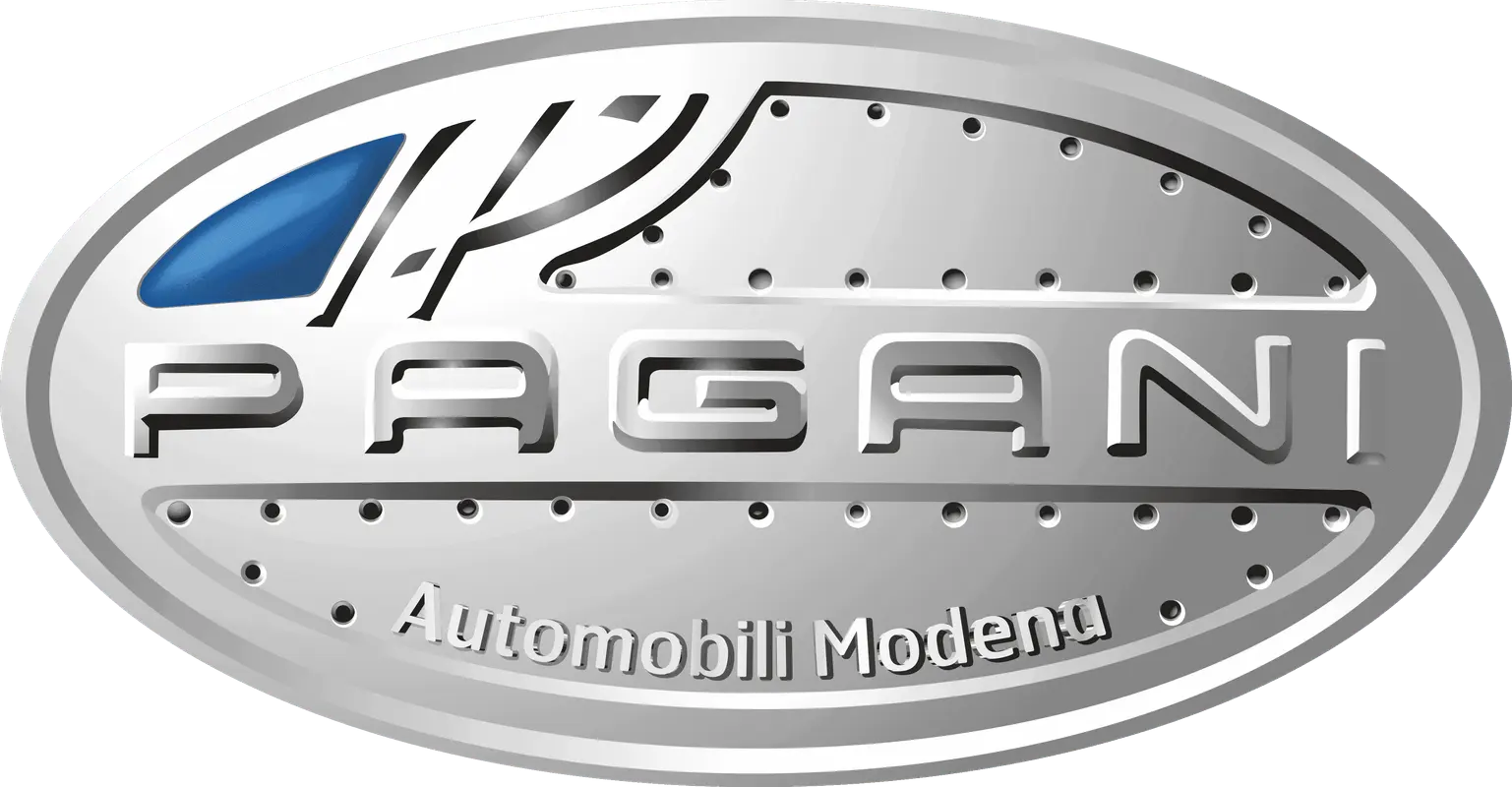
The badge Horacio Pagani chose looks less designed than fabricated: a silver oval like a riveted skin panel, PAGANI across the middle, and above it two letters P — one of them mirrored — closing into a second, smaller oval. For a man who left Lamborghini’s composites shop to build cars like instruments, the material was the point.
The lettering underneath says Automobili Modena; the works actually stands in San Cesario sul Panaro, a few kilometres outside the city. Close enough for the province — and for the legend.
1992–2005
The riveted plate: mirrored Ps over the name, Automobili Modena below.
2005–
Reduced to a line for print and screen; the metal plate keeps its rivets.