Competition defines specification
Homologation requirements shaped the 3.0 CSL and led directly to the road-going M1.
Munich, Germany · est. 1916
BMW's collector market is concentrated in scarce roadsters, homologation cars and the M1.
Curated entry points
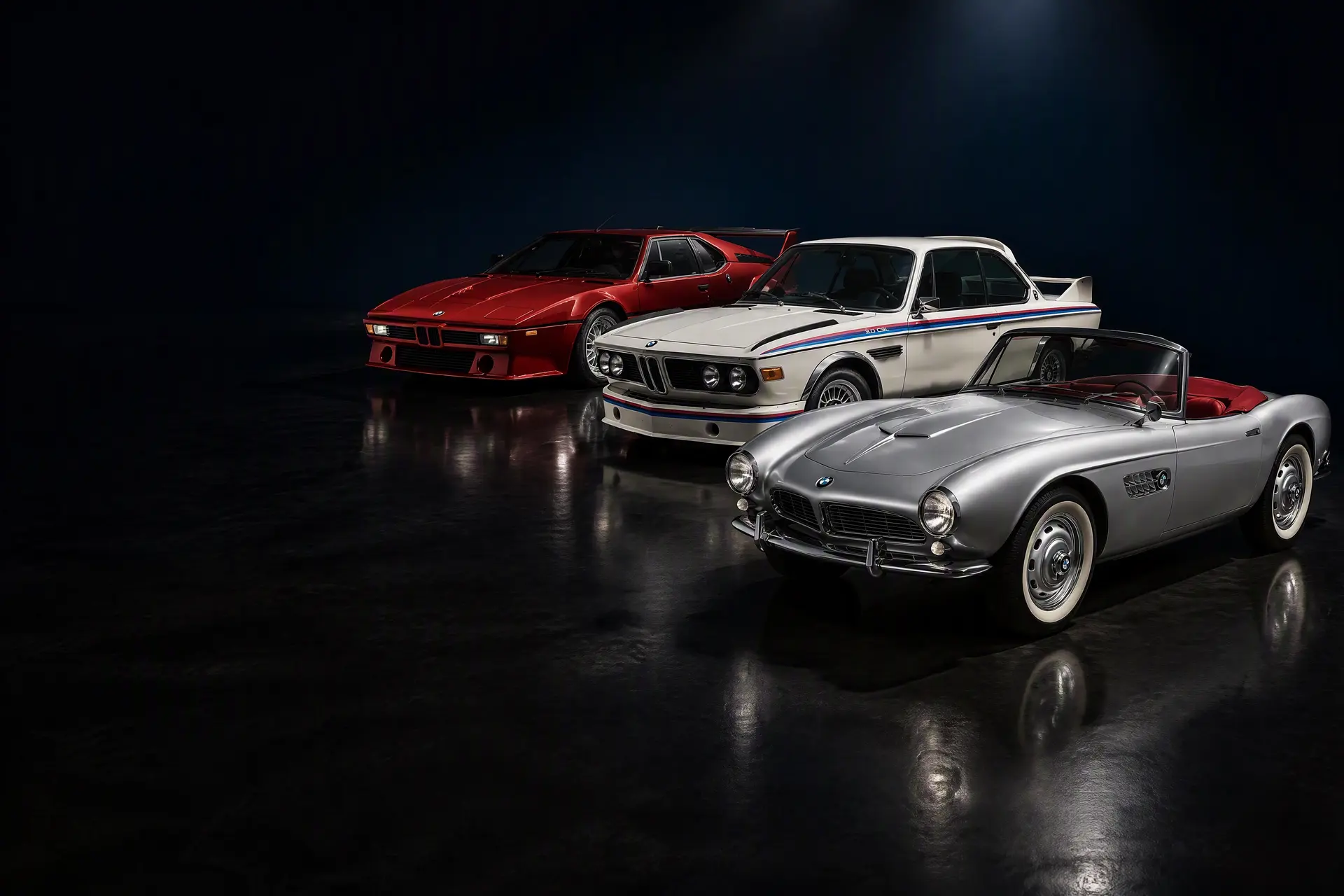
Three cars that explain the manufacturer: its origins, its engineering peak and the shape of its modern ambition.
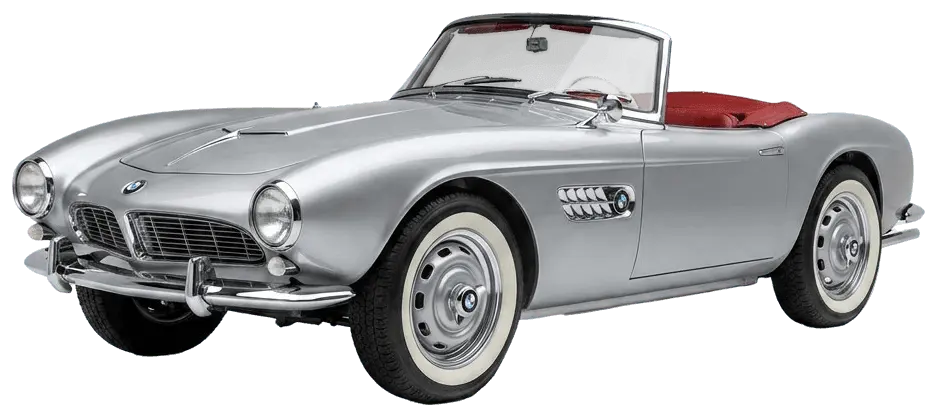 1956–1959
Goertz’s aluminium roadster — 252 built, Elvis owned one.
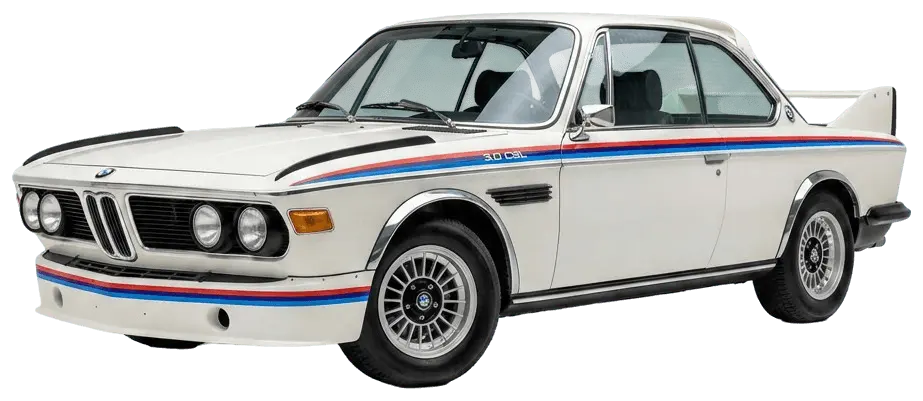 1972–1975
The winged homologation coupé that founded BMW Motorsport.
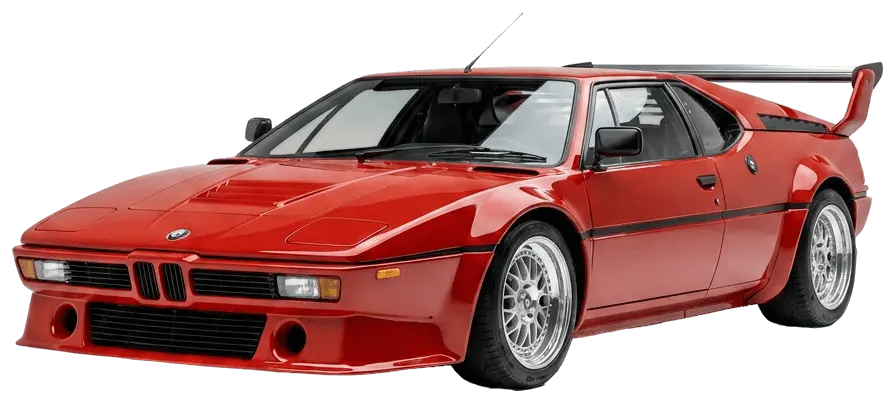 1978–1981
The only mid-engined BMW supercar — Giugiaro body, 453 built.
Complete catalogue
3 models · 1 families
The three BMWs that matter to collectors — a coachbuilt roadster from the fifties, the winged CSL that founded the Motorsport division, and the marque’s only mid-engined supercar.
The house
BMW’s collectible apex is narrow and brilliant. The 507 of 1956 was Albrecht von Goertz’s aluminium-bodied answer to the 300 SL — so expensive to build it nearly broke the company, so beautiful it now trades near two million.
The 3.0 CSL of the early seventies was a homologation special with wings the road cars carried in the boot — the “Batmobile” that founded BMW Motorsport and won six European Touring Car championships.
The M1 followed in 1978: a Giugiaro-drawn, mid-engined supercar built for a racing series that collapsed under it. Only 453 were made, and the straight-six M88 behind the seats became the heart of every great M car since.
Selected milestones
1916
The official origin
BMW dates its founding to the formation of Bayerische Flugzeugwerke on 7 March.
1928
BMW enters car production
The purchase of Fahrzeugfabrik Eisenach adds automobiles to the company's engine and motorcycle businesses.
1955
The 507 is presented
BMW unveils Albrecht von Goertz's aluminium-bodied V8 roadster at Frankfurt; limited demand keeps the production run short.
1972
BMW Motorsport is formed
BMW consolidates its racing activities in a wholly owned subsidiary whose first touring-car project is the 3.0 CSL.
1978
The M1 reaches production
BMW Motorsport's first clean-sheet car appears as a mid-engined road model created for Group 4 homologation.
What defines BMW
Homologation requirements shaped the 3.0 CSL and led directly to the road-going M1.
BMW uses lightweight frames and aluminium or composite panels when lower mass serves the car's purpose.
The inline-six runs from the 303 through the CSL and M1 into later BMW performance cars.
The hands
One name in the register stands behind this manufacturer. Their own file follows the work wherever it went.
The mark
Munich, 1917: aircraft-engine maker Rapp Motorenwerke becomes Bayerische Motoren Werke, and the new firm keeps its predecessor’s badge architecture — the name set in a black ring, the horse in the middle swapped for quarters of white and blue. Bavaria’s colours, inverted: trademark law of the day barred state arms from commercial emblems.
The propeller is a myth, and BMW has said so itself. It dates to a 1929 advertisement that drew the roundel into a spinning airscrew to sell aero engines built under Pratt & Whitney licence — a story so good the company let it stand for decades. The badge means Bavaria; it never meant a propeller.

1913–1917
Rapp Motorenwerke’s roundel — the black ring BMW would inherit, a horse still in the middle.
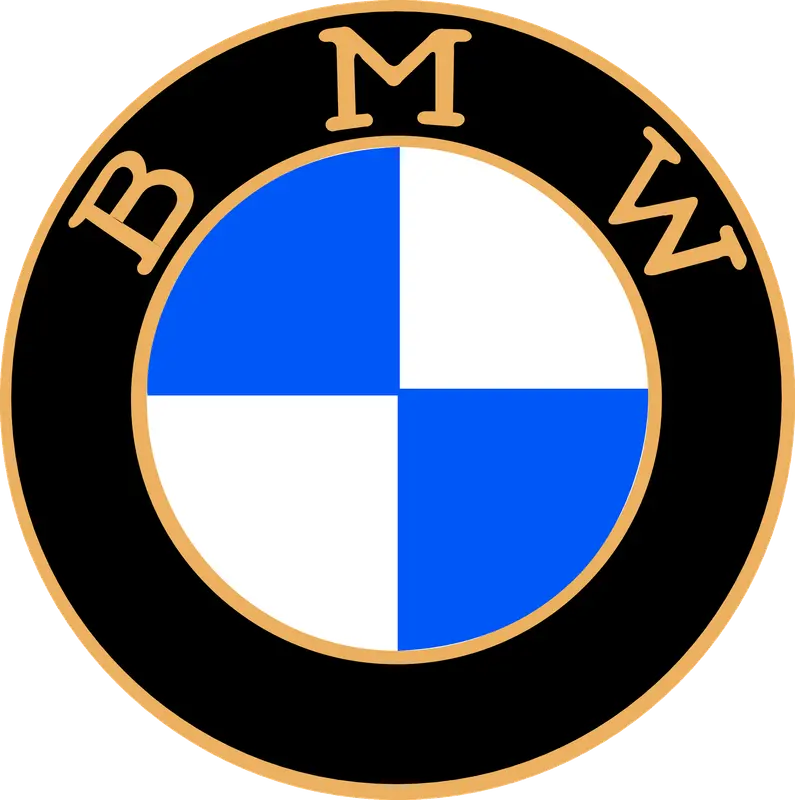
1917–1936
The first BMW roundel: Bavaria’s white and blue in the quarters, inverted to satisfy trademark law.
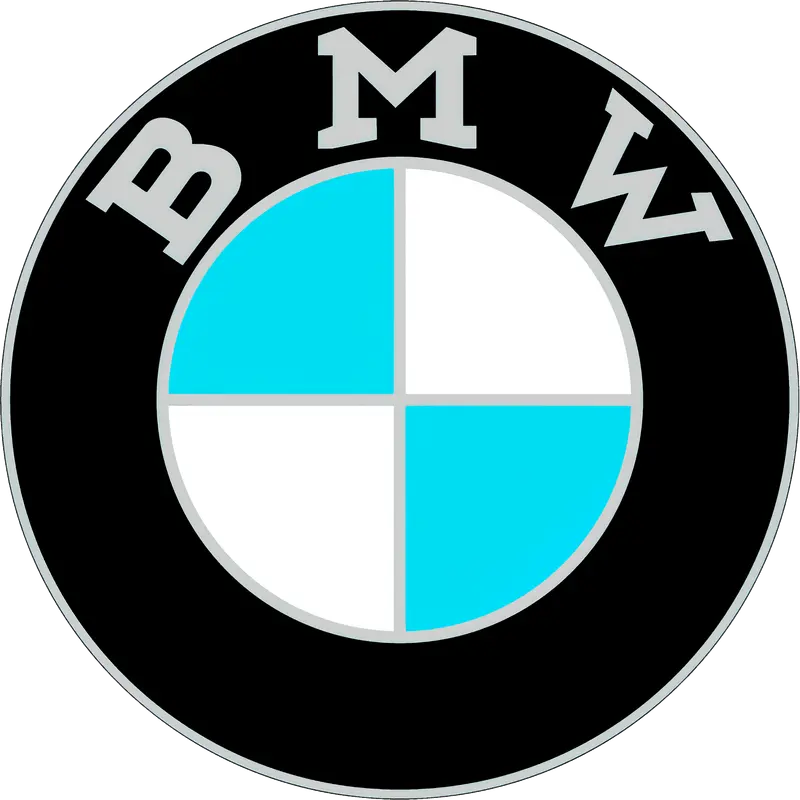
1936–1963
Thinner lines, lighter blue — the badge of the 328 and the 507.
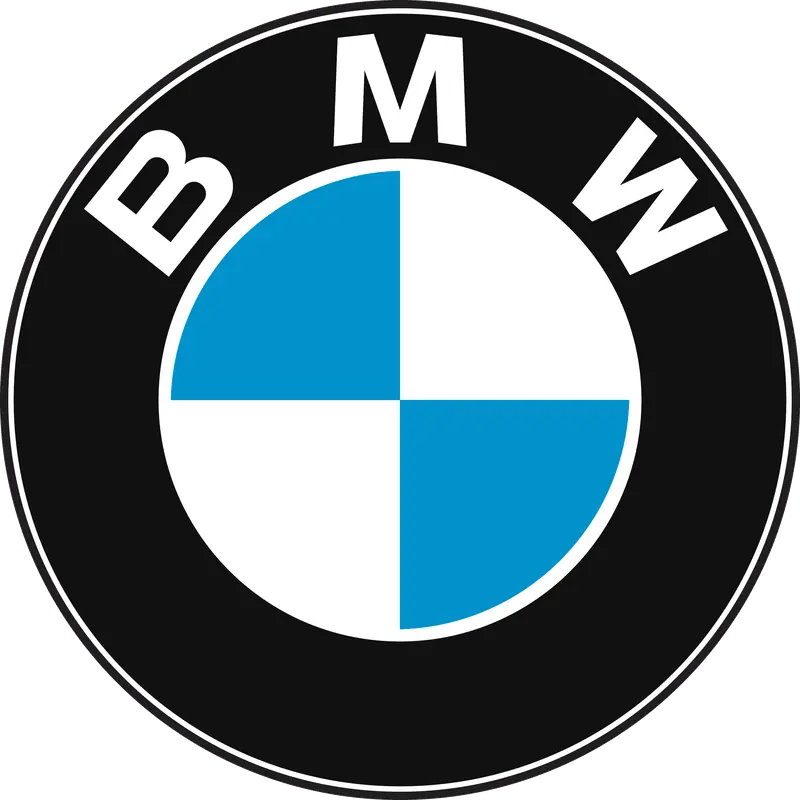
1963–1997
Redrawn cleaner and cobalt — the roundel of the CSL and M1 years.
1997–2020
Gloss and dimensionality for the screen age.
2020–
Jens Thiemer’s team goes flat and transparent — communications only; the cars keep the ring.