The Journal · HICONIUM × RIOCAM
What’s It Worth to You?
Hiconium prices the unpriceable. With RIOCAM it now makes the car yours to look at — on the number, the myth, and the artists we’re bringing into the room.
HICONIUM editorial · June 21, 2026 · 4 min
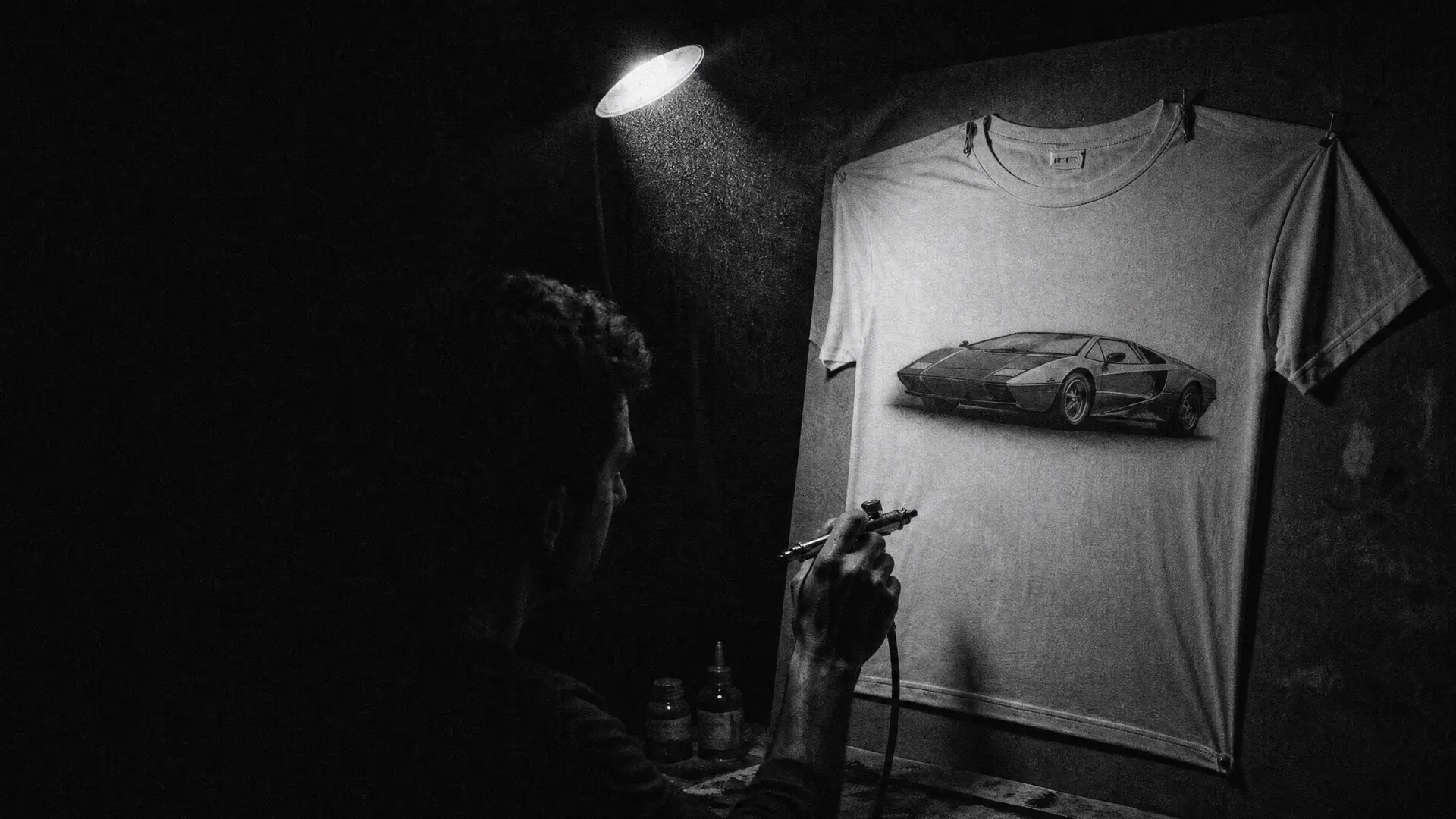
In 1984, on the cheap end of Ocean Drive, a man with an airbrush gun could turn your afternoon into a religion. Twenty dollars. He pinned a white T-shirt to a board, shook a can, and went to work: out of the hiss came a Countach in full wedge, low and impossible, a sun the colour of a blood orange dropping behind it, two palms leaning in like witnesses. He signed it in the corner. You wore your car home years before you could afford one.
That man understood something the market needed another forty years to admit: a great car is never only a machine. It is a rumour you can sit in.
RIOCAM has spent its whole life making that rumour wearable: airbrushed tourist art, race-team jerseys, a chrome wordmark, SINCE 1984 stamped on things that weren’t. It is glamorous, knowing, a little ridiculous and completely sincere, which is the only honest way to do nostalgia. RIOCAM makes the myth.
Hiconium does the unglamorous half. We price the unpriceable, the cars that change hands in the dark, on a handshake, for a number nobody will say out loud. And then we say it out loud. A HICON Price: an honest range, not a flattering one, kept current as the market moves, with the evidence stapled to it. The folder. The chassis number. The receipt from 1989. That is the number, and we will defend it.
Every great car is two cars. The asset and the icon.
The market got very good at the asset; the icon it left to a few photographers and a guy with a spray can. This partnership puts the two of them in the same room at last.
Here is the part that shouldn’t be possible, and is. You add a car to your Hiconium garage (the way you would file a passport, because that is roughly what we build around it). The platform already knows what it is worth. Now it learns what it is: the exact paint, the patina nobody refinished, the small flaw you would never sell and never fix. Hand that to a model trained on forty years of RIOCAM sunsets, and it gives your car back to you. Not a stock Countach but yours: your chassis, your scar in the door, your particular evening, arched under the wordmark, palms leaning in, the orange sun doing what it does. A poster of the thing you actually own. You came to file an asset. You leave with a myth.
Forty years ago the machine was a can of paint and a steady wrist. Now it is a neural net. The job hasn’t changed: turn a car into the way it makes you feel.
But the machine is the floor, not the ceiling; that distinction is the whole point. The better answer to who should paint your car was never a server. It is the people who taught the rest of us how to see these machines: the airbrush masters who made a wedge look like the future, the photographers who shot a Testarossa like a beautiful crime, the illustrators who decided a supercar was worth looking at long before the auction houses agreed. Most of them are still working. Almost none have ever been properly commissioned by the people who own the cars.
That is the long game, and it is the part we actually care about: putting the best automotive artists in the room with the collectors, and paying them to do the one thing no model can. To see a single car, owned by a single person, and make it permanent. The algorithm gives everyone a poster tomorrow. The artists give a few people a masterpiece, on purpose, over years.
Let us be honest about why this works. Nobody buys an F40 to reach the airport. They buy the myth, and they have been paying eight figures for it with no one willing to hand the myth back. A market that priced everything and pictured nothing. We turned the lights on; RIOCAM brought the colour.
So: what is it worth to you? Hiconium will give you the number, to the franc, tonight, in this city. RIOCAM gives you the other thing, the one the number was always standing in for. The car will outlive you; that was always the arrangement. Now the picture of it, your palms, your evening, your impossible orange sun, outlives you too.
You live it. We’ll price it. Somebody should paint it.